
Keeping your refrigerated units in top shape is crucial for smooth operations. Proper HVAC maintenance ensures your equipment runs efficiently, saving you time and money. In 2023, the vending industry generated over $8.6 billion in annual revenue, highlighting the importance of reliable systems1.
Millions of these units operate across the U.S., and many face common issues like temperature inconsistencies and energy inefficiencies1. Regular maintenance can prevent these problems, ensuring your business stays profitable. Imagine the frustration of a broken unit during peak hours—proper care can help you avoid such scenarios.
Effective HVAC management is not just about fixing problems; it’s about preventing them. From cleaning condenser coils to checking door seals, small steps can make a big difference1. Let’s dive into practical tips to keep your units running smoothly.
Key Takeaways
- Regular HVAC maintenance prevents costly downtime and ensures efficiency.
- Cleaning condenser coils twice a year can extend equipment lifespan1.
- Proper door seal checks improve energy efficiency and reduce repair needs.
- Maintaining ideal temperatures prevents food spoilage and financial losses.
- ASHRAE standards provide guidelines for safe and efficient refrigeration systems2.
Introduction: Your Coffee Chat on Refrigerated Vending and HVAC Maintenance
Let’s sit down and talk about how to keep your refrigerated systems running smoothly. As a business owner, you know how important it is to avoid downtime and keep your operations efficient. Whether you’re new to the industry or a seasoned owner, HVAC maintenance can feel overwhelming. But don’t worry—we’re here to help.
Imagine this: it’s a busy day at your location, and suddenly, your unit stops cooling. Frustrating, right? That’s why proactive care is essential. The vending industry is versatile and has low startup costs, making it a great option for many businesses. However, maintaining these systems is key to long-term success3.
This guide is designed to address the challenges you face. From temperature inconsistencies to energy inefficiencies, we’ll cover it all. You’ll also find personal stories and real-life examples to make the advice relatable. For instance, one person shared how regular cleaning of condenser coils saved them from costly repairs.
We’ll also touch on financing options, location factors, and step-by-step maintenance tips. By the end, you’ll have actionable advice to keep your systems running smoothly. Plus, we’ll dive into expert tips and industry trends to keep you ahead of the curve.
So, grab your coffee, and let’s get started. Together, we’ll make sure your refrigerated systems are in top shape, saving you time, money, and stress.
Understanding the Refrigerated Vending Machine Guide
Understanding the basics of refrigeration systems can save you from unexpected breakdowns. This guide is designed to help you maintain your equipment efficiently, ensuring it runs smoothly for years. Whether you’re new to the industry or a seasoned professional, these tips will simplify the process.
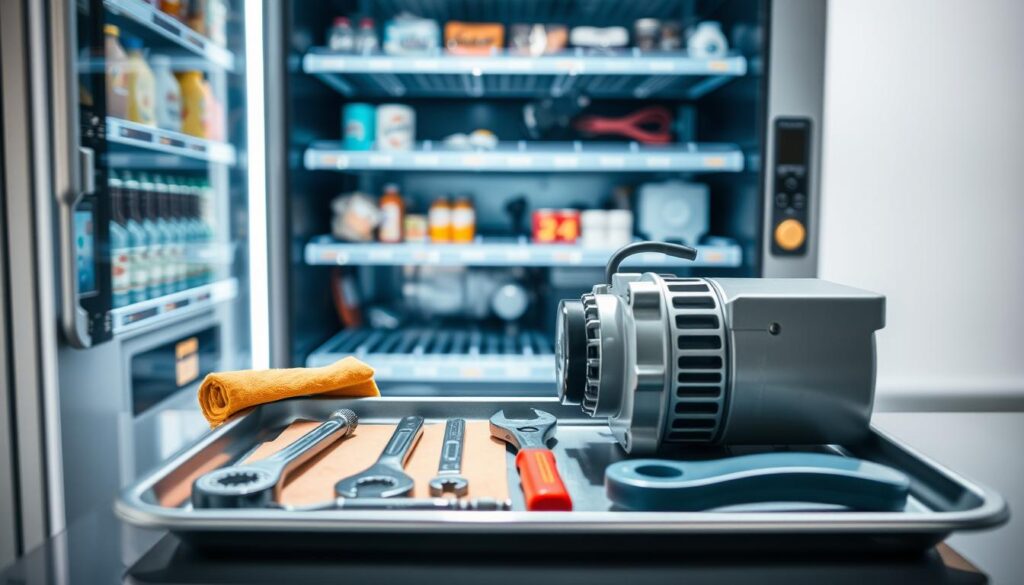
Key HVAC Maintenance Principles for Refrigeration
Your refrigeration system is like the heart of your operation—it needs regular care to function properly. Start by cleaning condenser coils twice a year. This simple step can extend the lifespan of your equipment4.
Next, check door seals regularly. A tight seal ensures energy efficiency and prevents warm air from entering. Think of it as closing the door to your home—it keeps the cold air inside where it belongs.
Finally, monitor temperature settings. Maintaining ideal conditions prevents food spoilage and financial losses. Smart systems can alert you to fluctuations, ensuring your products stay fresh4.
Industry Trends and Research Insights
The vending industry is evolving rapidly. Smart systems now use RFID technology to track inventory in real-time, reducing waste and improving efficiency4. These advancements are transforming how businesses operate.
Customizable inventory based on sales data is another trend gaining traction. By aligning product choices with customer preferences, you can boost satisfaction and sales4. This approach ensures your offerings stay relevant.
| Maintenance Task | Frequency | Benefits |
|---|---|---|
| Clean Condenser Coils | Twice a Year | Extends Equipment Lifespan |
| Check Door Seals | Monthly | Improves Energy Efficiency |
| Monitor Temperature | Daily | Prevents Food Spoilage |
By staying informed about these trends, you can keep your business ahead of the curve. Embrace new technologies and maintenance practices to ensure long-term success.
Identifying Common Maintenance Challenges for Your Vending Machine
Running a successful operation means tackling maintenance challenges head-on. Whether it’s a malfunctioning payment system or a jammed product dispenser, these issues can disrupt your business. Let’s explore the most frequent problems and how to address them.
One of the biggest challenges is location. High foot traffic areas can wear down your equipment faster. For example, a unit in a busy office building may face more wear and tear than one in a quieter setting. Regular inspections can help you spot early signs of damage5.
Regulatory compliance is another hurdle. ADA standards require accessible placement and functionality. Ignoring these rules can lead to fines or operational shutdowns. Ensure your unit meets all local and federal guidelines to avoid costly penalties6.
Vandalism is a concern in high-traffic areas. Broken buttons or damaged screens can render your equipment unusable. Installing security cameras or placing units in well-lit areas can deter such incidents7.
Here’s a quick overview of common challenges and solutions:
| Challenge | Solution |
|---|---|
| High Foot Traffic | Regular inspections and maintenance |
| Regulatory Compliance | Follow ADA and local guidelines |
| Vandalism | Install security measures |
By anticipating these issues, you can keep your equipment running smoothly. Proactive care not only prevents downtime but also extends the lifespan of your unit5.
Expert HVAC Tips for Reliable Refrigeration in Vending Machines
Maintaining your refrigeration systems doesn’t have to be a headache—here’s how to do it right. With the right strategies, you can reduce costs, boost profit, and keep your equipment running smoothly for years. Let’s dive into actionable tips that make a difference.
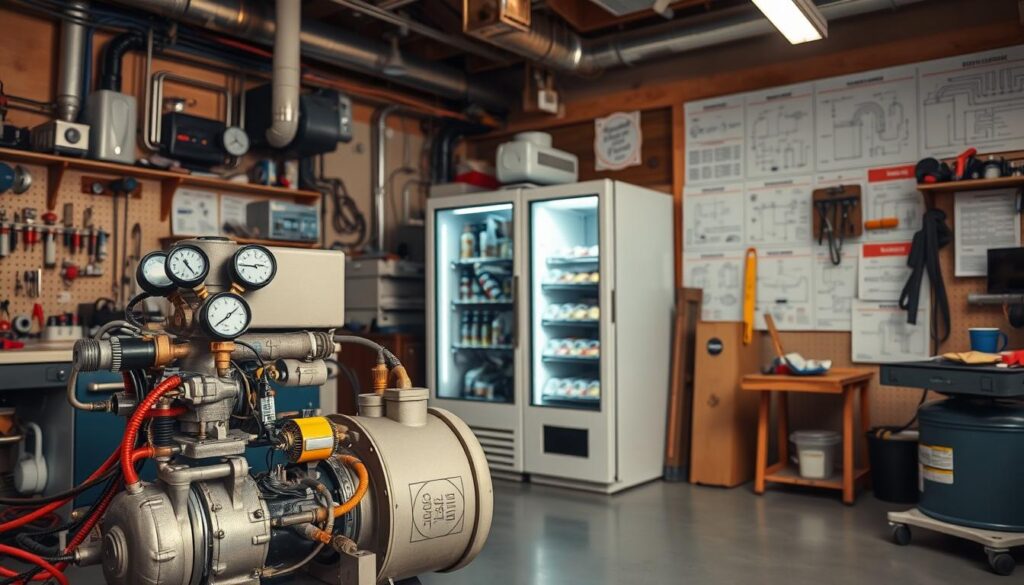
Proactive Maintenance Strategies You Can Trust
Start by cleaning condenser coils twice a year. This simple step can extend the lifespan of your equipment and save you money on repairs8. Regularly checking door seals is another must—tight seals improve energy efficiency and prevent warm air from entering.
Monitor temperature settings daily to avoid food spoilage. Smart systems can alert you to fluctuations, ensuring your products stay fresh and your sales remain steady8. Investing in high-quality dual ball bearings can also enhance fan life, reducing long-term costs8.
Personal Stories and Sensory-Rich Scenarios
Take the example of Lone Star Bistro. After upgrading their refrigeration system, they saved $1,350 monthly, cutting electricity bills and reducing food wastage9. Imagine the relief of seeing your money work smarter, not harder.
Another business, Blossom & Bites, slashed their monthly expenses by $1,550. By focusing on proactive maintenance, they turned potential losses into profit9. These stories show how small changes can lead to big results.
Here’s a quick breakdown of cost-saving strategies:
- Clean condenser coils twice a year to extend equipment life8.
- Check door seals monthly to improve energy efficiency.
- Monitor temperatures daily to prevent spoilage and boost sales.
By following these tips, you’ll not only save money but also enhance your business’s performance. Think of it as an investment in your future—one that pays off every day.
Optimizing Product Efficiency and Profitability in Your Vending Machine Business
Maximizing your business’s efficiency starts with smart product and inventory management. Whether you’re stocking snacks, beverages, or other items, the right strategies can boost your profits and keep customers coming back. Let’s explore how to make the most of your offerings.
Best Practices for Stock and Inventory Management
Keeping your inventory fresh and relevant is key to success. Start by rotating items regularly to maintain customer interest and reduce waste. For example, seasonal trends like hot beverages in winter and cold drinks in summer can drive sales10.
Use data to track which items sell best. Smart systems can help you monitor sales in real-time, ensuring you always have popular products in stock10. This approach not only improves efficiency but also boosts customer satisfaction.
Here’s a quick guide to managing your inventory effectively:
| Task | Frequency | Benefit |
|---|---|---|
| Rotate Items | Weekly | Maintains Freshness |
| Track Sales Data | Daily | Optimizes Stock Levels |
| Seasonal Adjustments | Quarterly | Aligns with Demand |
Aligning Product Choices with Local Demand Trends
Understanding your customers’ preferences is crucial. In an office setting, energy drinks and healthy snacks are often top sellers10. Tailoring your offerings to local tastes can significantly impact your sales.
For instance, gyms may prefer protein bars and bottled water, while schools might focus on nutritious options10. Regularly updating your product mix based on feedback and trends ensures your offerings stay relevant.
Balancing snacks and beverages is also important. A mix of both can cater to different customer needs, driving higher sales10. Think of it as offering variety without overwhelming your audience.
By focusing on these strategies, you’ll not only improve efficiency but also enhance your profitability. Small changes can lead to big results, making your business more successful and sustainable.
Finding the Right Location for Your Refrigerated Vending Machine
Choosing the perfect spot for your equipment can make or break your business. A well-placed unit can generate up to $2,000 a month, while a poor location might only bring in $5011. To ensure success, focus on foot traffic, accessibility, and legal compliance.
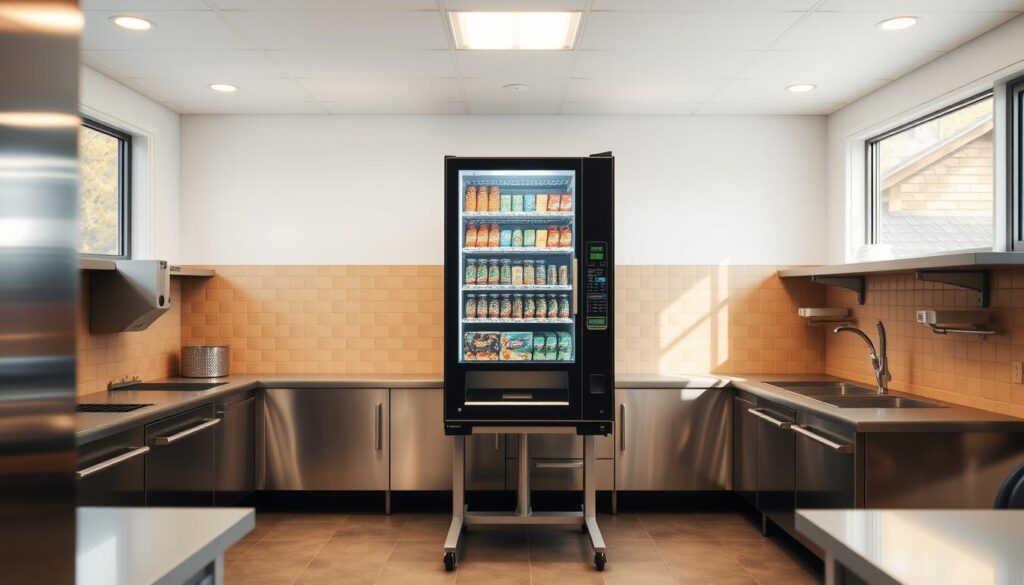
Start by evaluating foot traffic. Ideal locations should have at least 50 people passing by daily11. High-traffic areas like office parks, schools, and malls are excellent choices. For example, hospitals operate 24/7, providing a consistent customer base11.
Evaluating Foot Traffic and Accessibility Factors
Direct foot traffic is crucial. Think about high school students, hospital employees, or gym patrons. These groups often seek quick refreshments, making them ideal customers11. Indirect traffic, like airport passengers or event attendees, can also boost sales.
Accessibility matters too. Ensure your unit is easy to reach and complies with ADA standards. This not only avoids fines but also ensures everyone can use your equipment12.
Legal Compliance and State-Specific Regulations
Each state has its own rules for placing equipment. Some require permits or licenses, especially for food and drink units12. Always check local regulations before finalizing a location.
Negotiating with property managers can also impact your success. Many companies prefer commission agreements, where they earn a percentage of sales12. Be prepared to discuss terms that benefit both parties.
Here’s a quick checklist for selecting a location:
- Assess foot traffic and accessibility.
- Ensure compliance with ADA and local laws.
- Negotiate fair terms with property managers.
- Consider state-specific regulations for permits and contracts.
By following these steps, you’ll find a location that maximizes your profits and minimizes risks. Remember, the right spot can turn your equipment into a thriving part of your business.
Financing Options and Cost Considerations for HVAC Upgrades
Investing in HVAC upgrades doesn’t have to strain your budget—here’s how to make it work. Whether you’re upgrading for efficiency or replacing outdated systems, understanding your financing options can save you time and cash.
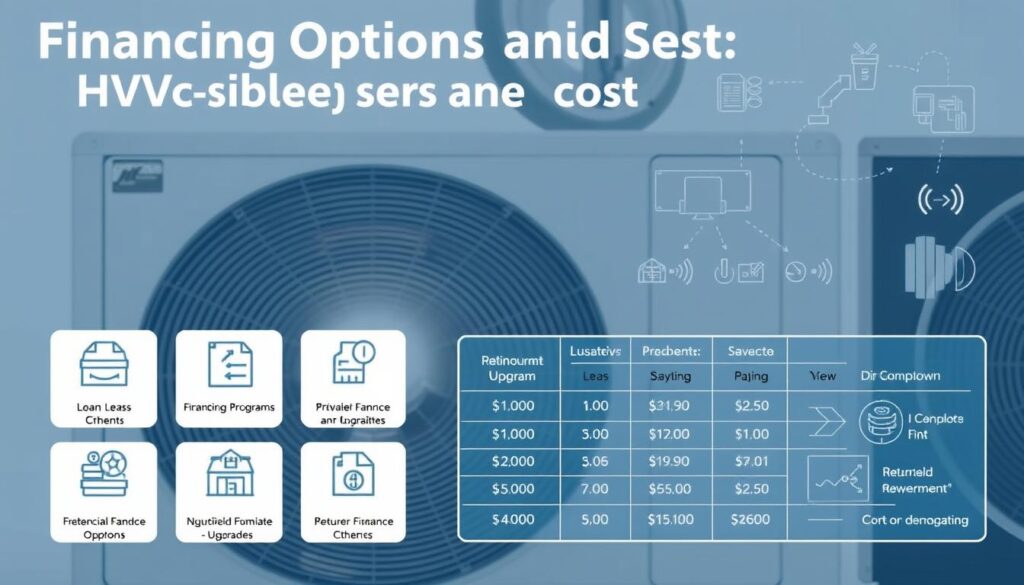
Start by exploring small-business loans. These loans often come with flexible repayment terms, making them a great option for long-term investments13. Equipment financing is another popular choice, allowing you to spread costs over time while upgrading your systems14.
Timing is crucial when planning upgrades. For example, replacing windows with high-efficiency ENERGY STAR models can reduce heating and cooling costs by up to 15%15. Plan your upgrades during off-peak seasons to avoid disruptions and take advantage of potential discounts.
Here’s a breakdown of common financing methods:
| Financing Method | Benefits |
|---|---|
| Small-Business Loans | Flexible repayment terms |
| Equipment Financing | Spread costs over time |
| Grants and Rebates | No repayment required |
Consulting with financial experts can help you create a personalized plan. They can guide you through state-specific incentives, like tax-exempt lease-purchase agreements, which lower upfront costs14.
By choosing the right financing option, you can make your HVAC upgrades affordable and stress-free. Remember, a well-planned investment today can save you cash and time in the long run.
Leveraging New Technology: Remote Monitoring in Vending Machines
Technology is transforming how we manage and maintain equipment, making processes smarter and more efficient. With advanced software, you can now oversee your systems in real-time, ensuring peak performance. This shift not only saves time but also enhances the overall management of your operations.
Understanding Vending Management Software Features
Modern software offers features like low-stock alerts, real-time reporting, and remote configuration. These tools help you stay ahead of potential issues, reducing downtime and improving efficiency16. For example, automated alerts for low-stock products ensure shelves are never empty, enhancing the consumer experience16.
Remote configuration capabilities allow you to update settings without being physically present. This feature is particularly useful for businesses with multiple locations, as it saves time and resources16. By leveraging these tools, you can streamline your operations and focus on growth.
How Technology Supports Real-Time Maintenance
Remote monitoring systems provide real-time data on equipment performance. This information helps you identify issues before they escalate, preventing costly repairs16. For instance, preventive maintenance alerts can reduce downtime by up to 30%, ensuring your systems run smoothly16.
Here’s a quick look at the benefits of remote monitoring:
| Feature | Benefit |
|---|---|
| Low-Stock Alerts | Prevents empty shelves |
| Real-Time Reporting | Improves decision-making |
| Remote Configuration | Saves time and resources |
By adopting these technologies, you can enhance your management practices and deliver a better experience for your consumers. Think of it as a smart investment that pays off in efficiency and satisfaction.
Ensuring Energy Efficiency and Reducing Operational Costs
Boosting energy efficiency in your operations can lead to significant savings and smoother performance. Think of it as tuning a car—small adjustments can make a big difference in how it runs. By taking actionable steps, you can reduce costs and increase your revenue over time.
Start by optimizing your space. A well-organized layout ensures your equipment operates efficiently, reducing unnecessary energy consumption. For example, placing units away from heat sources can prevent overworking cooling systems17.
Next, focus on regular maintenance. Cleaning condenser coils and checking door seals are simple steps that can improve energy efficiency. These tasks not only save energy but also extend the lifespan of your equipment17.
Here’s how energy savings translate to higher revenue:
- Reduced utility bills mean more money stays in your pocket.
- Efficient systems prevent downtime, keeping your operations running smoothly.
- Lower maintenance costs free up funds for other business investments.
Consider upgrading to smart systems. These technologies monitor energy use in real-time, alerting you to inefficiencies before they become costly problems. For instance, installing programmable thermostats can optimize energy use based on seasonal averages17.
Finally, plan your space wisely. Efficient layouts reduce wasted energy and improve airflow, ensuring your equipment operates at peak performance. By following these steps, you’ll not only save money but also boost your revenue in the long run.
Expert Insights: Blending Personal Experience with Industry Data
Blending personal experiences with industry data can provide actionable insights for your business. Whether you’re troubleshooting a cooling issue or optimizing product offerings, combining real-world stories with market trends helps you make smarter decisions. Let’s explore how this approach can elevate your operations.
Real-World Experiences Sharing Practical Tips
Take the story of Sarah, a small business owner who struggled with frequent equipment breakdowns. By regularly cleaning condenser coils and checking door seals, she reduced repair costs by 40%18. Her experience highlights the importance of proactive maintenance.
Another example is Mike, who noticed a spike in customer complaints about warm drinks. After monitoring temperature settings daily, he resolved the issue and improved satisfaction rates18. These stories show how small changes can lead to big results.
Supporting Claims with Data and Trends
Industry data backs these personal experiences. For instance, modern systems with IoT technology can reduce downtime by up to 30%19. This technology provides real-time alerts, ensuring your equipment runs smoothly.
Here’s a quick comparison of traditional vs. modern maintenance practices:
| Practice | Traditional | Modern |
|---|---|---|
| Monitoring | Manual Checks | Real-Time Alerts |
| Efficiency | Reactive Repairs | Proactive Maintenance |
| Cost | High Repair Costs | Reduced Expenses |
Common questions include: How often should I clean condenser coils? The answer is twice a year to extend equipment lifespan18. What products perform best in high-traffic areas? Healthy snacks and beverages are top sellers in offices and gyms19.
By combining personal stories with hard data, you can make informed decisions that benefit your business. Think of it as a roadmap to success—one that’s rooted in experience and supported by facts.
Using Your Vending Machine Guide: Step-by-Step HVAC Maintenance
Ensuring your HVAC systems are well-maintained is the key to smooth operations and consistent performance. Regular upkeep not only prevents breakdowns but also maximizes uptime and revenue generation20. Let’s walk through a clear, step-by-step process to keep your systems running efficiently.
Start by creating a maintenance checklist. Include tasks like cleaning condenser coils, checking door seals, and monitoring temperature settings. Cleaning coils twice a year can extend equipment lifespan and reduce repair costs20. Tight door seals improve energy efficiency, saving you money in the long run.
Next, establish a relationship with a reliable vendor. Regular servicing by professionals ensures your systems are in top shape. Many vendors offer service contracts, which can include monthly or quarterly visits. These agreements often include discounts on parts and labor, making them a cost-effective option.
Monitoring foot traffic is another crucial step. High-traffic areas may require more frequent maintenance to handle wear and tear. Use data from your location to adjust service intervals. For example, a busy office building might need monthly checks, while a quieter spot could do with quarterly visits.
Here’s a quick breakdown of essential tasks:
- Clean condenser coils twice a year to prevent overheating20.
- Check door seals monthly to ensure energy efficiency.
- Monitor temperature settings daily to avoid spoilage.
- Inspect electrical connections for signs of wear or damage.
Managing commission agreements with property managers can also impact your success. Many businesses prefer profit-sharing models, where they earn a percentage of sales. Negotiate terms that benefit both parties, ensuring a win-win partnership.
Finally, leverage technology for real-time monitoring. Smart systems can alert you to issues before they escalate, reducing downtime and repair costs20. These tools provide valuable insights, helping you make informed decisions about maintenance schedules and inventory management.
By following these steps, you’ll keep your HVAC systems running smoothly, ensuring consistent performance and profitability. Remember, proactive care is the best way to avoid costly repairs and downtime.
Conclusion
Taking care of your refrigeration systems is more than just maintenance—it’s about ensuring your business thrives. Regular upkeep, like cleaning condenser coils and checking door seals, keeps your equipment running efficiently and extends its lifespan21. These small steps can save you from costly repairs and downtime, ensuring your operations stay smooth.
Consistent maintenance also boosts energy efficiency, reducing operational costs and increasing profitability. For example, monitoring temperature settings daily prevents spoilage and keeps your drink offerings fresh21. By adopting these practices, you’ll not only save money but also enhance customer satisfaction.
Now is the time to act. Start by implementing the tips from this guide—clean your coils, check your seals, and monitor temperatures. These simple actions can make a big difference. Remember, proactive care is the key to long-term success.
Ready to take the next step? Stay informed and keep learning. Your business deserves the best, and with the right approach, you can achieve it. Let’s keep your systems running smoothly and your drink options refreshing!
FAQ
How often should I perform HVAC maintenance on my refrigerated unit?
What are the best practices for managing inventory in a refrigerated unit?
How can I choose the right location for my refrigerated unit?
What financing options are available for HVAC upgrades?
How does remote monitoring technology benefit my business?
What steps can I take to improve energy efficiency?
How do I align my product choices with local demand?
What are the most common maintenance challenges for refrigerated units?
How can I ensure legal compliance for my unit?
What are the key features of vending management software?
Source Links
- The Complete Guide to Commercial Refrigeration – KCR HVAC Blog
- Read-Only Versions of ASHRAE Standards
- ENERGY STAR Action Workbook for Small Business: Appendices
- Smart Vending Machines: A Guide for Businesses
- Vending Machine Maintenace: Common Issues and How to Do Preventative Maintenance – Vending Locator
- Troubleshooting Common Vending Machine Issues
- Common Problems With Vending Machines And How To Fix Them
- Axial AC Fans in Vending Machines
- Commercial Reach-In Refrigerator: 3 Epic Transformations!
- Maximize Profits with Your Vending Machines
- How To Find Vending Locations For Your Vending Machines? – Vending Locator
- Where Can I Put a Vending Machine? Choosing the Perfect Location | Worldwide Vending
- Energy Efficiency Strategies and Upgrades
- Energy-Saving Programs & Tools for Businesses
- A Complete Guide to Vending Telemetry
- How to Start a Vending Machine Business: The Ultimate Guide | PizzaForno
- Vending Machine Guide: An FAQ for Beginners | Vending.com
- Elevate Your Vending Machine Maintenance: Tips and Strategies for Success
- All You Need to Know About Vending Machines


0 Comments