
Ever wondered why your HVAC system isn’t performing as efficiently as it should? The culprit could be moisture or contaminants in the refrigeration system. These issues can lead to costly repairs and reduced performance. That’s where a filter drier comes in—a small but mighty component designed to protect your system.
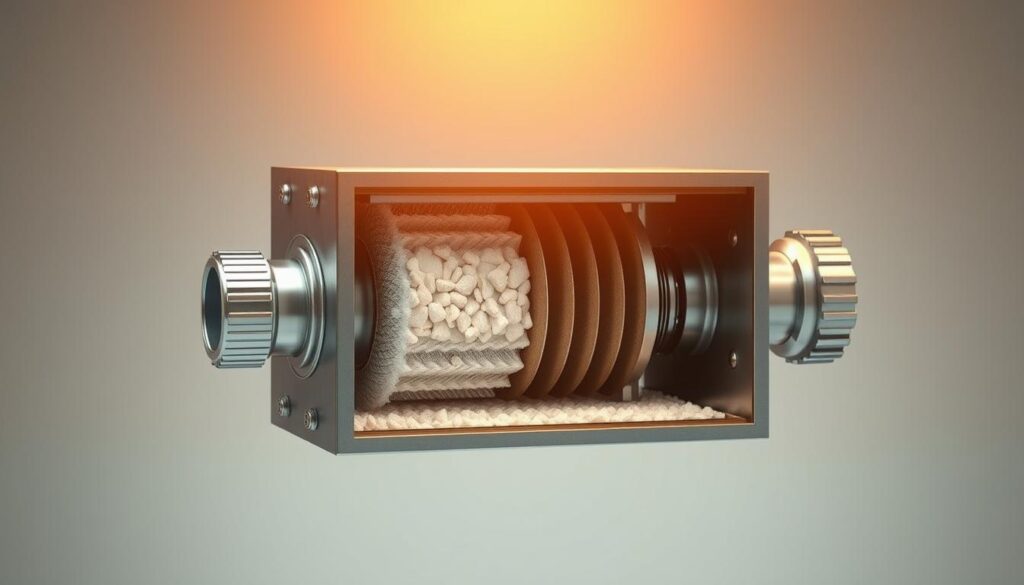
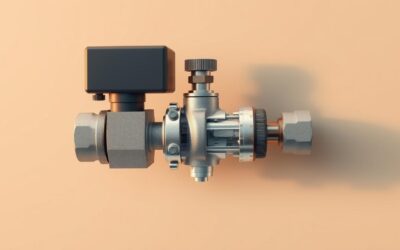
Installed in the liquid line between the condenser and the expansion valve, the filter drier works under high internal pressure to remove moisture and trap impurities. Its solid core, composed of 80% molecular sieve and 20% activated alumina, acts like a sponge to absorb water and retain acids. Additionally, its polyester mat screen captures dirt particles as small as 25 microns, ensuring smooth refrigerant flow and system longevity1.
Whether you’re dealing with a residential unit or a commercial setup, understanding the role of this component can save you time and money. This guide will walk you through its functions, types, and installation tips to keep your system running efficiently.
Key Takeaways
- Filter driers remove moisture and trap contaminants in refrigeration systems.
- They are installed in the liquid line between the condenser and expansion valve.
- The solid core consists of molecular sieve and activated alumina for moisture and acid absorption.
- They protect the system from damage caused by impurities and water particles.
- Proper installation ensures smooth refrigerant flow and system performance.
Understanding the Role and Importance of Filter Driers in HVAC Systems
Moisture and contaminants in your HVAC system can silently wreak havoc, leading to costly repairs. Even trace amounts of water can cause acids to form, corroding critical components and reducing system performance. This is where a well-designed component steps in to protect your setup.
How Filter Driers Prevent Moisture-Induced Damage in Refrigeration
Moisture in your HVAC system can lead to freeze-ups, corrosion, and even compressor failure. Filter driers use molecular sieves and activated alumina to absorb water and retain acids, ensuring smooth refrigerant flow. These desiccants are bonded to prevent attrition during system vibrations, maintaining their effectiveness over time2.
In systems with high water and solid particulate levels, steel driers are recommended over copper ones. They handle contaminants better and can effectively remove inorganic acids2. This prevents damage to the compressor and extends the life of your HVAC unit.
Real-Life Scenarios of HVAC Struggles and Filter Drier Solutions
Imagine a scenario where a malfunctioning component leads to acid build-up, significantly shortening the compressor’s lifespan3. This is a common issue when moisture isn’t properly managed. In another case, a technician noticed restricted flow due to frozen refrigerant inside the tubes. Installing a new filter drier resolved the issue, restoring system efficiency.
These examples highlight the importance of early identification and replacement of failing components. By addressing moisture and contamination promptly, you can avoid costly repairs and keep your HVAC system running smoothly.
Is your system showing signs of inefficiency? It might be time to check the condition of this critical component.
Your Trusted Filter Drier Guide: Key Functions, Types, and Benefits
Efficient HVAC performance hinges on the right components working in harmony. One such critical part is the filter drier, designed to protect your system from moisture and contaminants. Understanding its functions, types, and benefits can help you maintain optimal performance and avoid costly repairs.
Exploring Liquid Line, Suction Line, and Bi-Flow Driers in Detail
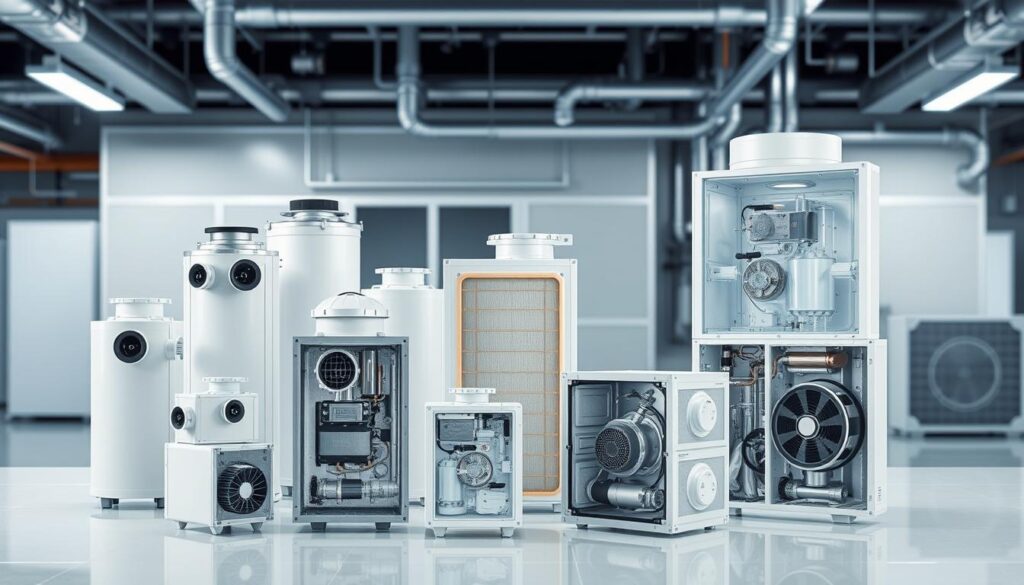
Liquid line driers are the most common type, installed between the condenser and expansion valve. They are ideal for removing moisture and trapping particles in residential and commercial units4. Suction line driers, on the other hand, are crucial for systems recovering from compressor failure, as they prevent contaminants from re-entering the compressor4.
Bi-flow driers are specifically designed for heat pump systems, ensuring effective filtration regardless of the refrigerant flow direction4. Each type serves a unique purpose, so choosing the right one is essential for your system’s needs.
Analyzing Industry Research and Data on Desiccants and Filtration Media
Desiccants like molecular sieves, activated alumina, and silica gel play a vital role in moisture absorption. Molecular sieves, for example, can hold up to 22% of their weight in water, making them highly effective4. Activated alumina excels in acid neutralization, protecting your system from corrosion4.
Research shows that combining these materials enhances performance. For instance, a blend of 80% molecular sieve and 20% activated alumina is ideal for high-temperature systems5. This ensures long-lasting protection and minimizes maintenance costs.
Using Long-Tail Search Queries to Understand Compatibility and Performance
Long-tail queries like “best filter drier for R410A systems” or “how to size a suction line drier” can guide your decision-making. These searches often reveal specific compatibility and performance insights. For example, DML filter driers are optimized for HFC refrigerants and offer high moisture removal capacity5.
By addressing these queries, you can ensure your system operates efficiently and avoid issues like restricted flow or acid formation. Regular monitoring and timely replacement are also key to maintaining peak performance.
Installation Insights and Maintenance Best Practices for Filter Driers
Proper installation and maintenance of your HVAC components can make all the difference in system performance. A well-placed and maintained component ensures smooth refrigerant flow, prevents pressure drop, and extends the life of your unit. Let’s dive into the best practices for installation and upkeep.
Optimal Placement in the Liquid Line for Maximum Efficiency
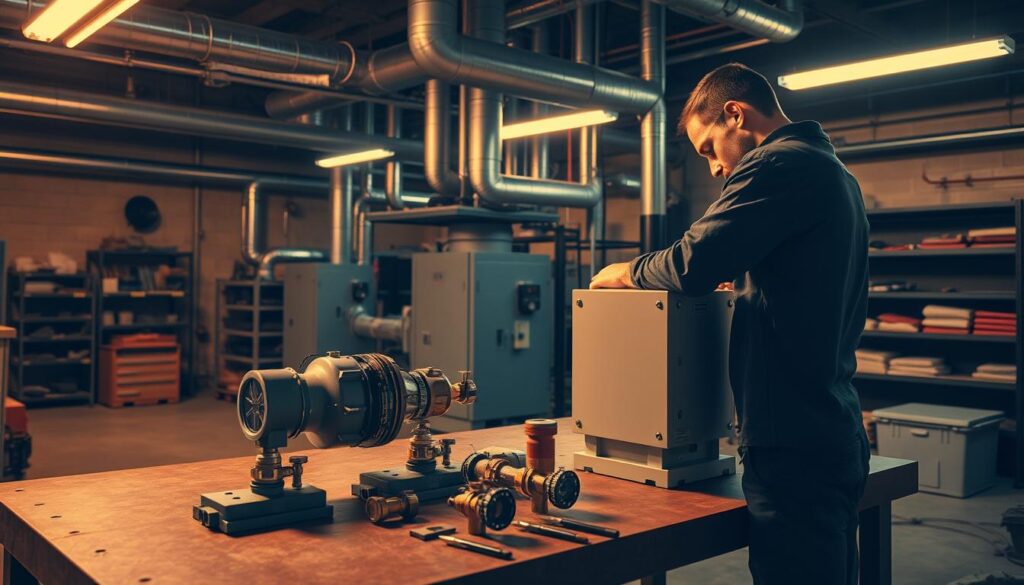
Placement is crucial for maximizing efficiency. Install the component vertically in the liquid line, with downward flow, to ensure proper moisture and particle removal. Positioning it near the metering device, such as the expansion valve, enhances its effectiveness6.
Incorrect placement can lead to contamination or restricted flow, reducing system performance. For example, horizontal installation may cause uneven distribution of desiccants, compromising their ability to absorb moisture7.
Practical Tips for Installation and Maintenance
Follow these steps for optimal installation:
- Ensure the component is compatible with your refrigerant type and system size.
- Use proper brazing techniques to avoid leaks and maintain system integrity.
- Check for signs of wear or damage before installation, such as cracks or corrosion.
Regular maintenance is equally important. Inspect the component annually for signs of clogging or reduced efficiency. Replace it every 2-3 years, or as recommended by the manufacturer, to maintain peak performance7.
By following these guidelines, you can prevent costly repairs and keep your HVAC system running smoothly. Next, we’ll explore how to identify issues and enhance efficiency through preventive measures.
Identifying Filter Drier Issues and Enhancing System Efficiency Through Preventive Measures
Is your HVAC system showing signs of inefficiency? It might be time to check its critical components. Early detection of problems can save you from costly repairs and ensure your system runs smoothly. Let’s explore the warning signs and practical steps to maintain peak performance.
What Are the Specific Signs of a Failing Filter Drier?
Recognizing the early warning signs can prevent major system failures. Here are some common indicators:
- Fluctuating Temperatures: If your system struggles to maintain consistent cooling or heating, it could be due to restricted refrigerant flow8.
- Unusual Noises: Hissing or bubbling sounds may indicate a pressure drop or refrigerant leak9.
- Increased Energy Bills: A failing component forces your system to work harder, leading to higher energy consumption.
- Frost or Cold Spots: Localized frost on the component suggests severe restriction and insufficient refrigerant flow9.
How to Analyze Pressure Drop Data and Moisture Levels for Early Detection
Monitoring key metrics can help you catch issues before they escalate. Here’s how:
- Pressure Drop: A drop of more than 2 psi indicates the component is restricting flow8. Use a gauge to measure this regularly.
- Moisture Levels: Excessive moisture can lead to acid formation and corrosion. Check for signs like bubbling in the sight glass9.
- Temperature Readings: High discharge temperatures (up to 215°F) and low evaporator pressures (as low as 1.8 psig) are red flags9.
By addressing these issues promptly, you can prevent major damage and extend the life of your HVAC system. Regular maintenance and timely replacement of critical components are key to long-term efficiency.
Conclusion
Keeping your HVAC system in top shape requires attention to detail and proactive care. By managing moisture levels and ensuring proper installation, you can prevent costly repairs and maintain efficiency. Regular checks for signs of wear, like fluctuating temperatures or unusual noises, are essential for early detection of issues10.
Monitoring refrigerant flow and pressure drop can help you catch problems before they escalate. For example, a drop of more than 2 psi indicates restricted flow, which can lead to system inefficiency11. Addressing these issues promptly ensures your unit operates smoothly and extends its lifespan.
Take action today by scheduling routine maintenance and consulting a professional technician if needed. Share your experiences or questions—we’re here to help you keep your system running at its best. Together, we can ensure your comfort and peace of mind.
FAQ
What does a filter drier do in an HVAC system?
Where should I install a filter drier in my refrigeration unit?
How do I know if my filter drier is failing?
What’s the difference between liquid line and suction line driers?
Can I use any filter drier for my HVAC unit?
How often should I replace my filter drier?
What are bi-flow driers, and when should I use them?
How does a filter drier improve system efficiency?
What’s the role of desiccants in a filter drier?
Can a filter drier handle both moisture and acid removal?
Source Links
- How Filter Driers Work
- A guide to understanding filter-drier functions and types
- What Are Filter Driers? – Today’s Homeowner
- What is a Filter Drier?
- DML / DCL hermetic filter driers, HFC optimized
- The Role and Importance of Filter Driers in Industrial Cooling Systems – Tunelgroup
- What Is a Filter Drier HVAC And Its Big Impact?
- Troubleshooting Filter Driers — Part 2
- How to Diagnose Partially Restricted Filter Driers
- Filter Driers: The First Line Of System Protection
- Filter-Driers And HFC Refrigerants


0 Comments