
Stepping into a modern HVAC facility, you’re greeted by the hum of advanced equipment and crisp, cool air. Yet, many professionals face challenges like rising energy costs, outdated systems, and safety concerns. Propane-based systems offer a sustainable alternative, combining eco-friendliness with high performance1.
These systems are not only efficient but also align with tightening environmental regulations. For technicians, understanding proper handling and installation is crucial for success. With a global warming potential (GWP) of just 3, propane stands out as a future-proof solution2.
This guide is designed to help you navigate the transition, offering actionable insights and real-world protocols. Whether you’re upgrading equipment or training your team, propane-based systems can transform your cooling system.
Key Takeaways
- Propane-based systems are eco-friendly with a GWP of 32.
- They offer significant energy savings and operational cost reductions1.
- Proper training is essential for safe handling and installation.
- These systems comply with current and future environmental regulations.
- They are versatile, suitable for commercial, residential, and transportation applications1.
Getting Started with R290 in HVAC: Why It Matters for Your System
Modern cooling systems are evolving, and propane-based options are leading the charge. With a global warming potential (GWP) of just 3, these systems are a sustainable choice for both residential and commercial applications3. But what makes them stand out in today’s HVAC landscape?
What Makes Propane a Game-Changer in Modern Refrigeration?
Propane-based systems outperform traditional synthetic options in several ways. They offer superior heat transfer properties, which enhance overall system performance3. Additionally, their low GWP minimizes environmental impact, making them a future-proof solution as regulations tighten4.
Compared to alternatives like HFO and A2L, propane stands out for its energy efficiency and eco-friendliness. For example, while R-410A has a GWP of 2,088, propane’s GWP is just 33. This significant difference makes it a preferred choice for reducing greenhouse gas emissions.
How Does This Natural Option Enhance Energy Efficiency?
Propane-based systems are designed to optimize energy use. Their efficient heat transfer capabilities reduce the workload on your cooling equipment, leading to lower energy costs3. This not only saves money but also extends the lifespan of your system.
Here’s a quick comparison of propane with other refrigerants:
| Refrigerant | GWP | Energy Efficiency |
|---|---|---|
| Propane (R-290) | 3 | High |
| R-410A | 2,088 | Moderate |
| R-134a | 1,430 | Low |
By choosing propane, you’re investing in a system that aligns with environmental regulations while delivering top-tier performance4. Whether you’re a technician or a homeowner, understanding its benefits can help you make informed decisions for your cooling needs.
Enhancing Safety and Handling: Expert Tips for Working with R290 Refrigerant
When working with advanced cooling systems, safety is the top priority. Propane-based systems, while efficient, require careful handling due to their flammability. Understanding the risks and following best practices can make all the difference.
Which Safety Precautions Should You Never Skip?
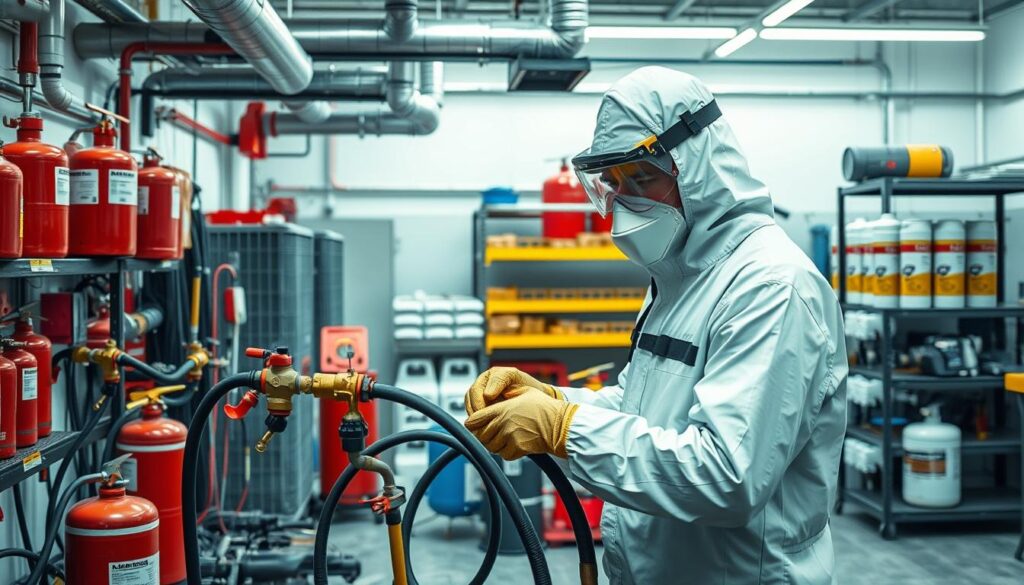
Before starting any work, ensure proper ventilation in the area. Use an electronic combustible gas detector to monitor for leaks. These tools are essential for identifying potential hazards before they escalate5.
Always wear personal protective equipment (PPE) like gloves and safety goggles. This minimizes the risk of direct contact or accidental splashes. Additionally, keep a fire extinguisher nearby in case of emergencies5.
Perform a thorough site survey to detect ignition sources. Electrical equipment should be at least 1.5 meters away from the system to reduce risks6. Double-check all connections and seals to prevent leaks.
Essential Tools and Training for Handling Flammable Refrigerants
Specialized tools are a must for working with propane-based systems. Use one-foot hoses and hydrocarbon-approved fans to ensure safe handling. Spark-resistant tools are also critical to avoid ignition risks7.
Training is non-negotiable. Technicians must complete comprehensive programs to understand the unique challenges of flammable refrigerants. This includes learning proper recovery procedures and charge management5.
Here’s a quick comparison of essential safety tools:
| Tool | Purpose |
|---|---|
| Combustible Gas Detector | Monitors for leaks |
| Hydrocarbon-Approved Fan | Ensures proper ventilation |
| Spark-Resistant Tools | Prevents ignition risks |
By following these guidelines, you can handle propane-based systems safely and efficiently. Always prioritize safety and stay updated on the latest protocols to ensure optimal performance6.
r290 refrigerant guide: Maximizing HVAC Efficiency and Environmental Benefits
Optimizing your HVAC system starts with understanding the delicate balance of refrigerant charge. Even slight variations can impact performance, energy efficiency, and environmental outcomes. By following precise protocols, you can achieve optimal results while maintaining safety and compliance.
Strategies to Optimize Refrigerant Charge and System Performance
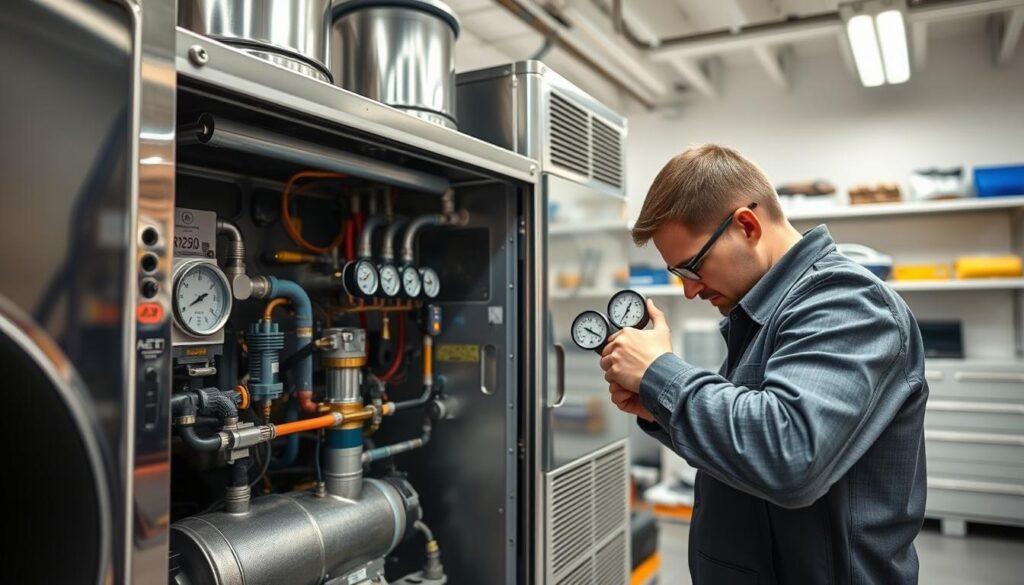
Accurate refrigerant charge is critical for efficient operation. Start by adhering to manufacturer specifications. Use specialized equipment to measure and adjust charge levels precisely. This ensures your system operates at peak efficiency.
Regular leak tests are essential. Advanced gas detectors can identify even minor leaks, preventing performance drops and environmental harm. Always perform these tests during routine maintenance to maintain system integrity.
Here’s a quick guide to key steps for optimizing charge:
- Measure charge levels using calibrated tools.
- Adjust according to manufacturer guidelines.
- Perform leak tests with advanced detectors.
- Document all adjustments for future reference.
Proper training for technicians is equally important. They must understand the sensitivity of these systems and follow strict protocols during charging and recovery processes.
Best Practices for Handling and Maintenance
Handling flammable refrigerants requires caution. Use spark-resistant tools and ensure proper ventilation. These precautions minimize risks and enhance safety during maintenance.
Routine maintenance is key to long-term efficiency. Schedule regular inspections to check for wear and tear. Replace worn components promptly to avoid performance issues. This proactive approach extends the lifespan of your system and reduces energy costs.
Here’s a comparison of essential maintenance tools:
| Tool | Purpose |
|---|---|
| Calibrated Charge Meter | Ensures precise charge levels |
| Gas Detector | Identifies leaks quickly |
| Spark-Resistant Tools | Prevents ignition risks |
By following these strategies, you can maximize your HVAC system’s efficiency while adhering to environmental regulations. Proper handling and maintenance ensure safety, performance, and sustainability.
Exploring Alternatives: Can HFO and A2L Refrigerants Rival R290?
As the HVAC industry evolves, the debate over the best cooling solutions intensifies. Propane-based systems have gained attention, but alternatives like HFO and A2L refrigerants are also making waves. Understanding their pros and cons can help you make informed decisions for your system.
What Are the Pros and Cons of HFO and A2L Options?
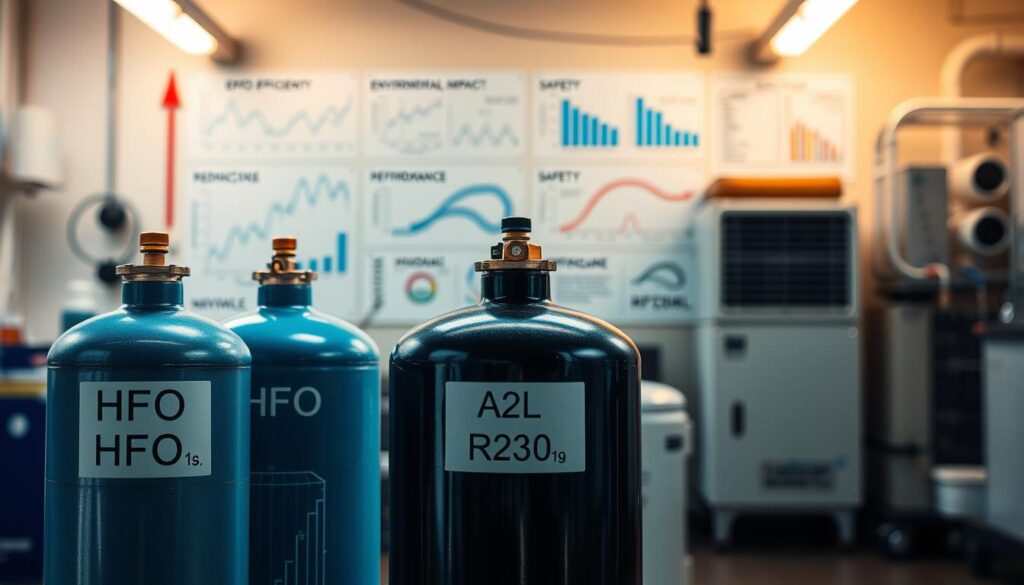
HFO refrigerants, such as R1234ze(E), offer a low global warming potential (GWP) of just 1, making them an eco-friendly choice8. They also require significantly less energy to ignite compared to propane, enhancing safety during handling8. However, their higher cost and lower energy efficiency in some applications can be drawbacks.
A2L refrigerants, like R-32 and R-454B, strike a balance between performance and environmental impact. With a GWP below 300, they comply with stricter regulations while delivering reliable performance9. Yet, their mild flammability requires additional training and precautions for technicians9.
How Do Industry Trends Impact Your Refrigeration Choices?
Regulatory changes are driving the shift toward low-GWP options. For example, EC Regulation 517/2014 mandates a reduction of HFCs to 21% of 2015 levels by 20308. This has accelerated the adoption of alternatives like HFO and A2L in both commercial and residential applications.
Energy efficiency is another key factor. Field tests show that R1234ze(E) has a higher coefficient of performance (COP) than many HFC systems, making it a strong contender for reducing operational costs8.
Real-Life Insights for Upgrading Your HVAC System Effectively
When upgrading your system, consider factors like safety, efficiency, and compliance. For instance, a commercial facility in California successfully transitioned to R-454B, reducing its carbon footprint while maintaining high performance9.
Here’s a quick comparison of key refrigerants:
| Refrigerant | GWP | Flammability | Energy Efficiency |
|---|---|---|---|
| R290 (Propane) | 3 | High | High |
| R1234ze(E) (HFO) | 1 | Low | Moderate |
| R-454B (A2L) | 466 | Mild | High |
By staying informed about industry trends and evaluating your specific needs, you can choose the best alternative for your HVAC system. Always prioritize safety and ensure your team is properly trained for handling these innovations10.
Your Next Steps Toward a Smarter, Safer HVAC Future
The future of HVAC systems is here, and it’s smarter, safer, and more sustainable than ever. By adopting innovative practices, you can enhance performance while reducing environmental impact. Start by scheduling a system audit to identify areas for improvement and ensure your equipment operates at peak efficiency11.
Invest in specialized training for your team. Proper handling and maintenance are crucial for safety and long-term savings. Stay updated on evolving regulations, like California’s GWP limit of 750, to ensure compliance and future-proof your system12.
Consult reputable manufacturers for upgrades that align with global warming potential standards. By taking these steps, you’ll create a more efficient and eco-friendly environment for cooling and refrigeration.
Ready to transform your HVAC system? Contact experts today to explore solutions that prioritize safety, sustainability, and cutting-edge performance.
FAQ
What makes R290 a standout choice for modern refrigeration systems?
How does R290 improve energy efficiency in HVAC systems?
What safety precautions are essential when handling R290?
What tools and training are needed for working with R290?
How can you optimize refrigerant charge and system performance with R290?
What are the pros and cons of HFO and A2L refrigerants compared to R290?
How do industry trends influence your choice of refrigerants?
What steps should you take to upgrade your HVAC system effectively?
Source Links
- The Ultimate Guide to R290 Refrigerant Systems | CK Supply
- General – How R290 is Changing the Refrigeration Industry: A Comprehensive Guide
- Eco-Friendly Refrigerants For HVAC: Best 4 Refrigerants In Canada
- Refrigerants Explained
- Working Safely with HC Refrigerants
- New BESA technical guidance outlines propane system best practice – Refrigeration and Air Conditioning
- Propane Hydrocarbon Refrigerant Safety Guide
- Module 112: The application of alternative refrigerants to meet F-gas requirements – CIBSE Journal
- Get the Lowdown on Low GWP
- Streamlining the Low-GWP Refrigerant Transition with Smart Tools
- New Safety Requirements for Low GWP Refrigerants



0 Comments