Ever wondered how your home stays cool on a scorching summer day? The answer lies in the refrigeration cycle, a process that keeps your space comfortable by absorbing and rejecting heat. This cycle is the backbone of your air conditioning system, ensuring efficient cooling year-round.
At its core, the cycle relies on a refrigerant that moves through key components like the compressor, condenser, and evaporator. The compressor acts as the heart, pumping the refrigerant to transfer heat from inside your home to the outside air. It’s a seamless process that keeps your living space at the perfect temperature.
Understanding this system not only helps you troubleshoot issues but also saves energy and reduces bills. For instance, over 90% of the time, chillers operate at less than peak load, meaning efficiency is crucial for optimal performance1. Ready to dive deeper? Let’s explore how each component works together to keep you cool.
Key Takeaways
- The refrigeration cycle is essential for maintaining home comfort by transferring heat.
- Key components include the compressor, condenser, and evaporator.
- Efficiency is critical, as most systems operate below peak load.
- Understanding your system can help reduce energy bills.
- Preventative maintenance ensures long-term performance.
A Friendly Introduction: Why the Refrigeration Cycle Matters for Your Home Comfort
Your home’s comfort on a hot day relies on a process you might not even notice. The refrigeration cycle is the unsung hero that keeps your space cool by absorbing and releasing heat. Without it, your air conditioner would struggle to maintain a comfortable temperature.
Think of it like a well-oiled machine. The refrigerant flows through components like the compressor and condenser, transferring heat from inside your home to the outdoors. This seamless process ensures your living space stays cool, even during the hottest months.
How a Well-Maintained System Can Save You Energy and Money
Regular maintenance is key to keeping your cooling system efficient. A well-tuned unit uses less energy, which translates to lower bills. For example, systems with low refrigerant levels can increase energy costs by up to 30%2.
Simple tasks like cleaning the condenser coils or checking for leaks can make a big difference. Addressing these issues early prevents your system from working harder than it needs to, saving you money in the long run.
When and Why Your System Might Need a Tune-Up
Your cooling system might need attention if you notice warm air blowing from the vents or ice buildup on the evaporator coils. These are signs that the refrigeration cycle isn’t functioning properly.
Refrigerant leaks, for instance, can reduce efficiency by up to 15%2. If you hear hissing or bubbling noises, it’s time to call a professional. Regular tune-ups not only fix these issues but also extend the life of your system.
By understanding how your cooling system works, you can take steps to keep it running smoothly. This ensures your home stays comfortable while saving you money on energy bills.
Breaking Down the hvac cycle guide: Understanding Each Essential Component
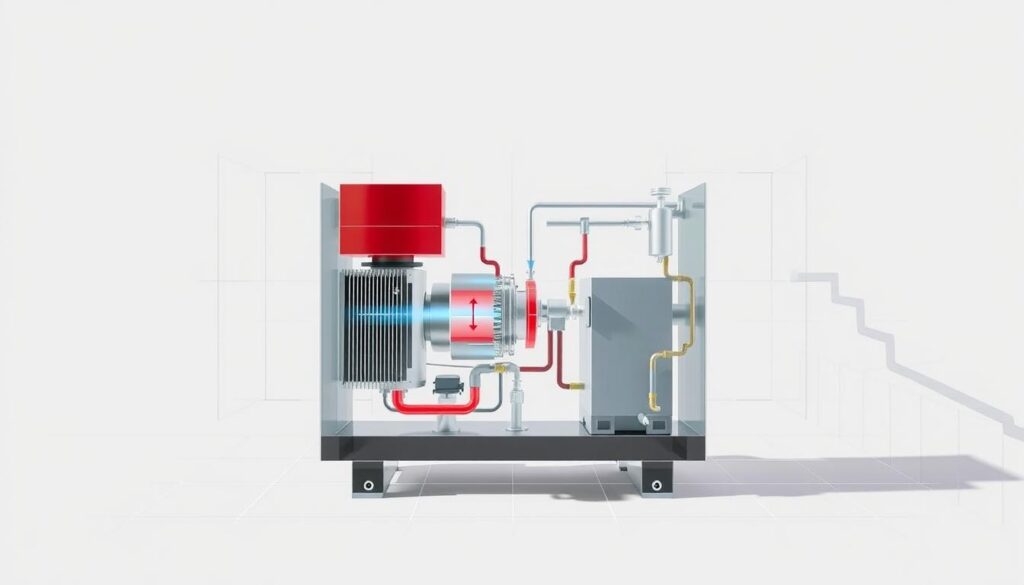
The secret to your home’s comfort lies in a few key components working together. These parts, like the compressor, condenser, expansion device, and evaporator, ensure your cooling system runs smoothly. Let’s explore how each one contributes to keeping you cool.
The Compressor’s Role as the Heart of Your Cooling System
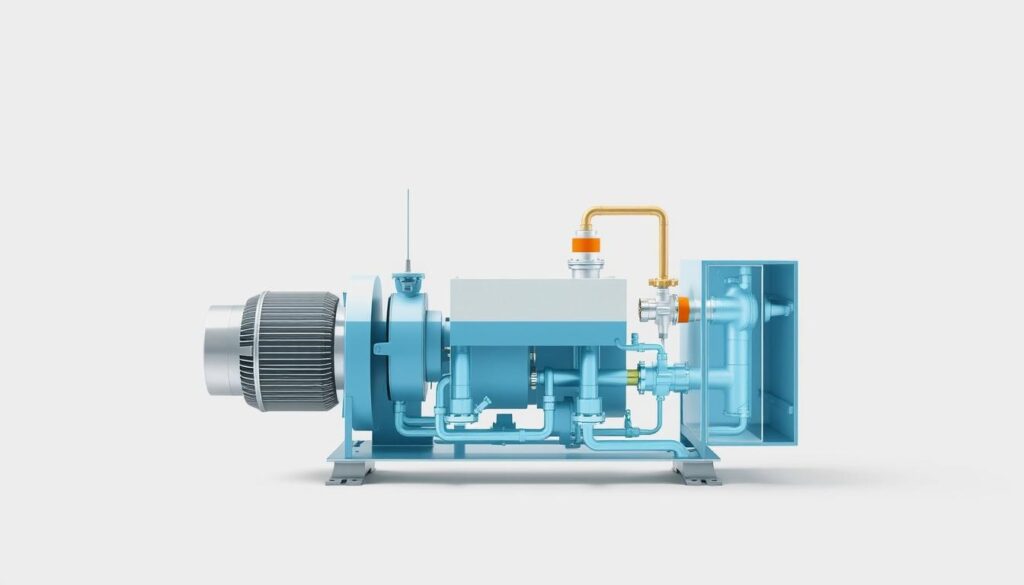
Think of the compressor as the heart of your cooling system. It pumps refrigerant through the entire setup, ensuring heat is transferred efficiently. The refrigerant enters as a low-pressure gas and is compressed into a high-pressure, heated gas3.
Without the compressor, the entire process would stop. It’s the driving force that keeps the refrigeration cycle moving, making it a critical part of your system.
How the Condenser, Expansion Device, and Evaporator Work Together
Once the refrigerant leaves the compressor, it moves to the condenser. Here, the high-pressure gas is converted into a liquid while releasing heat into the outside air3. This step is crucial for removing heat from your home.
Next, the expansion device lowers the pressure of the refrigerant before it enters the evaporator. This prepares it to absorb heat from inside your home, turning it back into a gas3.
Finally, the evaporator completes the cycle by absorbing heat and cooling the air. Each component has a unique job, and their teamwork ensures your home stays comfortable.
| Component | Role |
|---|---|
| Compressor | Pressurizes refrigerant, driving the cycle |
| Condenser | Converts gas to liquid, releasing heat |
| Expansion Device | Lowers refrigerant pressure |
| Evaporator | Absorbs heat, cooling the air |
Understanding these components helps you recognize when something isn’t working right. For example, if your system is blowing warm air, it could be a sign of low refrigerant levels or a faulty compressor3. Regular maintenance ensures each part performs its job efficiently, saving you energy and money.
How Refrigerant Absorbs and Releases Heat: Science, Data, and Real-Life Analogies
The key to your home’s comfort lies in a fascinating scientific process. At the heart of your cooling system is the refrigerant, a special substance that absorbs and releases heat to keep your space cool. Think of it as a “magic ingredient” that changes states to transfer heat efficiently.
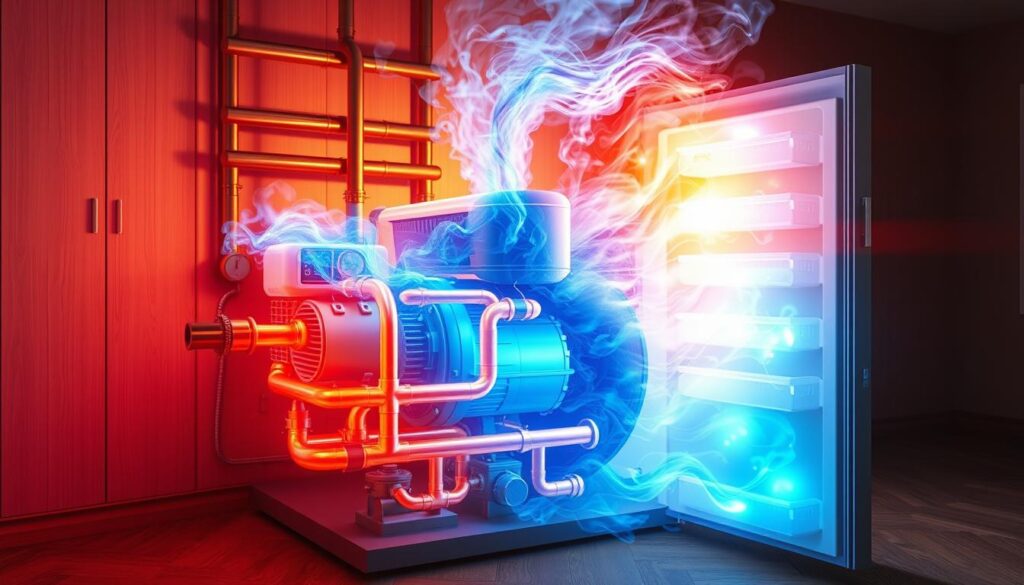
When the refrigerant absorbs heat from your indoor air, it turns from a liquid into a gas. This process cools the air, making your home feel refreshing. The gas then travels to the outdoor unit, where it releases the absorbed heat and turns back into a liquid. This cycle repeats to maintain a comfortable temperature inside your home4.
Exploring the Magic of Refrigerants for Efficient Heat Transfer
Refrigerants work like a pressure cooker in reverse. When pressure increases, so does the temperature. Conversely, lowering the pressure reduces the temperature. This principle allows the refrigerant to absorb heat indoors and release it outdoors4.
For example, R-410A, a common refrigerant, has a boiling point of -55°F at atmospheric pressure. In your cooling system, it’s pressurized to a liquid state, allowing it to absorb heat efficiently. When the pressure drops, it turns into a gas, releasing the heat it absorbed4.
Understanding Pressure and Temperature Changes in Cooling Processes
Pressure and temperature changes are the backbone of the cooling process. When the refrigerant is compressed, it heats up and moves to the outdoor unit. There, it cools down and condenses into a liquid, releasing heat into the outside air4.
This process is similar to how a freezer works. Even at 0°F, the refrigerant retains 85-90% of its thermal energy, ensuring efficient cooling4. By understanding these principles, you can better appreciate how your system keeps your home comfortable.
Efficient heat transfer is crucial for maintaining your cooling system’s performance. Regular maintenance ensures the refrigerant levels are optimal, preventing energy waste and keeping your home cool all summer long.
Practical Insights on Troubleshooting Common HVAC Refrigeration Cycle Challenges
When your cooling system acts up, it’s easy to feel overwhelmed, but understanding common issues can save you time and money. Many problems, like refrigerant leaks or frozen coils, have clear signs that you can spot early. Addressing these issues promptly keeps your home comfortable and your energy bills low.
Identifying Signs of Refrigerant Leaks, Frozen Coils, and Low Pressure
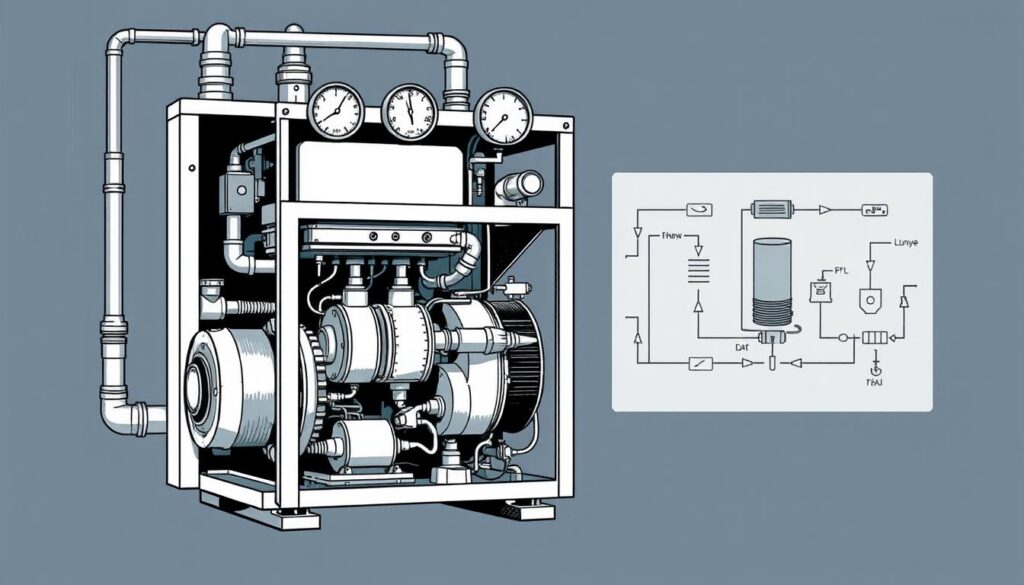
Refrigerant leaks are a common issue, often signaled by hissing noises or a drop in cooling efficiency. Low refrigerant levels can increase energy costs by up to 30%5. If you notice warm air blowing from your vents, it’s time to check for leaks.
Frozen evaporator coils are another red flag. This usually happens when airflow is restricted or refrigerant levels are low. Ice buildup on the coils can reduce your system’s efficiency by up to 15%5. Regularly cleaning the coils can prevent this problem.
Low pressure in your system can also cause issues. Blocked filters or closed valves are often the culprits, accounting for 25% of refrigeration system problems6. If your system is short cycling or struggling to cool, check the pressure levels.
Preventative Maintenance Tips for Enhancing Your HVAC System’s Efficiency
Regular maintenance is the best way to keep your cooling system running smoothly. Here are some practical tips:
- Clean the coils: Dirty condenser coils can reduce efficiency by up to 35%6. Clean them at least once a year.
- Check refrigerant levels: Low levels can strain your system. If you suspect a leak, call a professional.
- Inspect filters: Blocked filters are responsible for 20% of system failures6. Replace them every 1-3 months.
- Monitor pressure: Keep an eye on discharge and suction pressure to catch issues early.
By staying proactive, you can avoid costly repairs and keep your home comfortable. Regular check-ups not only extend the life of your system but also save you money on energy bills.
If you notice persistent issues like abnormal noises or high discharge pressure, it’s best to call a professional. They can diagnose and fix complex problems, ensuring your system runs efficiently.
Remember, a well-maintained cooling system is key to a comfortable home. Take action today to prevent problems tomorrow.
Staying Ahead with Industry Trends and Data-Driven HVAC Maintenance Strategies
Keeping your home comfortable doesn’t have to be a mystery—staying updated with the latest trends can make all the difference. The cooling industry is evolving rapidly, with new technologies and data-driven strategies enhancing the refrigeration cycle. By leveraging these advancements, you can optimize your system’s performance and save on energy costs.
Leveraging Research and Industry Statistics for Better System Performance
Research shows that integrating advanced technologies like predictive maintenance can reduce energy consumption by up to 25%7. Tools like IoT sensors provide real-time data, helping you monitor your system’s efficiency and address issues before they escalate. For example, the global energy recovery ventilator market is projected to grow at a CAGR of 14.3%, reaching USD 9.8 billion by 20318.
Regular maintenance, such as cleaning air ducts and replacing filters, can improve efficiency by 5-15%7. By combining these practices with data analytics, you can ensure your system operates at peak performance.
Balancing Innovative Cooling Technologies with Traditional Techniques
While new technologies offer exciting possibilities, traditional methods remain essential. For instance, sealing ductwork leaks can significantly improve efficiency, reducing energy consumption by up to 30%7. Similarly, maintaining accurate thermostat settings ensures your system doesn’t work harder than necessary.
Here’s a comparison of traditional and innovative approaches:
| Traditional Techniques | Innovative Technologies |
|---|---|
| Regular filter replacement | IoT sensors for real-time monitoring |
| Annual professional inspections | Predictive maintenance using AI |
| Cleaning air ducts | Energy recovery ventilators |
By integrating both approaches, you can maximize your system’s lifespan and efficiency. For example, training in-house staff on basic maintenance tasks can extend system longevity by up to 20%7.
Staying informed about industry trends and adopting a balanced approach ensures your home stays comfortable while saving energy and money. Embrace innovation, but don’t overlook the value of time-tested practices.
Conclusion
Understanding how your cooling system works can make a big difference in your home’s comfort and energy bills. The refrigeration cycle relies on key components like the refrigerant, which absorbs and releases heat to keep your space cool. Regular maintenance, such as cleaning coils and checking pressure, ensures your system runs efficiently9.
By staying proactive, you can avoid common issues like refrigerant leaks or frozen coils. Simple steps, like replacing filters every 1-3 months, can improve air quality and reduce energy costs9. If you notice persistent problems, consulting a professional ensures your system stays in top shape.
Share these insights with friends or explore additional resources to deepen your knowledge. Taking care of your cooling system not only saves money but also keeps your home comfortable year-round. You’ve got this!
FAQ
How does the refrigeration cycle keep my home cool?
What role does the compressor play in the cooling process?
Why is refrigerant important for heat transfer?
What are common signs of a refrigerant leak?
How can I improve my HVAC system’s efficiency?
What happens if my expansion valve fails?
How does the evaporator coil work in the cooling process?
Why is my condenser coil important?
What’s the difference between high-pressure and low-pressure sides of the system?
How often should I schedule HVAC maintenance?
Source Links
- Chiller Compressor: Refrigeration Cycle Analysis and Meanline Design
- What Is AC Refrigerant and How Does it Work?
- Understanding the Refrigerant Cycle – Trane®
- How Do Heat Pumps Get Heat From Cold Air? Part 2 – GreenBuildingAdvisor
- Troubleshooting the Refrigeration Cycle for Mechanical Problems
- Refrigeration System Troubleshooting: A Practical guide – Refcon hvac
- Manifestly Checklists | HVAC Maintenance Checklist
- Top 10 HVAC Industry Trends in 2025 | StartUs Insights
- Understanding Your HVAC: A Comprehensive Guide for Homeowners – A&T Mechanical | Edmond HVAC


0 Comments