
Have you ever opened your freezer only to find a thick layer of ice covering your food? This common issue can disrupt your refrigerator’s performance, leading to higher energy bills and potential food spoilage. Frost buildup on evaporator coils restricts airflow, making your system work harder to maintain the right temperature1.
Understanding how your freezer operates can help you prevent these problems. The refrigeration process relies on key components like the evaporator and condenser coils, along with the compressor, to keep your food fresh. When these parts are covered in ice, the entire system becomes less efficient2.
Optimizing your freezer’s defrosting process not only saves energy but also extends the life of your appliance. By learning how to manage frost buildup, you can protect your stored items and reduce unnecessary costs. Let’s dive into the details to help you keep your freezer running smoothly.
Key Takeaways
- Frost buildup on coils reduces airflow and increases energy consumption.
- Proper defrosting prevents food spoilage and maintains optimal temperatures.
- Key components like evaporator coils and compressors are vital for efficient cooling.
- Regular maintenance can extend the life of your freezer and save on repair costs.
- Understanding the defrost process helps you optimize your refrigerator’s performance.
Understanding the Fundamentals of Refrigeration and Defrosting
Ever wondered why your freezer struggles to maintain its temperature? The answer lies in the refrigeration cycle, a process that keeps your food fresh by removing heat from the interior. This cycle involves four key components: the compressor, condenser, expansion valve, and evaporator coil. Each plays a vital role in cooling your freezer efficiently3.
How Does Your HVAC Refrigeration Cycle Work?
The refrigeration cycle begins with the compressor, which pressurizes the refrigerant, turning it into a high-temperature gas. This gas then flows to the condenser, where it releases heat and transforms into a liquid. Next, the expansion valve reduces the pressure, cooling the refrigerant further. Finally, the evaporator coil absorbs heat from the freezer, turning the refrigerant back into a gas4.
This continuous process ensures your freezer stays cold. However, when frost accumulates on the evaporator coil, it disrupts airflow and reduces efficiency. Understanding this cycle helps you see why regular defrosting is essential.
What Causes Ice Buildup and Frost Accumulation?
Ice buildup on the evaporator coil often results from humidity entering the freezer. When warm air meets the cold coils, moisture condenses and freezes, forming frost. Over time, this accumulated ice restricts airflow, forcing your freezer to work harder3.
Another factor is temperature differentials. If the freezer door is left open or the seal is faulty, warm air enters, increasing the likelihood of ice buildup. Proper maintenance and regular defrosting can prevent these issues, ensuring your freezer operates smoothly.
| Component | Role in Refrigeration Cycle |
|---|---|
| Compressor | Pressurizes refrigerant into a high-temperature gas |
| Condenser | Releases heat, turning refrigerant into a liquid |
| Expansion Valve | Reduces pressure, cooling the refrigerant |
| Evaporator Coil | Absorbs heat, turning refrigerant back into a gas |
Defrost Cycle Guide: Expert Insights on Manual and Automatic Defrost Methods
Managing ice buildup in your freezer can save you time and energy. Whether you’re dealing with a manual or automatic system, understanding the options helps you make the best choice for your needs. Let’s explore the pros and cons of each method to help you decide.
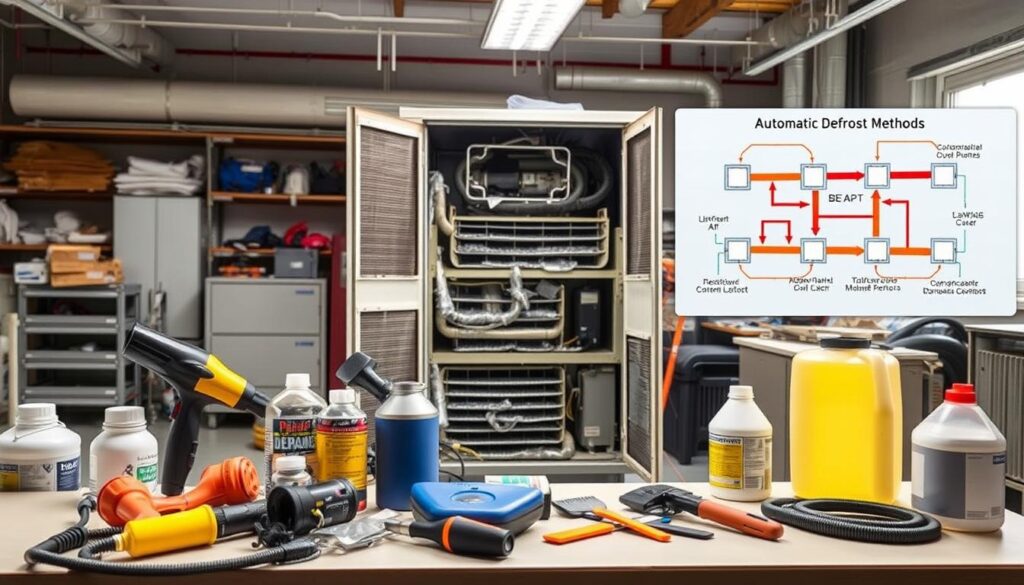
How Manual Defrosting Safeguards Temperature Stability
Manual defrosting requires you to turn off the freezer and let the ice melt naturally. This method ensures temperature stability, as there are no sudden temperature swings. It’s ideal for those who prefer hands-on maintenance and want to avoid the noise of automatic systems5.
However, manual defrosting can take up to 12 hours, depending on the ice buildup. Using a fan can speed up the process by pushing cold air out6. While it’s more time-consuming, it’s energy-efficient and extends the life of your compressor.
Exploring Auto Defrost Techniques Like Electric and Hot Gas Methods
Automatic defrost systems use heaters or hot gas to melt ice without manual intervention. Electric defrost typically takes about 30 minutes, making it a convenient option for busy households6.
Hot gas methods are even faster, using refrigerant to heat the coils directly. While these systems are efficient, they can be noisier and may cause slight temperature fluctuations5. If you value convenience over energy savings, automatic defrost might be the better choice.
When to Use Off-Cycle Defrost Strategies
Off-cycle defrost is a hybrid approach that combines manual and automatic methods. It’s ideal for reducing energy consumption while maintaining temperature stability. This method is particularly useful in colder climates where ice buildup is frequent7.
By choosing the right defrost method, you can optimize your freezer’s performance and save on energy costs. Consider your lifestyle and freezer usage to make the best decision for your home.
Optimizing Energy Efficiency and Overall System Performance
Did you know that small adjustments to your freezer can lead to big energy savings? Properly managing your refrigerator freezer not only keeps your food fresh but also reduces your energy bills. Let’s explore how you can enhance your unit’s efficiency and performance.
One of the biggest energy drains in a freezer is ice buildup. When frost accumulates on the coils, it restricts airflow, forcing the unit to work harder. Studies show that this can reduce efficiency by up to 15%8. Regularly clearing ice can prevent this issue and save energy.
Another key factor is maintaining proper temperature settings. Setting your freezer too cold wastes energy, while too warm can lead to food spoilage. Aim for a temperature of 0°F (-18°C) for optimal performance. Also, check your door seals. A faulty seal allows warm air to enter, increasing heat and ice buildup9.
Did you know that even a few extra minutes saved per defrost cycle can add up to significant energy savings? For example, in colder climates, a heat pump may consume an additional 200-300 kWh annually due to frost formation8. By optimizing defrost timing, you can reduce this waste.
Expert recommendations include using pressure and timing controls to fine-tune your unit’s performance. High-velocity airflow during defrost can reduce the number of cycles by up to 60%, translating to a 40% energy savings8. Think of it as tuning a car engine for maximum fuel efficiency.
Finally, monitor your unit’s performance through regular maintenance. Check for frost buildup, ensure proper airflow, and adjust settings as needed. By making these small changes, you can keep your refrigerator freezer running efficiently and save on energy costs.
Practical Tips for Effective HVAC Defrost Maintenance
Keeping your freezer in top shape doesn’t have to be complicated. With a few simple steps, you can ensure it runs efficiently and avoids common issues like ice buildup. Let’s explore how to choose the right defrost method, maintain your evaporator coils, and stay updated on the latest technologies.
How to Choose the Right Defrost Method for Your Freezer or Refrigerator
Selecting the best defrost method depends on your lifestyle and freezer type. For manual systems, turn off the unit and let the ice melt naturally. This method is energy-efficient but can take up to 12 hours10.
Automatic systems use heaters or hot gas to melt ice quickly. These are ideal for busy households but may cause slight temperature fluctuations11. Consider your needs and freezer usage to make the right choice.
Steps to Maintain Evaporator Coil and Prevent Ice Buildup
Regular maintenance is key to preventing ice buildup. Start by checking the temperature settings. Aim for 0°F (-18°C) to balance efficiency and food safety10.
Use warm water to speed up manual defrosting. Also, inspect the drain line for clogs. A clear drain ensures melted ice flows out smoothly, preventing future buildup11.
What Recent Trends Suggest About New Defrosting Technologies?
New technologies are making defrosting more efficient. For example, some systems now use gas to heat coils directly, reducing defrost time to just 10 minutes10.
Smart fridge systems are also emerging. These monitor temperature and humidity levels, automatically adjusting defrost cycles for optimal performance11. Staying updated on these trends can help you save energy and extend your freezer’s lifespan.
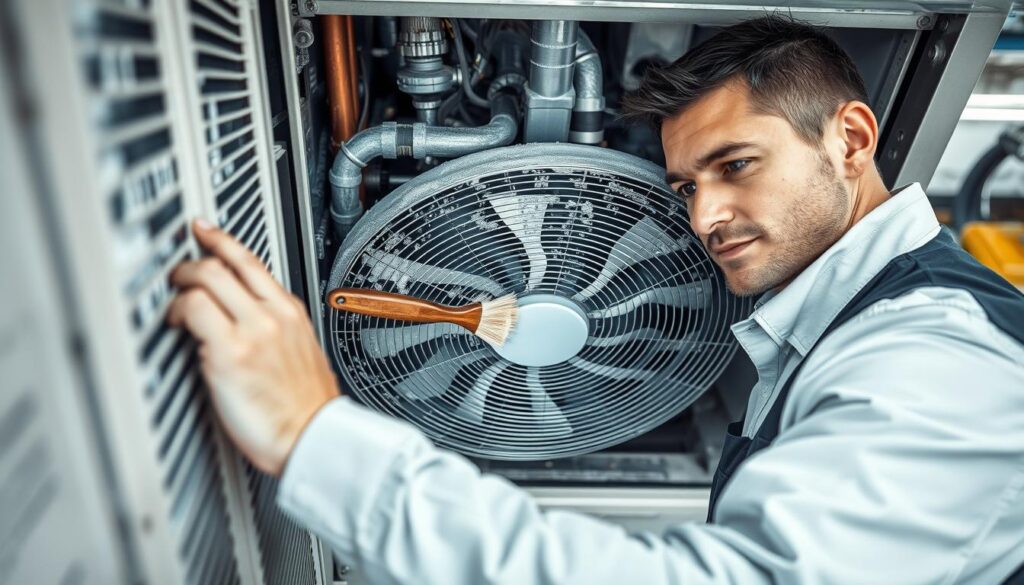
| Defrost Method | Pros | Cons |
|---|---|---|
| Manual | Energy-efficient, extends compressor life | Time-consuming (up to 12 hours) |
| Automatic (Electric) | Quick (30 minutes), convenient | May cause temperature fluctuations |
| Automatic (Hot Gas) | Very fast (10 minutes), efficient | Noisier, higher energy use |
Conclusion
A little attention to your freezer can go a long way in saving energy. By understanding how your fridge freezer works, you can optimize its performance and avoid unnecessary costs. Whether you prefer manual or automatic methods, the right approach ensures your coil stays frost-free and your system runs efficiently12.
Regular maintenance, like checking the setting and clearing ice buildup, keeps your unit in top shape. Small adjustments, such as monitoring the amount of frost on the coil, can prevent larger issues down the line13.
Take a moment to review your current practices. A thoughtful approach to maintenance not only extends your freezer’s life but also keeps your energy bills in check. With these tips, you’ll enjoy a reliable and cost-effective cooling system for years to come.
FAQ
How does the refrigeration cycle in my HVAC system work?
What causes ice buildup on the evaporator coil?
How does manual defrosting help maintain temperature stability?
What are the differences between electric and hot gas defrost methods?
When should I use off-cycle defrost strategies?
How can I choose the best defrost method for my freezer or refrigerator?
What steps can I take to maintain the evaporator coil and prevent ice buildup?
What are the latest trends in defrosting technologies?
Source Links
- Defrost Methods and Controls – Kalos Services
- Types of defrost in refrigeration – INTARCON
- Understanding the Refrigeration Cycle : A Guide to Cooling – Industrial Cold Room & Equipments – Frigo System
- Fundamentals of Mechanical Refrigeration Systems
- Self-Defrosting vs Manual Defrosting Freezer Comparison Guide
- How to Defrost Your Freezer in 8 Simple Steps
- How to Defrost a Heat Pump: 7 Steps (with Pictures) – wikiHow
- Alternative Defrost Strategies for Residential Heat Pumps
- What Is the Role of the Defrost Cycle in a Heat Pump? – True Blue Heating and Cooling
- The Heat Pump Defrost Cycle Explained
- Understanding Your Heat Pump’s Defrost Cycle
- Understanding Defrost Cycles on Refrigerators and Freezers | Blog
- The Defrost Cycle in MRCOOL Heat Pumps | Efficient HVAC Solutions

0 Comments