
Struggling to stay cool during hot summer days? A portable air conditioner might be the perfect solution for your cooling needs. Unlike traditional window units, these systems offer flexibility, allowing you to move them from room to room with ease. Imagine turning a sweltering afternoon into a comfortable retreat with just the push of a button.
Portable air conditioners are designed for quick installation, often requiring just a screwdriver and a window for the exhaust hose. They’re ideal for homes where permanent installations aren’t feasible. Plus, many models come with adjustable fan speeds and temperature controls, ensuring you can customize your cooling experience.
If you’re tired of dealing with bulky, inefficient air conditioner units, it’s time to explore the benefits of a portable alternative. Let’s dive into how to choose the right one for your space.
Key Takeaways
- Portable air conditioners offer flexibility and easy installation.
- They are ideal for cooling specific rooms or spaces.
- Adjustable settings provide personalized comfort.
- Energy-efficient models help reduce electricity costs.
- Regular maintenance ensures optimal performance.
Chill Out: Identifying Your Cooling Needs
When the heat hits unexpectedly, staying cool becomes a top priority. Understanding your specific cooling needs is the first step to finding the right solution. Whether it’s your bedroom, home office, or living room, each space has unique requirements.
Start by measuring your room’s dimensions. A general rule is to calculate 20 BTUs per square foot. For example, a 300-square-foot room needs around 6,000 BTUs. This ensures your unit has the right cooling capacity to keep you comfortable.
Choosing the wrong size can lead to inefficiency. An undersized unit will struggle to cool the space, while an oversized one may cycle on and off too often, wasting energy. Proper sizing also helps maintain optimal temperature and humidity levels.
Energy efficiency is another key factor. Look for models with a high Energy Efficiency Ratio (EER). Units with a higher EER consume less power, saving you money on electricity bills. Energy Star-certified models are a great option for maximizing energy efficiency.
Here’s a quick guide to help you determine the right BTU for your space:
| Room Size (Square Feet) | Recommended BTUs |
|---|---|
| 150-250 | 5,000 |
| 250-350 | 6,000 |
| 350-450 | 8,000 |
| 450-550 | 10,000 |
Consider your room’s specific needs. Is it a bedroom where quiet operation is essential? Or a home office where consistent cooling is a must? Features like remote control and programmable timers can enhance convenience and efficiency.
By understanding your cooling needs, you can choose a model that fits your lifestyle. Next, let’s explore how these units work and what makes them uniquely effective for your space.
Understanding the Ultimate Guide to Portable AC
Ever wondered how a portable air conditioner keeps your room cool without the hassle of permanent installation? These units are designed to provide flexibility and convenience, making them a popular choice for many homes. Let’s break down how they work and what makes them stand out.
What is a Portable Air Conditioner and How Does It Work?
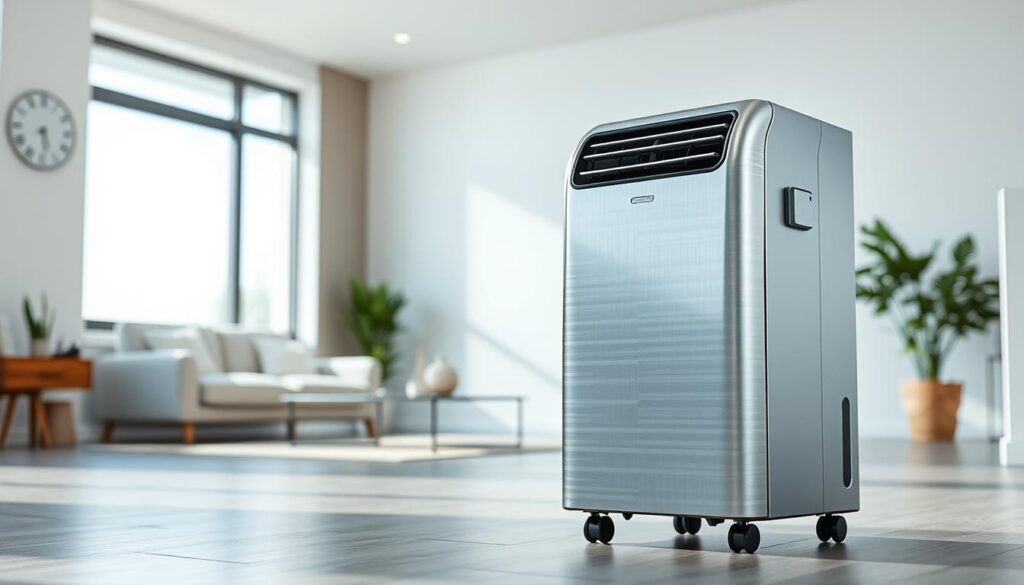
A portable air conditioner is a self-contained cooling system that you can move from room to room. Unlike traditional window units, it doesn’t require complex installation. Simply plug it in, attach the exhaust hose to a window, and you’re ready to go.
Here’s how it works: The unit pulls in warm air from the room, cools it using a refrigeration cycle, and then vents the hot air outside through the hose. Think of it like a mini fridge for your space—it removes heat and humidity, leaving you with cool, comfortable air.
Which Features Make Portable AC Units Uniquely Effective for Your Space?
Portable air conditioners come with features that enhance their usability and efficiency. Many models offer multiple operating modes, including cooling, dehumidifying, and fan-only settings. This versatility allows you to adapt to different weather conditions and personal preferences.
Dual-hose systems are another standout feature. These units use one hose to pull in air and another to vent it out, making them more efficient than single-hose models. They’re perfect for larger spaces or areas with high humidity.
Here’s a quick comparison of single-hose and dual-hose systems:
| Feature | Single-Hose | Dual-Hose |
|---|---|---|
| Efficiency | Good | Excellent |
| Cooling Speed | Moderate | Fast |
| Energy Use | Lower | Higher |
Portable air conditioners are also ideal for apartments or rentals. Since they don’t require permanent installation, you can take them with you when you move. Plus, their compact design makes them a great fit for smaller spaces.
Compared to window units and central air systems, portable ACs offer unmatched flexibility. They’re easy to set up, energy-efficient, and perfect for targeted cooling. Ready to dive deeper into how these units work? Let’s explore the mechanics in the next section.
How Do Portable Air Conditioners Work and What to Expect?
Curious about how a portable air conditioner keeps your space cool and comfortable? These units use a simple yet effective process called the refrigeration cycle. It’s like a magic trick for your room—turning warm air into a refreshing breeze.
The Refrigeration Cycle Explained
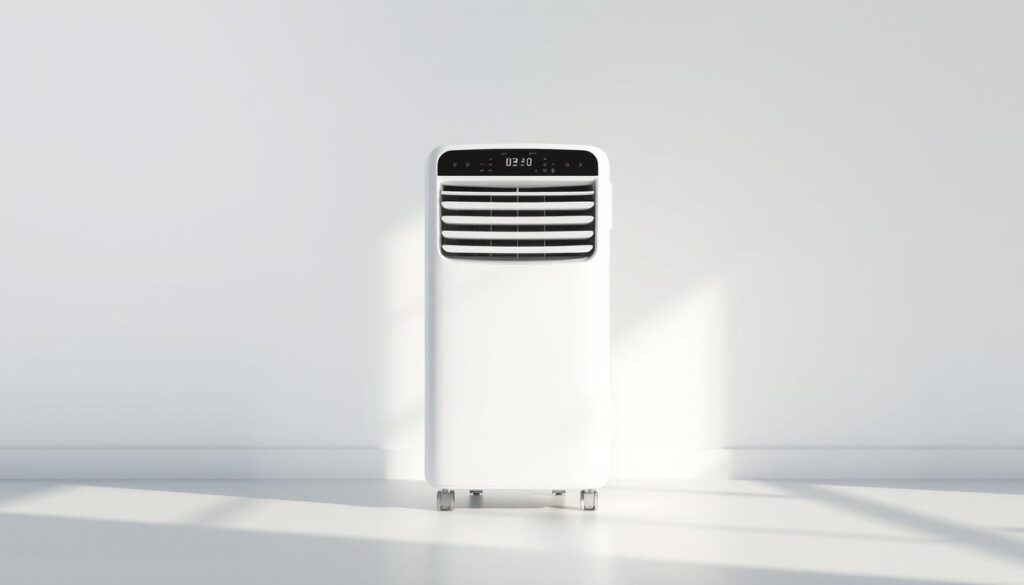
Here’s how it works: The unit pulls in warm air from your room. Inside, a compressor pressurizes refrigerant, turning it into a hot gas. This gas flows to the condenser, where it cools down and becomes a liquid.
Next, the liquid refrigerant moves to the evaporator. As it evaporates, it absorbs heat from the air, cooling it down. The cool air is then blown back into your room, while the warm air is vented outside through the exhaust hose.
Key Components and Their Roles
Three main parts make this process possible: the compressor, condenser, and evaporator. Together, they work like a team to lower your room’s temperature. The fan ensures smooth airflow, while the exhaust system keeps hot air out.
What to Expect During Operation
Portable air conditioners are designed for quiet performance. You’ll notice a gentle hum, not a loud roar. Cooling happens gradually, so don’t expect instant results. Over time, you’ll feel the temperature drop, creating a comfortable environment.
Common Questions and Troubleshooting
Worried about noise? Many models are engineered for low decibel levels, making them perfect for bedrooms or offices. If you hear unusual sounds, check the fan or exhaust hose for blockages.
Setup is straightforward, but ensure the exhaust hose is securely connected to a window. Proper installation prevents warm air from seeping back into your room.
Maintenance Tips for Peak Efficiency
Routine care keeps your unit running smoothly. Clean the air filter every two weeks to maintain airflow. If your model has a water reservoir, empty it regularly to prevent mold growth. These simple steps ensure long-lasting performance.
| Component | Function |
|---|---|
| Compressor | Pressurizes refrigerant to start the cooling process |
| Condenser | Cools refrigerant into a liquid |
| Evaporator | Absorbs heat from the air, cooling it down |
Understanding how your portable air conditioner works helps you make the most of its features. Now that you know the basics, let’s explore how to choose the right size for your space.
Sizing Your Portable Air Conditioner Effectively
Finding the right size for your portable air conditioner can make all the difference in staying cool. A unit that’s too small won’t cool your room effectively, while one that’s too large wastes energy. Let’s break down how to choose the perfect fit for your space.
Which BTU Capacity is Right for Your Room Dimensions?
BTU (British Thermal Unit) measures the cooling capacity of your unit. The U.S. Department of Energy recommends 20 BTUs per square foot. For example, a 300-square-foot room needs around 6,000 BTUs. This ensures your portable unit can handle the heat without overworking.
Oversizing your unit can lead to frequent cycling, which increases wear and tear. Undersizing, on the other hand, leaves your room uncomfortably warm. Therefore, calculating the correct BTU is essential for both comfort and efficiency.
How Do You Measure Your Square Footage for Optimal Cooling?
Start by measuring the length and width of your room. Multiply these numbers to get the square footage. For example, a 15-foot by 20-foot room is 300 square feet. Adjust for factors like ceiling height, insulation, and sunlight. Sunny rooms may need 10% more BTUs, while shaded areas can subtract 10%.
Here’s a quick guide to help you determine the right BTU for your space:
| Room Size (Square Feet) | Recommended BTUs |
|---|---|
| 150-250 | 5,000 |
| 250-350 | 6,000 |
| 350-450 | 8,000 |
| 450-550 | 10,000 |
For smaller spaces like a bedroom, a 5,000 BTU unit is often sufficient. Larger areas, such as a living room, may require 8,000 BTUs or more. Always consider your specific needs to ensure the best cooling experience.
Now that you know how to size your portable air conditioner, you’re ready to explore energy-saving strategies in the next section. Proper sizing not only keeps you comfortable but also helps reduce electricity costs.
Energy Efficiency and Cost-Saving Strategies with Portable ACs
Keeping your home cool doesn’t have to break the bank. With a few smart strategies, you can reduce your energy consumption while staying comfortable. Portable air conditioners are a great option, but knowing how to use them efficiently can make a big difference in your electricity bill.
What are proven tactics to reduce energy consumption while staying cool?
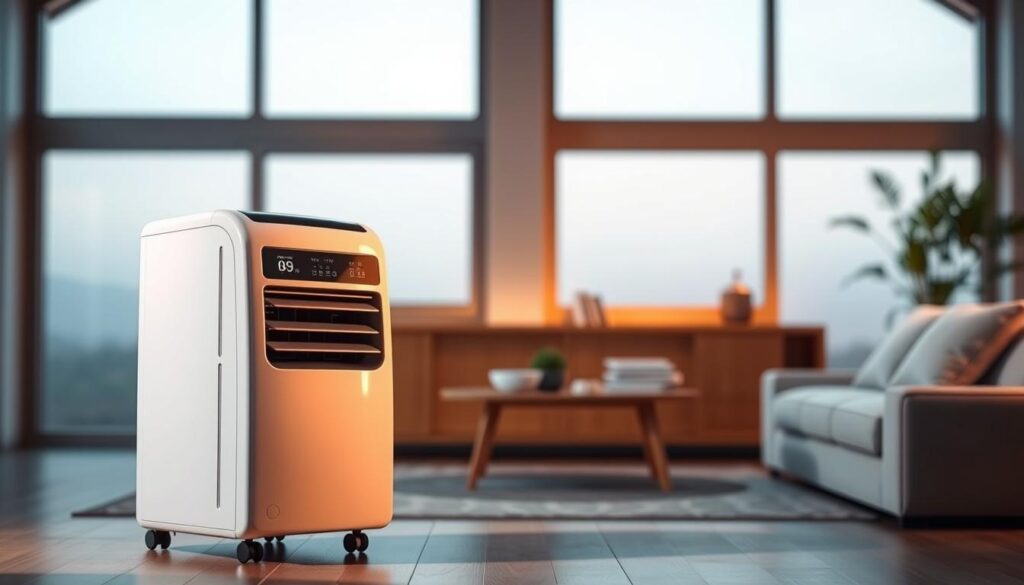
Start by choosing a unit with a high Energy Efficiency Ratio (EER). Models with an EER of 9.5 or higher are considered efficient. Upgrading from an EER of 8 to 11 can slash your cooling costs by nearly one-third. That’s a significant saving over time.
Proper sizing is another key factor. An oversized unit cycles on and off too often, wasting energy. Undersized units struggle to cool your space, leading to higher power usage. Aim for 20 BTUs per square foot for optimal performance.
Here are some actionable tips to save energy:
- Use programmable timers to run your unit only when needed. This can save you $50-70 per season.
- Set the temperature a few degrees higher. Each degree above 72°F reduces cooling costs by 3-5%.
- Clean or replace air filters regularly. A clogged filter can reduce efficiency by up to 15%.
- Seal gaps around the window kit to prevent warm air from entering. This can cut runtime by 12%.
Features like sleep settings and self-evaporating systems also help. Sleep settings adjust the temperature at night, while self-evaporating units reduce the need for manual drainage. These small changes add up to noticeable savings.
For example, insulating the exhaust hose can improve efficiency by 7-9%. Direct sunlight can increase power consumption by 5-8%, so shading your unit is a simple yet effective step.
By following these tactics, you can enjoy a cool home without overspending. Next, let’s compare different cooling systems to find the best fit for your lifestyle.
Comparing Portable, Window, and Central Air Systems
Not all cooling systems are created equal—finding the best fit for your home matters. Whether you’re renting an apartment or own a house, the right air conditioning option can make all the difference. Let’s explore how portable, window, and central air systems stack up.
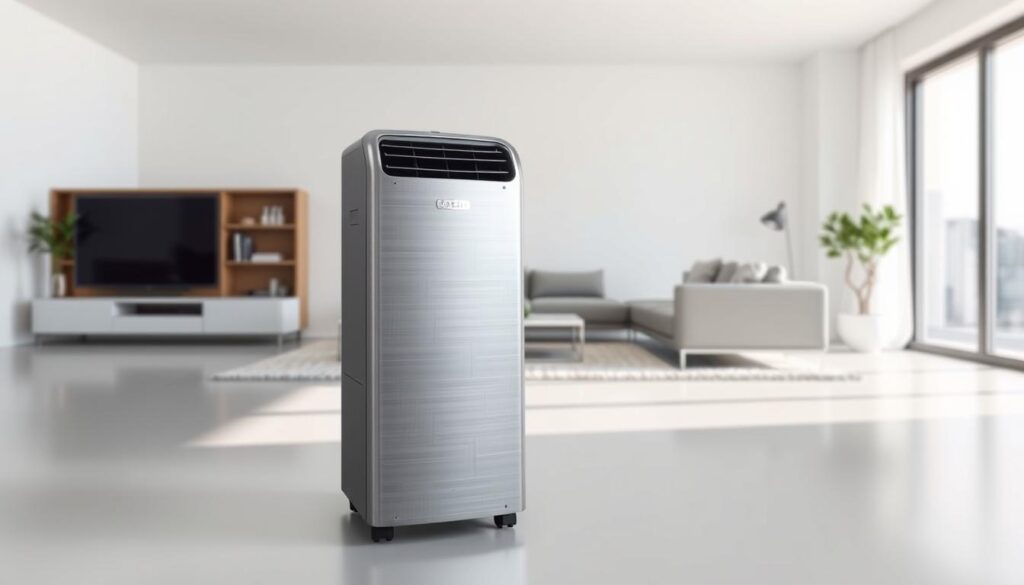
How can you decide which cooling system fits your lifestyle?
Portable air conditioners are a versatile choice for many. They’re easy to install, requiring just a window for the exhaust hose. This makes them ideal for rentals or spaces with HOA restrictions. Plus, you can move them from room to room, offering flexibility that other systems can’t match.
Window units, on the other hand, are more permanent. They’re great for cooling single rooms but can be tricky to install, especially if you’re doing it alone. Central air systems provide whole-home comfort but come with higher upfront costs and installation complexity.
Here’s a quick comparison of the three options:
| Feature | Portable | Window | Central Air |
|---|---|---|---|
| Installation | Easy | Moderate | Complex |
| Portability | High | Low | None |
| Energy Use | Moderate | Low | High |
Noise is another factor to consider. Window units tend to be quieter since most of the noise is directed outside. Portable units, while convenient, can be louder because the noise stays inside the room. Central air systems are generally quiet but can be expensive to maintain.
If you’re looking for a budget-friendly and flexible option, a portable air conditioner might be your best bet. For those in smaller spaces or with limited installation options, window units are a solid choice. Central air is ideal for larger homes where consistent cooling is a priority.
Ready to set up your new cooling system? Let’s move on to the next section for installation tips and tricks.
Installation and Setup: Making Portable Air Conditioner Setup a Breeze
Setting up your new cooling system doesn’t have to be overwhelming. With a few simple steps, you can have your portable unit running smoothly in no time. Let’s walk through the process to ensure a secure and efficient installation.
Step-by-Step Installation Checklist
Follow these steps to get your cooling system up and running:
- Choose the Right Location: Place your unit near a window for easy exhaust hose connection. Ensure there’s at least 12 inches of space around it for proper airflow.
- Connect the Exhaust Hose: Attach the hose to the back of the unit and secure it to the window kit. Keep the hose as short as possible to maintain efficiency.
- Secure the Window Panel: Adjust the panel to fit your window opening. Use weatherstripping to seal gaps and prevent warm air from entering.
- Plug It In: Connect the unit directly to a grounded outlet. Avoid using extension cords to ensure safe operation.
- Level the Unit: Use a spirit level to check if the unit is even. This prevents tipping and ensures optimal performance.
Tools You’ll Need
Here’s a quick list of tools to make the setup hassle-free:
| Tool | Purpose |
|---|---|
| Screwdriver | Secure the window kit |
| Spirit Level | Ensure the unit is level |
| Weatherstripping | Seal gaps around the window |
Safety Tips for Smooth Operation
Safety is key when setting up your portable unit. Always unplug the unit before performing any maintenance. Keep the exhaust hose free of obstructions to avoid overheating. Regularly check the power connection to ensure it’s secure.
By following these steps, you’ll enjoy efficient cooling without any hassle. Ready to keep your unit running smoothly? Let’s move on to maintenance tips in the next section.
Maintenance and Troubleshooting: Keeping Your AC Running Smoothly
Keeping your portable air conditioner in top shape doesn’t have to be a chore. With a few simple steps, you can ensure your unit runs efficiently and lasts for years. Regular maintenance not only improves performance but also saves you money on energy bills.
How Can You Clean Filters and Manage Water Drainage Effectively?
Cleaning the air filter is one of the easiest ways to maintain your portable unit. A clogged filter reduces airflow, making the system work harder and use more energy. Aim to clean the filter every two weeks. Simply remove it, rinse with water, and let it dry completely before reinstalling.
Water drainage is another key aspect. Many units have a built-in reservoir that collects condensation. Empty it regularly to prevent mold and bacteria growth. If your model has a continuous drainage option, use a hose to direct water outside or into a drain.
What Are Some Troubleshooting Tips When Issues Arise?
If your unit isn’t cooling effectively, check the exhaust hose for blockages. A kinked or clogged hose can reduce efficiency. Ensure the hose is securely connected to the window kit to prevent warm air from entering your space.
Unusual noises, like rattling or grinding, often indicate a problem with the fan or motor. Turn off the unit and inspect for debris. If the issue persists, consult the user manual or contact customer support.
Here are some quick maintenance tips to keep your air conditioner running smoothly:
- Clean the air filter every two weeks to improve airflow and cooling efficiency.
- Empty the water reservoir regularly to prevent mold and maintain indoor air quality.
- Check the exhaust hose for blockages and ensure it’s securely connected.
- Inspect the unit for unusual noises or vibrations and address them promptly.
Regular maintenance not only extends the lifespan of your portable unit but also ensures it operates at peak efficiency. By following these steps, you’ll enjoy consistent cooling and lower energy costs. Next, let’s explore how to minimize noise for a more serene environment.
Addressing Noise, Portability, and Comfort Factors
Imagine a quiet, cool space where the hum of your cooling system blends seamlessly into the background. Achieving this serene atmosphere is easier than you think, even with a portable air conditioner. Let’s explore how to minimize noise and enhance comfort in your home.
How Do You Minimize Noise for a Serene Environment While Cooling?
Noise can be a concern when using a portable air conditioner, especially in bedrooms or home offices. Fortunately, many modern units are designed with quiet operation in mind. Look for models with inverter compressors or dedicated quiet modes, which reduce noise levels to as low as 50 decibels—comparable to a quiet refrigerator.
Here are some practical tips to further reduce noise:
- Relocate the Unit: Place it on a flat, stable surface away from walls or furniture that can amplify sound.
- Use Sound-Dampening Accessories: Add a rubber mat under the unit to absorb vibrations.
- Opt for Sleep Mode: This feature lowers fan speed and reduces noise during nighttime use.
By choosing the right portable unit and implementing these strategies, you can enjoy a peaceful, cool environment without disruptions.
Key Features for Quiet and Efficient Cooling
Not all portable air conditioners are created equal. Some models come with advanced features that enhance both comfort and efficiency. For example, dual-hose systems are not only more energy-efficient but also tend to operate more quietly than single-hose units.
Here’s a quick comparison of noise levels in popular models:
| Model | Noise Level (dB) | Key Feature |
|---|---|---|
| Model A | 52 | Inverter Compressor |
| Model B | 48 | Sleep Mode |
| Model C | 50 | Dual-Hose System |
These features not only reduce noise but also improve overall cooling performance, making your home a more comfortable place to relax or work.
Creating a serene environment is about more than just temperature control. It’s about ensuring your portable air conditioner works quietly and efficiently, so you can focus on what matters most. Ready to hear how others have transformed their spaces? Let’s dive into real-user experiences next.
Real Stories: Experiences from Cooling Enthusiasts
Picture this: a sweltering summer afternoon, and your home feels like an oven. For many, a portable air conditioner has been a game-changer. Let’s dive into real stories from users who’ve transformed their spaces with these versatile units.
How Has a Portable AC Transformed Everyday Comfort for Users?
Sarah, a renter in Arizona, struggled with the heat in her small apartment. Installing a portable unit was her solution. “It’s so easy to move from my room to the living area,” she shares. “The cooling is instant, and I no longer dread summer nights.”
John, a home office worker, praises the quiet operation of his model. “I can focus on my work without the distraction of a noisy air conditioner,” he says. “It’s been a lifesaver during heatwaves.”
What Practical Insights Do Experienced Users Share Over Coffee?
Over coffee, users often swap tips on maximizing their portable air units. Lisa recommends cleaning the filter regularly. “It keeps the cooling efficient and extends the unit’s life,” she advises.
Mike highlights the importance of proper sizing. “I made the mistake of buying a unit that was too small for my room,” he recalls. “Once I upgraded, the difference was night and day.”
Here’s a quick comparison of popular models based on user feedback:
| Model | Key Feature | User Rating |
|---|---|---|
| LG 7,000 BTU | Multiple fan speeds | 4.5/5 |
| Honeywell 10,000 BTU | Quiet operation | 4.7/5 |
| DeLonghi 12,000 BTU | Dual-hose system | 4.6/5 |
These stories and insights show how a portable air conditioner can meet your need for comfort, whether you’re in an apartment, home office, or rental space. Ready to explore the innovative features of modern models? Let’s move on to the next section.
Innovative and Smart Features in Modern Portable AC Models
Modern technology has revolutionized the way we stay comfortable at home. Today’s portable air conditioners are more than just cooling devices—they’re smart, efficient, and designed to fit seamlessly into your lifestyle. Let’s explore the cutting-edge features that make these units a must-have for any home.
Which Smart Functions Can Enhance Your Overall Comfort and Control?
Imagine having a personal assistant for your home’s climate. That’s what modern portable air conditioners offer. Models like the Midea Duo and LG LP1419IVSM come with app-based controls and voice command integration. You can adjust the temperature, switch modes, or set schedules using your smartphone or voice assistant like Amazon Alexa or Google Assistant.
These features aren’t just convenient—they’re energy-efficient too. Built-in heat pumps and variable-speed compressors optimize energy use, reducing your electricity bills. Plus, dual functionality allows these units to provide both cooling and heating, making them a year-round solution.
Here’s a quick look at some standout smart features:
- App-Based Controls: Manage your unit from anywhere using a smartphone app.
- Voice Command Integration: Use voice assistants like Alexa or Google Assistant for hands-free control.
- Remote Control: Adjust settings without leaving your seat.
- Programmable Timers: Set your unit to turn on or off at specific times.
For example, the Midea Duo MAP14HS1TBL uses a unique hose-in-hose design for more efficient cooling. It’s also compatible with smart home systems, offering seamless integration into your daily routine.
Here’s a comparison of popular models based on their smart features:
| Model | Smart Features | Energy Efficiency |
|---|---|---|
| Midea Duo MAP14HS1TBL | App control, voice commands | High |
| LG LP1419IVSM | Remote control, quiet operation | Moderate |
| Whynter ARC-14S | Dual-hose system, dehumidifier | High |
These innovations make modern portable air conditioners more than just appliances—they’re tools for creating a comfortable, efficient home. Ready to explore how these features can transform your space? Let’s move on to the final insights and next steps.
(Final Insights and Next Steps)
Transforming your home into a cool oasis doesn’t have to be complicated. A portable air conditioner offers a flexible and efficient solution for various cooling needs. From easy installation to customizable settings, these units provide comfort without the hassle of permanent fixtures.
To make sure you get the most out of your unit, consider its cooling capacity and rating. Proper sizing ensures optimal performance, while regular maintenance keeps it running smoothly. Cleaning filters and managing water drainage are simple steps that enhance efficiency and extend the unit’s lifespan.
Energy-saving features like programmable timers and sleep modes help reduce electricity costs. Many modern models also come with smart functions, allowing you to control the air conditioner from your phone or voice assistant. These innovations make it easier than ever to enjoy a comfortable home environment.
Ready to take the next step? Explore trusted sources to compare models and find the perfect fit for your space. With the right portable air unit, you can create a cooler, more comfortable home effortlessly.
FAQ
What is a portable air conditioner and how does it work?
Which features make portable AC units uniquely effective for your space?
How does the refrigeration cycle in a portable unit keep your room cool?
Which BTU capacity is right for your room dimensions?
How do you measure your square footage for optimal cooling?
What are proven tactics to reduce energy consumption while staying cool?
How can you decide which cooling system fits your lifestyle?
What simple steps ensure a secure and efficient installation?
How can you clean filters and manage water drainage effectively?
What are some troubleshooting tips when issues arise?
How do you minimize noise for a serene environment while cooling?
How has a portable AC transformed everyday comfort for users?
Which smart functions can enhance your overall comfort and control?
Source Links
- Find the Best Portable Air Conditioner
- The Best Portable Air Conditioner
- Your Comprehensive Guide to Choosing and Using a Portable Air Conditioner
- Ultimate Guide To Portable Air Conditioners: What You Need To Know
- The Essential Checklist: What to Look for in a Portable Air Conditioner
- Ultimate Guide To Portable Air Conditioners: What You Need To Know
- Portable Air Conditioners: A Comprehensive Guide | Rinaldi’s
- The Ultimate Guide to the Smallest Portable Air Conditioner
- How Portable Air Conditioners Work
- How Do Portable Air Conditioners Work & Other Frequently Asked Questions
- How to Correctly Pick a Portable Air Conditioner | Evapolar
- Ultimate Guide To Portable Air Conditioners: What You Need To Know
- The Ultimate Guide to Mobile Air Conditioning Units for Home
- Energy Efficiency of a Portable Air Conditioner: Saving on Electricity – Sensibo
- Breadcrumbs
- Window Air Conditioners vs. Portable Air Conditioners: Which One Is Right for You?
- Should you buy a portable air conditioner or a window unit? We’ve tested both and window units are far more efficient and powerful.
- Quick & Easy Tips for Installing Your Portable Air Conditioner
- A Step-by-Step Guide To Installing Your Portable Air Conditioner
- How to Install a Portable Air Conditioner | Newair Compact Appliances
- How to Clean Portable Air Conditioner: A Complete Guide
- The Complete Guide to Caring for Your Danby Portable AC | Danby Canada
- Stay Chilled Anywhere: The Ultimate Guide to Portable Air Conditioners – Apollo Heat Pumps
- Choosing the Perfect Portable AC: London Climate Hire Guide
- Portable LG Air Conditioner Review: Is this Floor AC Unit Worth It?
- Portable Air Conditioners: Buy the Right One and Stay Cool This Summer
- Portable Air Conditioner Ultimate Buying Guide 2023
- The Best Portable Air Conditioners to Cool Down Any Room
- The 6 best portable air conditioners of 2025, including options to help with wildfire smoke
- Ultimate Guide to Choosing Portable Outdoor AC Units
- How Do Portable Air Conditioners Work & Other Frequently Asked Questions


0 Comments