
Ever been relaxing in your room, enjoying the cool air, only to be interrupted by an annoying rattling sound? You’re not alone. Many people face this issue with their cooling unit, and it can quickly disrupt your comfort.
Modern cooling systems are designed to operate quietly, typically between 25 and 55 decibels. However, loose parts or debris can cause unexpected noises. Addressing these sounds early can save you from costly repairs and keep your system running smoothly.
This guide offers practical steps to diagnose and fix rattling sounds. From checking for loose screws to ensuring proper installation, you’ll find solutions that balance performance and efficiency. Let’s get your unit back to providing the quiet, cool air you deserve.
Key Takeaways
- Rattling sounds often indicate loose parts or debris in your cooling system.
- Modern units operate quietly, typically between 25 and 55 decibels.
- Early diagnosis can prevent costly repairs and maintain system efficiency.
- Regular maintenance helps keep your unit running smoothly and quietly.
- Proper installation is key to minimizing unexpected noises.
Introduction: Cooling Down Noisy Portable AC Woes
Struggling to stay cool while dealing with a noisy cooling system? You’re not alone. Many people face the frustration of unexpected sounds disrupting their peace. A loud unit can make it hard to relax, especially during hot summer days.
Modern innovations, like RIGID’s Carry-On Portable Air Conditioner, are designed to solve this problem. These systems combine powerful cooling with advanced noise reduction. Imagine enjoying a quiet room without the constant hum of a loud fan.
This guide is here to help. We’ll walk you through troubleshooting steps, from proper installation to routine maintenance. By following these tips, you can restore your comfort and keep your system running smoothly.
Here’s a quick comparison of noise levels in popular cooling units:
| Model | Noise Level (dB) | Key Feature |
|---|---|---|
| RIGID Carry-On | 50 | Advanced noise reduction |
| Standard Unit | 60 | Basic cooling |
| High-End Model | 45 | Ultra-quiet operation |
Whether you’re at home or in a small space, a quiet cooling system can make all the difference. Let’s dive into practical solutions to keep your air cool and your environment peaceful.
Is Your Portable AC Making That Rattling Noise?
Is your cooling unit disrupting your peace with unexpected noises? Imagine trying to relax in your living space, only to hear a persistent rattling sound. It’s not just annoying—it’s a sign something might be wrong.
Rattling noises often stem from loose components or vibrations. Over time, screws can loosen, or debris might get trapped in the system. Even high-performance units can face these issues if not well-maintained.
Think of it like background chatter in a coffee shop—it’s hard to ignore. Loose parts, worn-out filters, or improper installation can all contribute to the problem. Addressing these early can save you from costly repairs and maintain your unit’s efficiency.
Here are some common causes to check:
- Loose screws or bolts
- Debris in the system
- Misaligned fan blades
- Worn-out components
Regular maintenance is key to keeping your cooling system running smoothly. Simple steps like tightening screws or cleaning the filter can make a big difference. If the noise persists, it might be time for a professional inspection.
In the next sections, we’ll guide you through identifying and fixing these issues step by step. Let’s restore your living space to the quiet, comfortable haven it should be.
The Ultimate “portable ac noise guide” for Diagnosing Rattling Sounds
Are you tired of unexpected noises ruining your peaceful environment? This guide is here to help. It’s designed to blend technical expertise with real-life experiences, offering a comprehensive approach to diagnosing and fixing rattling sounds in your cooling system.
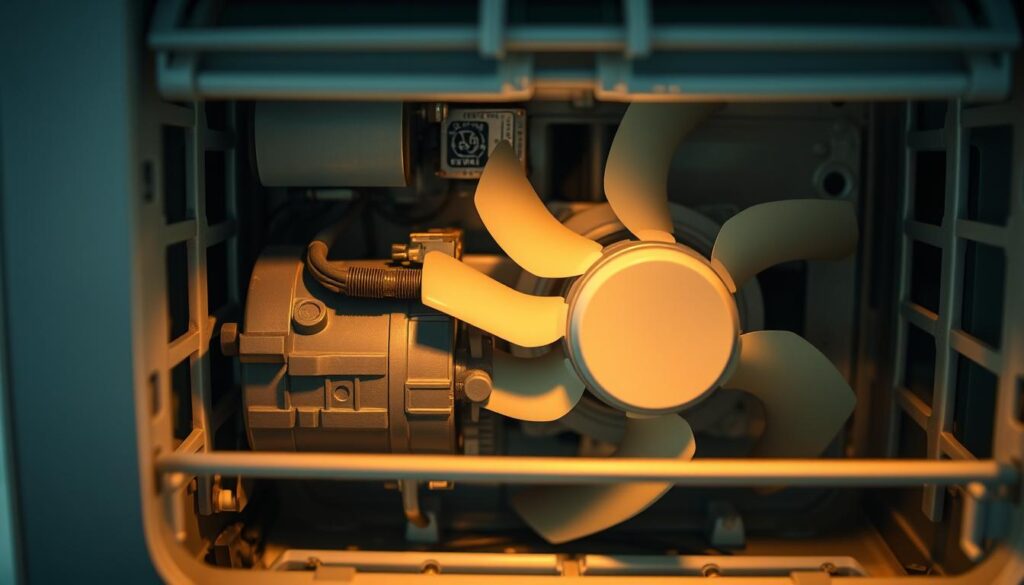
Imagine this: You’re enjoying a quiet evening when suddenly, a persistent rattling sound disrupts your calm. It’s not just annoying—it’s a sign something might be wrong. This guide takes you step-by-step through the process of identifying and resolving these issues, from checking the compressor to inspecting the hose and exhaust system.
- It combines technical data with personal anecdotes and expert reviews.
- You’ll get an in-depth look at decibel ratings and measurement tools.
- Every detail, from control mechanisms to fan regulation, is meticulously covered.
Let’s dive into a quick comparison of noise levels in popular cooling systems:
| Model | Noise Level (dB) | Key Feature |
|---|---|---|
| Standard Unit | 60 | Basic cooling |
| High-End Model | 45 | Ultra-quiet operation |
| Advanced System | 25 | Whisper-quiet power |
By following this guide, you’ll not only restore your peace but also enjoy the benefit of a more energy-efficient home. Say goodbye to rattling sounds and hello to a quieter, more comfortable living space.
Understanding Decibel Levels and Their Impact on Your Comfort
Have you ever wondered why some cooling systems are quieter than others? The answer lies in decibel levels, a measure of sound intensity. Lower decibel ratings mean quieter operation, which is crucial for maintaining a peaceful environment.
For example, a whisper is around 30 dB, while a normal conversation is about 60 dB. When choosing a cooling system, understanding these numbers can help you find a unit that balances performance and quietness.
How Can You Accurately Measure Noise Levels?
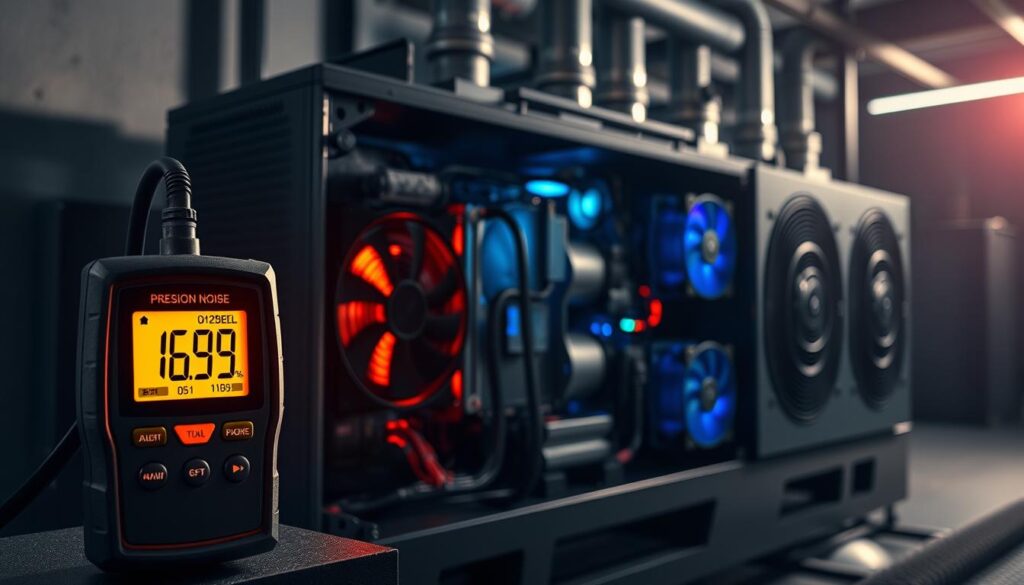
Measuring noise levels is easier than you might think. A decibel meter is a handy tool that provides precise readings. Simply place it near your cooling system to check its sound output.
Regular measurements can help you identify changes in noise levels, which might indicate issues like loose parts or debris. Keeping an eye on these readings ensures your system stays efficient and quiet.
What Do Industry Decibel Standards Mean for You?
Industry standards set benchmarks for acceptable noise levels in cooling systems. Most quiet units operate between 40 and 60 dB, similar to a library or electric toothbrush. This range ensures minimal disruption in your daily life.
Here’s a quick comparison of noise levels in popular cooling systems:
| Model | Noise Level (dB) | Key Feature |
|---|---|---|
| Standard Unit | 60 | Basic cooling |
| High-End Model | 45 | Ultra-quiet operation |
| Advanced System | 25 | Whisper-quiet power |
Understanding these standards helps you make informed decisions. Look for units with lower decibel ratings for a quieter, more comfortable space.
Proper installation and regular maintenance also play a role in minimizing noise. Clean filters and stable positioning can significantly reduce sound levels, ensuring your system runs smoothly.
By paying attention to decibel levels, you can enjoy a cooling system that’s both efficient and peaceful. It’s a small step that makes a big difference in your daily comfort.
Features to Look for in a Quiet Portable Air Conditioner
Looking for a cooling solution that’s both quiet and efficient? Modern portable air conditioners are designed to deliver powerful cooling without the distraction of loud sounds. Let’s explore the key features that make these units stand out.
Ultra-Compact Mobility Benefits
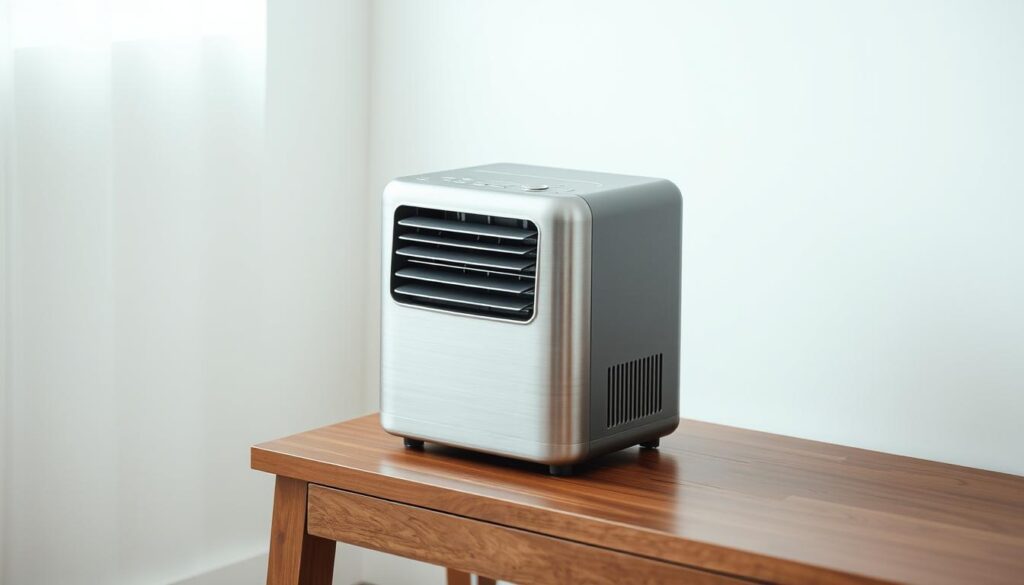
An ultra-compact design is essential for easy portability and space efficiency. Units like RIGID’s Carry-On model are lightweight and easy to move, making them perfect for small spaces or multi-room use. This design ensures you can enjoy cool air wherever you need it most.
Modern portable units also feature powerful engines that deliver consistent performance without taking up much space. This balance of power and portability is a game-changer for those who value convenience.
Advanced Noise Reduction Techniques at Work
Noise reduction is a top priority in today’s cooling systems. Innovations like vibration-dampening materials and insulated compressor compartments significantly lower sound output. These techniques ensure your unit operates quietly, even at high fan speeds.
For example, some models use advanced fan blades and motor designs to minimize vibrations. This results in a quieter operation, ideal for bedrooms, offices, or any space where peace is essential.
When shopping for a portable air conditioner, check product manuals and customer reviews for details on noise levels. Look for units with decibel ratings below 50 dB for the quietest experience.
By focusing on these features, you can find a cooling system that combines performance, convenience, and quiet operation. It’s the perfect way to enhance your comfort without compromising on efficiency.
Real-Life Experiences and Expert Reviews
Imagine starting your day with a quiet, cool breeze and a hot cup of coffee. For many, this is the reality with modern cooling systems designed to blend seamlessly into daily life. But what makes these units stand out? Let’s dive into real-life stories and expert insights to find out.
Sipping Coffee While Listening: Personal Cooling Journeys
Sarah, a working professional from Texas, shares her experience: “I used to dread the loud hum of my old unit. Now, with my new system, I can enjoy my morning coffee in complete peace.” Stories like Sarah’s highlight the importance of quiet operation in enhancing daily comfort.
Another user, John, emphasizes the energy efficiency of his unit. “Not only is it quiet, but it also keeps my home cool without driving up my electricity bill.” These testimonials show how modern cooling systems balance performance and peace.
Data-Backed Customer Insights and Trends
Customer reviews and expert analyses reveal key trends in the cooling industry. For instance, the Midea Duo MAP14HS1TBL is praised for its quiet operation and consistent cooling. Similarly, the LG Dual Inverter model stands out for its ultra-quiet performance.
Here’s a quick comparison of popular models based on customer ratings and noise levels:
| Model | Customer Rating | Noise Level (dB) |
|---|---|---|
| Midea Duo MAP14HS1TBL | 4.5/5 | 50 |
| LG Dual Inverter | 4.7/5 | 44 |
| Whynter ARC-14S | 4.6/5 | 51 |
Experts also emphasize the importance of regular maintenance to keep your system running quietly. Simple steps like cleaning filters and tightening screws can prevent unexpected sounds and extend the unit’s lifespan.
By combining personal stories with data-driven insights, you can make informed decisions about your cooling needs. Whether it’s for your home or office, a quiet system can transform your daily comfort.
Hassle-Free Installation and Maintenance Tips
Want to keep your space cool without the hassle of constant maintenance? Proper installation and regular care can make all the difference. Let’s explore how to set up your unit for smooth operation and minimal disturbances.
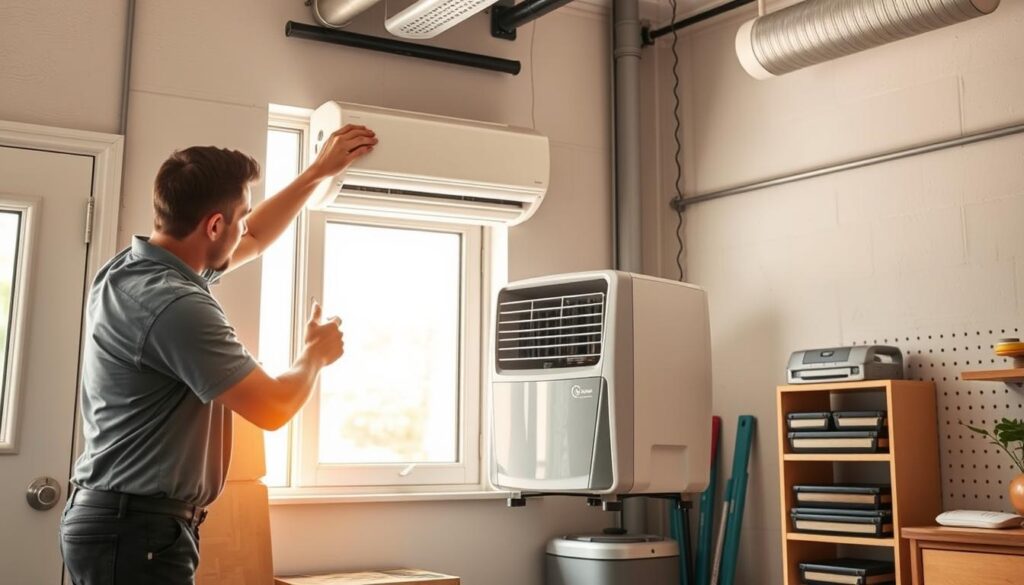
Step-by-Step Setup to Avoid Vibration Issues
Start by choosing the right spot for your unit. Place it on a flat, stable floor to prevent vibrations. Ensure the window adapter kit fits snugly to avoid gaps that can reduce cooling efficiency.
Next, check the vent hose for kinks or bends. A straight hose ensures optimal airflow. Use weather stripping or foam seals to fill any gaps around the window or exhaust hose. This simple step can improve performance by up to 25%.
Easy Cleaning and Routine Maintenance Practices
Regular cleaning is key to keeping your unit running quietly. Clean the filter every two weeks to prevent dust buildup. If your unit has a water reservoir, empty it regularly to avoid leaks.
For units with self-evaporating systems, you’ll save time on manual drainage. Schedule routine checks to tighten screws and inspect components. These small steps can extend your unit’s lifespan and maintain its efficiency.
| Factor | Impact | Solution |
|---|---|---|
| Floor Stability | Reduces vibrations | Use a flat, sturdy surface |
| Vent Hose | Improves airflow | Keep it straight and kink-free |
| Filter Maintenance | Enhances efficiency | Clean every two weeks |
By following these tips, you’ll enjoy a quieter, more efficient cooling experience. A little effort during setup and maintenance goes a long way in enhancing your comfort.
Breakthrough Cooling Technologies and Noise Reduction Innovations
What if your cooling system could work like a well-tuned orchestra, delivering comfort without a single off note? Modern advancements in technology have made this possible, blending efficiency with quiet operation. Let’s explore how these innovations are transforming the way we stay cool.
State-of-the-Art Cooling Systems Explained
Today’s cooling systems are engineered with precision, much like a finely crafted instrument. Insulated compressor compartments and vibration-dampening materials reduce sound output significantly. These features ensure your unit operates smoothly, even at peak performance.
For example, advanced fan blades and motor designs minimize vibrations, resulting in quieter operation. This is especially beneficial for spaces where peace is essential, like bedrooms or offices. The goal is to deliver powerful cooling without disrupting your daily life.
Achieving Energy Savings for a Quieter Operation
Innovations in cooling technology don’t just reduce noise—they also save energy. Units with higher efficiency ratings consume less power, lowering your electricity bills. This dual benefit makes modern systems a smart choice for both your wallet and your comfort.
Here’s a quick comparison of leading models and their energy-saving features:
| Model | Energy Efficiency (SEER) | Noise Level (dB) |
|---|---|---|
| Midea Duo | 14 | 50 |
| LG Dual Inverter | 16 | 44 |
| Whynter ARC-14S | 15 | 51 |
By choosing a system with these advancements, you’ll enjoy a quieter, more efficient home environment. It’s a win-win for both your comfort and your budget.
Versatile Applications of Quiet Portable Air Conditioners
Picture yourself enjoying a cool breeze in your living room, office, or even on a sunny patio. Modern cooling systems are designed to adapt to various settings, making them a perfect fit for any space.
Whether you’re at home, in a small office, or hosting an outdoor event, these units deliver consistent performance. Their compact design and energy-efficient operation ensure you stay comfortable without compromising on convenience.
Cooling Solutions for Home, Office, and Outdoor Spaces
In your home, a quiet cooling system can transform your living room into a peaceful retreat. Offices benefit from their unobtrusive operation, allowing you to focus without distractions. Outdoor spaces, like patios or garages, become more enjoyable with portable cooling solutions.
Here are some tips for optimal use:
- Place the unit near a window for efficient installation and airflow.
- Adjust the fan speed to match the room size and cooling needs.
- Use the timer function to save energy during off-peak hours.
Adapting AC Performance for Motorhomes and Trailers
For those on the move, portable cooling systems are a game-changer. Motorhomes and trailers often face limited space and power constraints. These units are designed to fit seamlessly into compact areas while providing reliable cooling.
Key features to look for include:
- Lightweight design for easy portability.
- Dual hose systems for improved efficiency.
- Low power consumption to conserve energy.
With the right setup, you can enjoy a comfortable journey, no matter where the road takes you.
Optimizing BTU Capacity and Room Sizing for Efficient Cooling
Choosing the right cooling system for your space can make all the difference in comfort and efficiency. The key is matching the BTU capacity to your room’s size. Too small, and your unit will struggle; too large, and it may cycle on and off too often, wasting energy.
Understanding BTU (British Thermal Units) is essential. It measures how much heat your system can remove from a room in an hour. A properly sized unit ensures optimal performance and energy savings.
How to Determine the Right BTU for Your Space
Calculating the right BTU for your area is simple. Start by measuring your room’s square footage. A general rule of thumb is 20 BTUs per square foot. For example, a 300-square-foot room would need around 6,000 BTUs.
Other factors like insulation, ceiling height, and sunlight exposure can affect your cooling capacity needs. If your room gets a lot of sunlight or has high ceilings, you may need to increase the BTU slightly.
Here’s a quick guide to help you determine the right BTU for your space:
| Room Size (Square Feet) | Recommended BTU |
|---|---|
| 100-150 | 5,000 |
| 150-250 | 6,000-7,000 |
| 250-350 | 8,000-10,000 |
| 350-450 | 10,000-12,000 |
| 450-550 | 12,000-14,000 |
| 550-700 | 14,000-16,000 |
Balancing Efficiency with Noise Level Considerations
While BTU capacity is crucial, it’s also important to consider noise levels. A unit that’s too powerful for your room might cool quickly but could create unnecessary noise. Look for models with advanced noise reduction features to maintain a peaceful environment.
Regular maintenance, like cleaning the filter, can also help reduce noise and improve efficiency. A well-maintained system operates smoothly and quietly, ensuring your comfort without disruptions.
By carefully matching BTU capacity to your space and considering noise levels, you can enjoy a cooling system that’s both effective and quiet. Proper sizing not only enhances performance but also extends the lifespan of your unit.
Conclusion: Embrace a Cooler, Quieter Living Environment
Transform your space into a peaceful retreat with the right cooling system. By addressing issues like loose parts and debris, you can enjoy a quieter, more efficient setup. Proper sizing and installation are key to minimizing disruptions and maximizing comfort.
Regular maintenance, such as cleaning filters and tightening screws, ensures your system runs smoothly. These small steps not only reduce noise but also improve energy efficiency, saving you money in the long run.
Take action today to create a cooler, quieter home environment. Explore advanced models and implement the tips shared here for a more comfortable living experience. Your peace and comfort are worth it.
FAQ
Why is my portable air conditioner making a rattling sound?
How can I measure the noise level of my unit?
What features should I look for in a quiet air conditioner?
How do I properly install my unit to avoid vibration issues?
Can I use a portable air conditioner in small spaces like motorhomes?
What maintenance practices keep my unit running quietly?
How do I choose the right BTU for my room?
Are there energy-efficient options that are also quiet?
Source Links
- Thomas & Galbraith Heating, Cooling & Plumbing – Cincinnati & Dayton
- AC Making Noise: 12 Fixes to Quiet a Noisy Air Conditioner
- The Ultimate Guide to the Best Quiet Portable Air Conditioners
- Portable Air Conditioner Repair: Common Problems & Fixes
- How Do Portable Air Conditioners Work?
- Why Is My Air Conditioner Making A Rattling Noise? – Dor-Mar Heating & Air Conditioning
- Why Is My AC Making A Rattling Sound? | Express Air
- Is Your AC Unit Talking To You? Here’s What It’s Trying To Say
- How to Block Air Conditioner Noise | Soundproof Cow
- How to Reduce Air Conditioner Sound for Peace and Quiet
- The Best Portable Air Conditioner
- The Ultimate Guide to Portable Home AC Units: Noise Levels and More
- How to Reduce Air Conditioner Sound for Peace and Quiet
- Find Your Perfect Quietest Portable AC This Summer
- Best Quiet Portable Air Conditioner
- The Essential Checklist: What to Look for in a Portable Air Conditioner
- Five Things to Consider When Buying a Portable Air Conditioner
- Best Portable Air Conditioners And How They Work | Weather.com
- How to Install a Portable AC Unit: A Step-by-Step Guide to Cool Your Space
- Stay Chilled Anywhere: The Ultimate Guide to Portable Air Conditioners – Apollo Heat Pumps
- Portable Air Conditioner Facts, Buying Guide & Top Ten List 2017
- IFA 2024: Midea Unveils Game Changing Innovations, Driving the Future of Green Technology
- Mastering Air Conditioner Installation: Your Ultimate Guide
- Choose the Quietest Air Conditioner in the UK. Useful Tips (May 2024 update) | MorrisDirect.co.uk
- Best Portable Air Conditioners of 2024: Key Factors to Consider
- Are Portable Air Conditioners Worth It? Weighing the Pros & Cons
- Your Comprehensive Guide to Choosing and Using a Portable Air Conditioner
- How To Choose an Air Conditioner
- Ultimate Guide to Buying the Perfect Air Conditioner
- The Best Quiet Portable Air Conditioner for Small Spaces
- Ultimate Guide To Silence: 10 Powerful Fixes, Now!
- Understanding HVAC Systems Basics, Work & Types



0 Comments