
Ever felt your air conditioner isn’t cooling your room properly? You’re not alone. Many homeowners struggle with choosing the right unit for their space, often leading to inefficiency and higher energy bills. Understanding BTUs (British Thermal Units) is the key to solving this problem.
BTUs measure the amount of heat an air conditioning system can remove from a room per hour. For example, a 1,000-square-foot home typically needs around 24,000 BTUs for effective cooling. Choosing the right capacity ensures your system runs efficiently, saving you money and keeping your environment comfortable.
This guide will help you navigate everything from basic BTU definitions to calculating the perfect size for your air conditioner. Let’s make your home the cool, comfortable haven it should be.
Key Takeaways
- BTUs measure the cooling capacity of your air conditioner.
- Choosing the right BTU rating ensures energy efficiency.
- Room size, insulation, and climate affect BTU requirements.
- Oversized or undersized units lead to inefficiency and higher costs.
- Proper BTU calculations save money and improve comfort.
Understanding BTUs: What They Are and Why They Matter
Have you ever wondered why some rooms feel perfectly cool while others struggle? The answer often lies in BTUs, or British Thermal Units. This measurement is the key to ensuring your air conditioner works efficiently and keeps your home comfortable.
What is a British Thermal Unit and How Is It Defined?
A British Thermal Unit is a way to measure energy. Specifically, one BTU is the amount of heat needed to raise the temperature of one pound of water by 1°F. Think of it as the energy required to warm up a small cup of water. For air conditioning, BTUs measure how much heat a system can remove from a room per hour.
For example, a 10,000 BTU unit can cool a small bedroom, while a larger space might need 24,000 BTUs or more. Understanding this helps you choose the right size for your needs.
How BTUs Impact Heating and Cooling in Your Home
BTUs directly affect how well your air conditioner or heater performs. Too few BTUs, and your system will struggle to maintain a comfortable temperature. Too many, and it will cycle on and off too quickly, wasting energy and reducing its lifespan.
For instance, a friend once bought an oversized unit for their living room. It cooled the space too quickly, leaving the room damp and clammy. On the other hand, an undersized air conditioner in a hot climate will run constantly, driving up your bills without ever reaching the desired temperature.
By calculating the right number of BTUs for your home, you can save money, improve comfort, and extend the life of your system.
Assessing Your Space and Insulation for Accurate BTU Calculations
Choosing the right air conditioner starts with understanding your space. Accurate calculations ensure your system runs efficiently, keeping your home comfortable without wasting energy. Let’s break down how to measure your room, evaluate insulation, and consider other factors that affect cooling needs.

How to Measure Room Size, Ceiling Height, and Square Footage
Start by measuring your room. Use a tape measure to find the length and width. Multiply these numbers to get the square footage. For example, a room that’s 12 feet long and 10 feet wide has 120 square feet.
Don’t forget the ceiling height. Standard ceilings are 8 feet tall. If yours is higher, add 10% to your BTU needs for every extra foot. This ensures your air conditioner can handle the additional space.
Understanding Insulation Quality and R-Value for Efficiency
Insulation plays a big role in cooling efficiency. The R-value measures how well insulation resists heat flow. Higher R-values mean better insulation, reducing the workload on your system.
Check your walls, attic, and windows. Poor insulation can increase your energy bills. Upgrading insulation can improve comfort and lower costs.
Additional Factors Like Sun Exposure and Room Occupancy
Sun exposure and room usage also affect BTU needs. Rooms with large windows or direct sunlight may require more cooling. Add 10% to your BTU calculation for sunlit areas.
Consider how many people use the room. Each person adds about 600 BTUs. For example, a home office with two people needs an extra 1,200 BTUs.
| Factor | Adjustment |
|---|---|
| Ceiling Height >8 ft | +10% per extra foot |
| Sun Exposure | +10% |
| Occupancy | +600 BTUs per person |
| Poor Insulation | +10-20% |
By assessing your space and these factors, you can ensure your air conditioner is the right fit. This saves money, improves comfort, and extends the life of your system.
Using a btu guide to Choose the Right Air Conditioner for Maximum Efficiency
Finding the right cooling solution doesn’t have to be overwhelming. With the right tools and knowledge, you can select an air conditioner that matches your home’s needs perfectly. This ensures optimal performance, lower energy bills, and a comfortable environment.
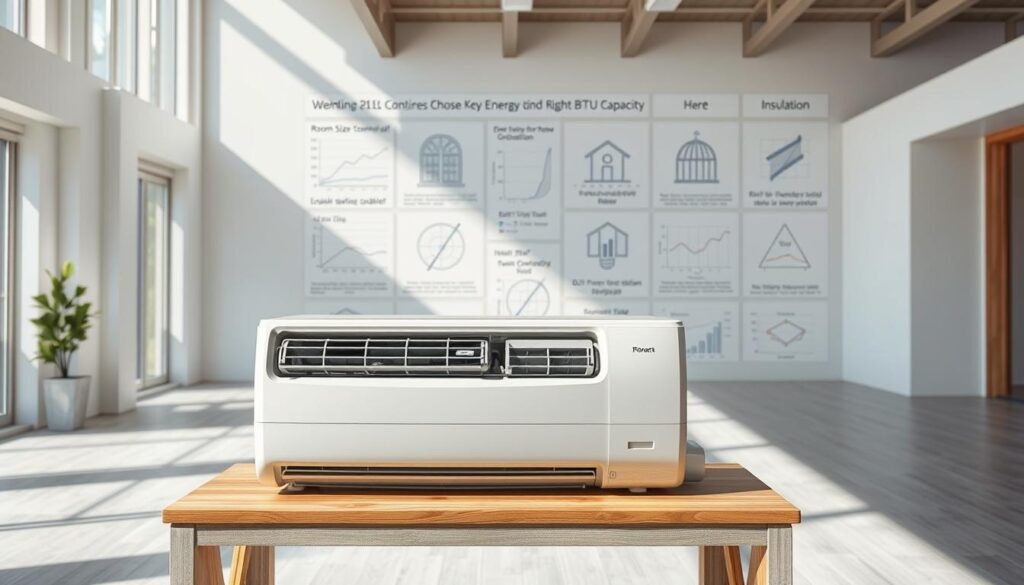
Leveraging Online BTU Calculators and Industry Data
Online BTU calculators are a game-changer when it comes to estimating cooling needs. These tools factor in your room’s square footage, insulation, and even sun exposure to provide accurate recommendations. For example, a 300-square-foot room typically requires around 7,000 BTUs, but a sunny room might need 10% more.
Industry data from sources like EnergyStar and LG can also guide your decision. These resources highlight the importance of matching your unit’s capacity to your home’s size and layout. Using these tools ensures you avoid the pitfalls of an oversized or undersized system.
Tips on Matching BTU Ratings with Your AC System and Home Needs
When selecting an air conditioner, consider these tips to ensure the best fit:
- Measure your space: Calculate the square footage and account for ceiling height. Taller ceilings may require more cooling power.
- Evaluate insulation: Poor insulation increases your system’s workload. Upgrading insulation can reduce your energy needs.
- Factor in sun exposure: Rooms with direct sunlight may need additional BTUs to maintain a comfortable temperature.
| Factor | Adjustment |
|---|---|
| Sun Exposure | +10% BTUs |
| Poor Insulation | +10-20% BTUs |
| Ceiling Height >8 ft | +10% per extra foot |
By following these steps and using reliable resources, you can choose an air conditioner that meets your needs. This not only improves comfort but also extends the life of your system and saves on energy costs.
Conclusion
Understanding BTUs is essential for choosing the right air conditioner for your home. It ensures your system runs efficiently, keeping your space comfortable without wasting energy. By assessing factors like room size, insulation, and sun exposure, you can determine the correct capacity for your needs.
Using reliable tools like online calculators simplifies the process. These tools help you match your air conditioning unit to your home’s specific requirements. This avoids the pitfalls of an oversized or undersized system, saving you money and improving comfort.
Ready to optimize your cooling? Start by checking your current unit or consult an expert for advice. Taking these steps ensures your home stays comfortable while reducing energy costs. Your ideal air conditioner is just a few calculations away!
FAQ
What is a British Thermal Unit and how is it defined?
How do BTUs impact heating and cooling in your home?
How do you measure room size, ceiling height, and square footage for BTU calculations?
What role does insulation quality and R-value play in BTU efficiency?
What additional factors like sun exposure and room occupancy should you consider?
How can you use online BTU calculators and industry data effectively?
What tips can help match BTU ratings with your AC system and home needs?
Source Links
- Air Conditioning BTU’s: What Are They & What Do They Mean?
- Demystifying BTUs: Understanding the Key to Efficient Heating and Cooling
- How Many BTU Per Square Foot Do I Need (with BTU Calc)
- BTU Calculator
- Air Conditioner BTU Calculator & Chart
- How Many BTUs Do I Need? | BTU Calculator Per Square Foot
- How to calculate the required amount of BTU for your building
- How to Choose the Right BTU for Your Home AC
- 10 Expert Air Conditioner Buying Guide Tips
- Guide to BTUs & AC Sizing | Choose the Right AC
- Why BTU Matters: Guide to Selecting the Best Air Conditioner
- BTU Ratings: A Guide to HVAC Efficiency and Comfort



0 Comments