
Ever faced the frustration of an HVAC system struggling with low evaporator loads or the risk of coil freeze-up? You’re not alone. These challenges are common, especially in systems where load conditions vary significantly. The good news? There’s a proven solution that keeps your system running smoothly.
Hot gas bypass is a clever technique that introduces high-temperature gas from the discharge line to stabilize suction pressure. This prevents freezing and maintains efficiency, even under low load conditions. With a 58 psig activation threshold, it’s a precise method that requires careful piping and adjustment, as per equipment manufacturer guidelines1.
Imagine sitting in a local coffee shop, discussing these system challenges with industry peers. The conversation naturally turns to how hot gas bypass can be a game-changer. This article blends technical insights with friendly advice to help you tackle these issues head-on.
Key Takeaways
- Hot gas bypass prevents coil freezing and maintains system efficiency.
- It introduces high-temperature gas to stabilize suction pressure.
- Activation occurs at a 58 psig threshold.
- Precise piping and adjustment are crucial for optimal performance.
- This method is essential for systems with varying load conditions.
Understanding the Essentials of Hot Gas Bypass Operation
Have you ever wondered how HVAC systems handle fluctuating loads without compromising efficiency? The answer lies in a clever technique called hot gas bypass. This method ensures your system stays stable, even during low-demand periods, by creating a false load in the evaporator. Let’s break down how it works and why it’s essential for your system’s performance.
How Hot Gas Bypass Creates a False Load in Evaporators
During low-load conditions, the evaporator may struggle to maintain proper temperature, risking coil freeze-up. Hot gas bypass solves this by drawing high-temperature gas from the compressor discharge line. This gas simulates a true load, keeping the evaporator active and preventing freezing2.
For example, when the valve activates at 58 psig, it ensures the evaporator temperature stays above 120°F. This process is like a safety net for your system, ensuring it runs smoothly even when demand is low.
Monitoring Suction Pressure and Temperature to Prevent Coil Freeze-Up
Keeping an eye on suction pressure and temperature is crucial. If the pressure drops too low, the evaporator coil can freeze, disrupting the system. Hot gas bypass helps maintain optimal pressure levels, ensuring consistent performance3.
Regular monitoring also helps identify issues early, saving you from costly repairs. Think of it as a proactive approach to system maintenance.
Leveraging Industry Data and Manufacturer Insights
Industry data and manufacturer guidelines provide valuable insights into optimizing hot gas bypass systems. For instance, United CoolAir Corp. TechTips highlight the importance of precise valve adjustments and proper piping for peak efficiency2.
Here’s a quick comparison of key parameters for effective operation:
| Parameter | Optimal Range | Impact |
|---|---|---|
| Suction Pressure | 58 psig | Prevents coil freeze-up |
| Evaporator Temperature | 120°F+ | Ensures stable operation |
| Valve Activation | 58 psig | Maintains false load |
By following these guidelines, you can ensure your system operates efficiently, even under varying load conditions.
Installation and Adjustment Techniques for Your System
Installing and adjusting your HVAC system doesn’t have to be overwhelming. With the right techniques, you can ensure smooth operation and prevent common issues like coil freeze-up or compressor short cycling. Let’s dive into the essentials of setting up your system for success.
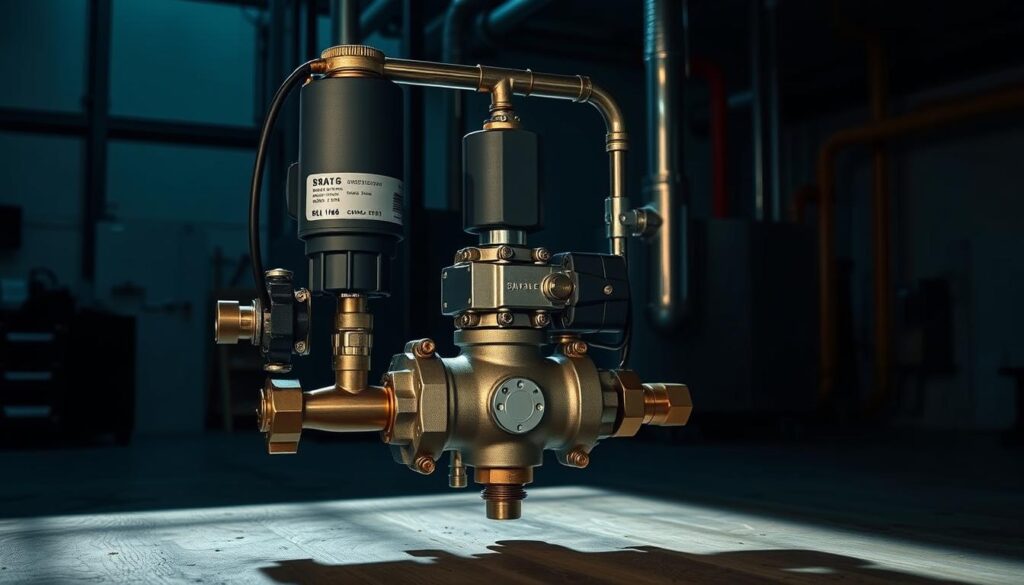
Selecting the Appropriate Piping, Valve, and Configuration
Choosing the right components is the first step. Start with the piping—ensure it’s sized correctly based on manufacturer tables for line sizing. Proper insulation is also crucial to maintain efficiency and prevent condensation4.
For the valve, opt for a mechanical or electronic type depending on your needs. Mechanical valves allow manual adjustments, while electronic valves offer precise control using a 12 VDC stepper motor4. Position the valve carefully, ensuring it’s accessible for future maintenance.
Consider the piping configuration. Common setups include:
- Evaporator inlet with a distributor: Ideal for systems with a TX valve.
- Evaporator inlet without a distributor: Follows similar principles but simplifies the setup.
- Directly into the suction line: Best for systems with multiple evaporators4.
Step-by-Step Adjustments to Achieve Optimal Pressure Settings
Once installed, fine-tuning the system is key. Start by brazing the connections and checking for leaks. Carefully evacuate the line set to remove any air or moisture5.
Adjust the valve gradually. Turn the adjustment stem clockwise to increase pressure by approximately 4 psig per full turn. Counterclockwise turns decrease it by the same amount5. Aim for a suction pressure of 58 psig to ensure proper activation5.
Monitor the temperature at the thermocouple. It should read 120°F or higher when the valve is active5. Stabilize the system after each adjustment to confirm accurate readings.
By following these steps, you’ll maintain optimal pressure settings and extend the life of your equipment. Proper installation and adjustment not only prevent costly repairs but also ensure consistent performance under varying load conditions.
Hot Gas Bypass Guide: Operation and Troubleshooting
Ever wondered how to keep your HVAC system running smoothly during low-demand periods? Low load conditions can lead to issues like compressor short cycling and coil freeze-up. Fortunately, a hot gas bypass valve can help stabilize your system and prevent these problems4.

Addressing Low Load Conditions and Preventing Compressor Short Cycling
When your system operates under low load, the suction pressure drops, risking compressor short cycling. This can lead to frequent stops and starts, which significantly contribute to compressor failure over time4. A hot gas bypass valve adjusts automatically to maintain pressure, ensuring the compressor runs longer and more efficiently5.
For example, in a lecture hall with fluctuating occupancy, the system switches to a false load mode during low-demand periods. This keeps the evaporator active and prevents freezing4.
Practical Tips for Diagnosing and Resolving Temperature and Pressure Issues
Diagnosing issues with your system starts with monitoring temperature and pressure. If the suction pressure drops below 58 psig, the valve should modulate open to stabilize it5. Check the thermocouple outlet for a reading of 120°F or higher to confirm proper activation5.
Here are some troubleshooting steps:
- Check thermocouple placement: Ensure it’s correctly positioned for accurate readings.
- Verify valve modulation: If the valve fails to adjust, inspect for mechanical or electronic issues4.
- Monitor oil return: Improper refrigerant flow can cause oil return problems, so follow manufacturer guidelines4.
Regular maintenance is key to long-term reliability. Adhere to manufacturer instructions and schedule routine checks to keep your system in top shape4.
| Issue | Solution |
|---|---|
| Low suction pressure | Modulate valve to maintain 58 psig5 |
| Incorrect temperature readings | Check thermocouple placement5 |
| Valve failure | Inspect for mechanical or electronic issues4 |
Final Insights on Optimizing Your HVAC Hot Gas Bypass System
Optimizing your HVAC system for varying loads doesn’t have to be complicated. By implementing proper techniques, you can ensure smooth operation and avoid common issues like coil freeze-up or compressor stress. A well-adjusted system reduces downtime and extends equipment life6.
Key benchmarks, such as maintaining a 58 psig activation point and ensuring a 120°F+ evaporator temperature, are critical for stability. Regular monitoring and adherence to manufacturer guidelines make troubleshooting straightforward7.
Take action today. Review your current setup, schedule a service check, and start enjoying the benefits of a finely tuned system. If you have questions, don’t hesitate to reach out—we’re here to help you achieve peak performance.
FAQ
How does a hot gas bypass system prevent coil freeze-up?
What should you consider when selecting a valve for your system?
How can you adjust pressure settings for optimal performance?
What are common signs of low load conditions in your HVAC system?
Why is industry data important for maintaining your system?
How do you diagnose temperature and pressure issues in your setup?
Source Links
- Using Hot Gas Reheat for Humidiy Control Engineers Newsletter
- Guide to Refrigeration Systems
- Centrifugal Chiller – Fundamentals | Energy-Models.com
- The Hot Gas Bypass Valve Explained | HVAC Know It All
- Understanding Hot Gas Bypass
- Microsoft Word – 90_1_2019_Appendix_G_PRM_2023.11.21
- Trane Engineers Newsletter, volume 32-2



0 Comments