When it comes to maintaining optimal temperatures in your home or business, the right HVAC system makes all the difference. Refrigeration condensing units are essential for heat transfer, ensuring your space stays cool in summer and warm in winter. These units play a critical role in preserving the quality and safety of perishable goods, making them indispensable for food storage and industrial processes1.
Choosing the right product for your needs is more than just about comfort—it’s about energy efficiency and performance. A well-maintained system can reduce energy usage by at least 10%, saving you money on utility bills2. With innovations like RIGID’s compact cooling solutions, you can achieve both efficiency and reliability in your HVAC setup.
This guide will help you navigate the process of selecting an energy-efficient condensing unit for your system. Whether you’re upgrading an old setup or installing a new one, understanding the balance between performance and efficiency is key to making the right choice.
Key Takeaways
- Condensing units are vital for heat transfer in HVAC systems, ensuring consistent temperature control1.
- Energy efficiency is a top priority, as it can significantly reduce operational costs2.
- Proper maintenance extends the lifespan of your system and prevents unexpected breakdowns3.
- Innovative products like RIGID’s compact solutions offer both reliability and efficiency.
- Selecting the right unit depends on your specific cooling and heating needs.
Understanding Condensing Units: The Heart of HVAC Systems
At the core of every effective HVAC system lies the condensing unit, ensuring seamless cooling and heating. This component is essential for maintaining comfortable indoor temperatures, whether it’s a scorching summer day or a chilly winter night. But what exactly makes it so important?
Definition and Key Components
A condensing unit is the outdoor part of your HVAC system, responsible for converting refrigerant from gas back into liquid form. This process is crucial for heat exchange, which keeps your home or business comfortable4. Let’s break down its main parts:
- Compressor: This transforms the refrigerant into a high-pressure, high-temperature gas, kickstarting the cooling cycle5.
- Condenser Coil: Here, the refrigerant releases the heat it absorbed from your indoor air, allowing it to cool down5.
- Fan: The fan pulls air through the condenser coil, helping to transfer heat outside5.
How Condensing Units Facilitate Cooling Processes
Think of your HVAC system like the human circulatory system. The condensing unit acts as the heart, pumping refrigerant through the system to remove heat. Here’s how it works:
First, the compressor pressurizes the refrigerant, turning it into a hot gas. This gas then flows into the condenser coil, where it releases heat to the outside air. Finally, the fan helps dissipate this heat, ensuring your indoor space stays cool and comfortable5.
This process is what makes air conditioning possible. Without a well-functioning condensing unit, your system wouldn’t be able to maintain the ideal temperature4.
condensing unit guide: Your Expert Roadmap to Energy Efficiency
Balancing cooling capacity with energy consumption is the key to an efficient HVAC system. Whether you’re upgrading or maintaining your setup, these expert tips will help you maximize performance and savings.
Expert Tips and Industry Insights
Start by ensuring your system’s cooling capacity matches your needs. Oversized units waste energy, while undersized ones struggle to maintain the desired temperature. For example, the Fujitsu LZAH1 Series boasts a SEER of 33.1, making it a top choice for efficiency6.
Proper installation is crucial. Improper setup can reduce system efficiency by up to 30%6. Always hire certified professionals to avoid costly mistakes.
Here are some actionable strategies:
- Upgrade insulation: Enhancing home insulation prevents air leakage, improving efficiency6.
- Seal ductwork: This reduces energy bills and boosts system performance6.
- Choose high SEER ratings: Systems with SEER ratings of 16 to 21 are considered high efficiency6.
Real-world data from Consumer Reports highlights the importance of temperature regulation. For instance, replacing a 1970s model with a new unit can save up to 40% on energy costs7.
Ask yourself: “How can I ensure my cooling system meets my energy needs?” The answer lies in balancing capacity with efficiency. Practical examples, like the Lennox Signature Series XC25, show how advanced technology can cut energy costs by up to 60%7.
By following these tips, you’ll not only save money but also extend the lifespan of your system. Stay informed, make smart choices, and enjoy the benefits of an energy-efficient cooling system.
Key Considerations When Choosing a Refrigeration Condensing Unit
Selecting the right refrigeration component is crucial for optimal performance and energy savings. Whether you’re upgrading or installing a new system, understanding key factors like cooling capacity, temperature control, and compatibility ensures you make the best choice. Let’s break down what you need to know.
Evaluating Cooling Capacity and Temperature Control
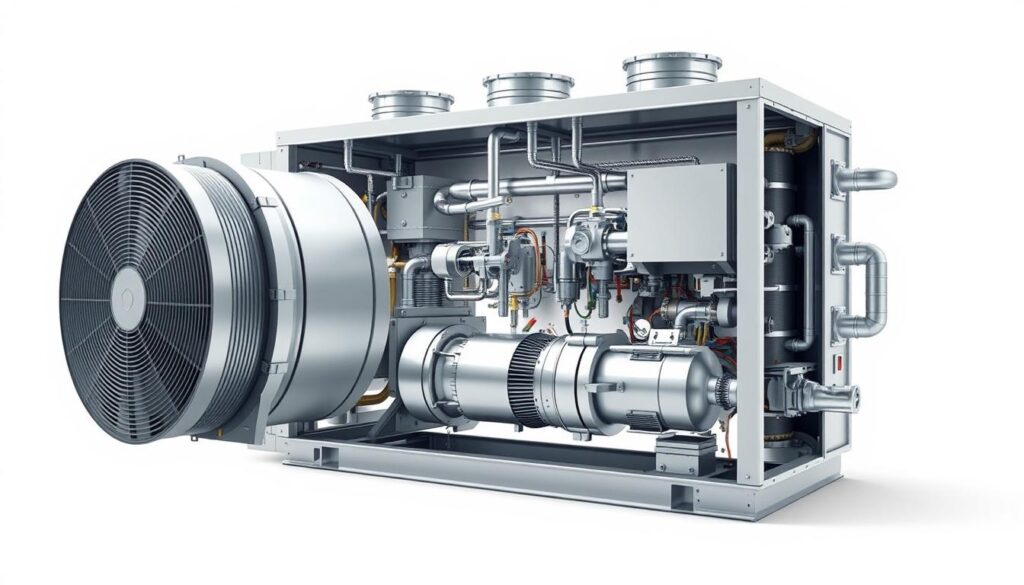
Cooling capacity should match your heat load requirements. Oversized systems waste energy, while undersized ones struggle to maintain temperature8. For example, in cold storage warehouses, additional heat from foot traffic and equipment must be factored into your cooling load estimate9.
Defrost cycles can impact compressor performance. For applications with storage temperatures of 35 °F or higher, compressors should operate for 16 to 18 hours9. This ensures consistent temperature control and prevents system strain.
Assessing Energy Efficiency and Unit Compatibility
Energy efficiency is a top priority. Look for systems with high SEER (Seasonal Energy Efficiency Ratio) ratings, typically exceeding 168. Units with an EER (Energy Efficiency Ratio) of 12 or higher are also considered efficient8.
Compatibility with your existing setup is equally important. Ensure the unit fits your space and meets installation requirements, such as minimum clearance from walls8. Regular maintenance can extend the lifespan of your system by 15-20%8.
| Factor | What to Look For |
|---|---|
| Cooling Capacity | Match heat load requirements; avoid oversizing or undersizing8. |
| Temperature Control | Ensure consistent performance with proper compressor operation9. |
| Energy Efficiency | Choose units with SEER ratings above 16 or EER ratings of 12+8. |
| Compatibility | Check space constraints and installation requirements8. |
By focusing on these factors, you’ll ensure your refrigeration system operates efficiently and reliably. What steps will you take to evaluate your current setup? Start with a thorough assessment of your cooling needs and compatibility requirements.
Exploring Varied Types of Condensing Units for Different Applications
From air-cooled to remote systems, each option offers distinct advantages for various scenarios. Whether you’re running a small business or managing an industrial facility, understanding these differences ensures you meet your cooling needs effectively.
Air-Cooled and Water-Cooled Options
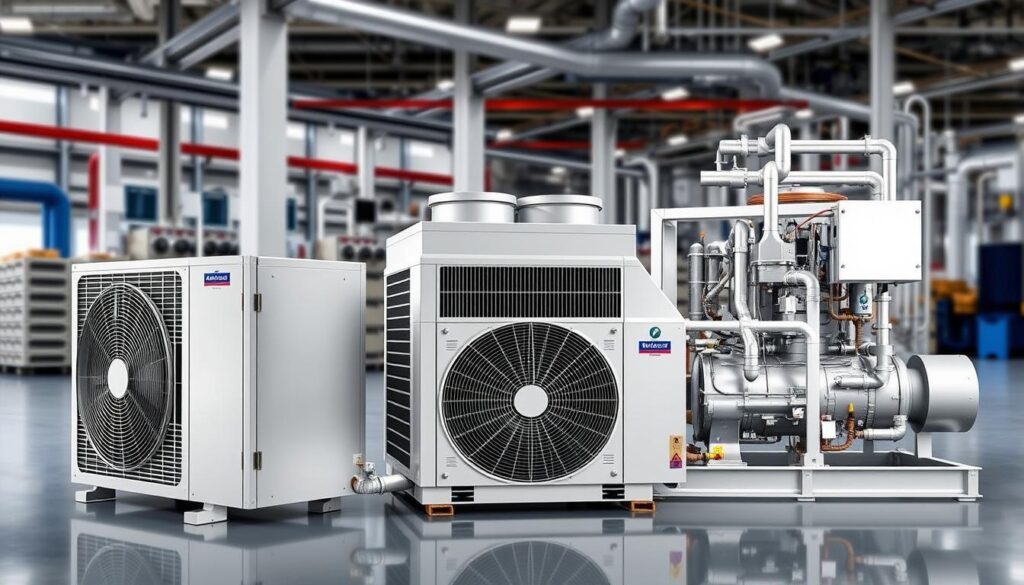
Air-cooled systems use ambient air to remove heat, making them ideal for smaller setups or areas with limited water access. They’re easier to install and require less maintenance, but they may struggle in extremely hot climates10.
Water-cooled systems, on the other hand, are more efficient for large-scale operations like industrial refrigeration. They use water to dissipate heat, ensuring consistent performance even in high-demand environments10.
Benefits of Remote and Packaged Systems
Remote systems separate the condenser from the evaporator, offering flexibility in installation. This setup is perfect for industrial applications where space constraints or noise reduction are priorities11.
Packaged systems combine all components into a single unit, simplifying installation and reducing upfront costs. They’re a great choice for small to medium-sized businesses looking for a straightforward solution11.
| Type | Best Use Case | Key Benefit |
|---|---|---|
| Air-Cooled | Small businesses, residential | Low maintenance, easy installation |
| Water-Cooled | Industrial, large-scale | High efficiency, consistent performance |
| Remote | Industrial, noise-sensitive areas | Flexible installation, reduced noise |
| Packaged | Small to medium businesses | Simplified setup, cost-effective |
Using the correct gas in your system can optimize cooling performance and reduce environmental impact. Always consult with a professional to ensure compatibility and efficiency10.
Which type of cooling system best meets your business’s needs? Consider factors like space, climate, and operational demands to make the right choice.
Installation and Integration in Existing HVAC Systems
Installing a new HVAC system or upgrading an existing one doesn’t have to be overwhelming. With the right approach, you can ensure a smooth process that minimizes disruptions and maximizes efficiency. Whether you’re working with limited space or integrating new components, these tips will help you achieve a seamless setup.
Tips for Seamless Installation
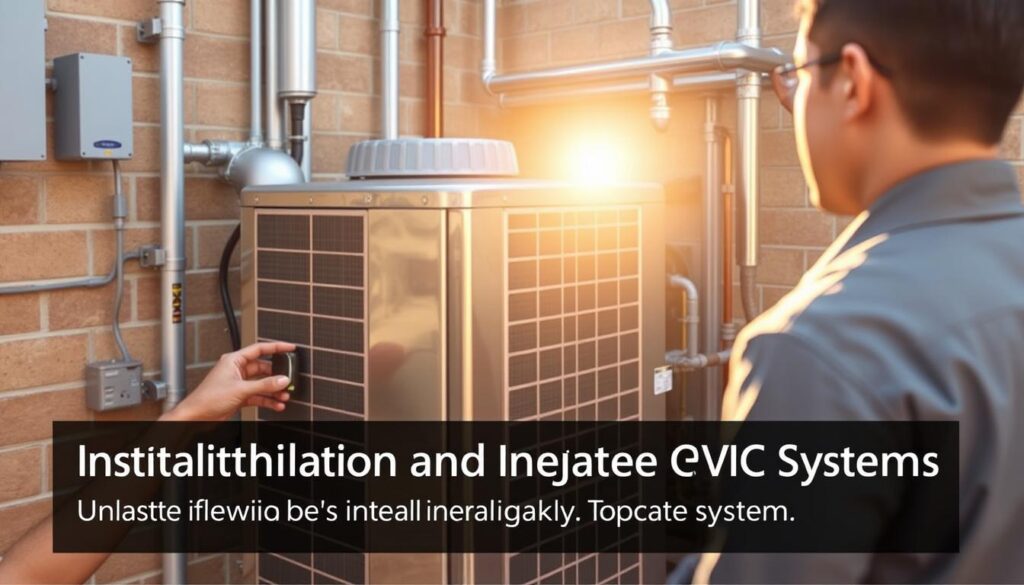
Start by planning the layout of your heating and cooling components. Proper arrangement ensures optimal airflow and performance. For example, placing the outdoor unit in a shaded area can improve efficiency by up to 10%12.
Modern units often come with pre-wired features, making installation easier. Always hire certified professionals to handle the setup. This ensures compliance with local building codes and prevents costly mistakes13.
Here are some practical tips:
- Measure your space: Ensure the unit fits comfortably without obstructing airflow12.
- Check ductwork: Seal any leaks to prevent energy loss and improve efficiency13.
- Test the system: After installation, run tests to ensure all components work harmoniously14.
Integrating Units with Current Systems
Integrating new components with your existing HVAC system requires careful planning. Start by assessing compatibility. For instance, ensure the new unit matches the capacity of your current setup to avoid inefficiency13.
Use zoning systems to control heating and cooling in different areas independently. This enhances comfort and reduces energy consumption12.
How can you ensure each component works in harmony with your current system? Focus on proper alignment and regular maintenance. For example, upgrading insulation can improve efficiency by up to 20%13.
| Integration Tip | Benefit |
|---|---|
| Match system capacities | Prevents inefficiency and energy waste13. |
| Use zoning systems | Enhances comfort and reduces energy use12. |
| Upgrade insulation | Improves efficiency by up to 20%13. |
By following these steps, you’ll create a system that fits together like a well-oiled machine. This ensures long-term performance and energy savings.
Expert Tips on Maintenance and Upkeep of Your Cooling System
Keeping your cooling system in top shape doesn’t just save money—it ensures comfort year-round. Regular maintenance can prevent unexpected breakdowns and extend the lifespan of your system. With a few simple steps, you can maintain peak performance and avoid costly repairs15.
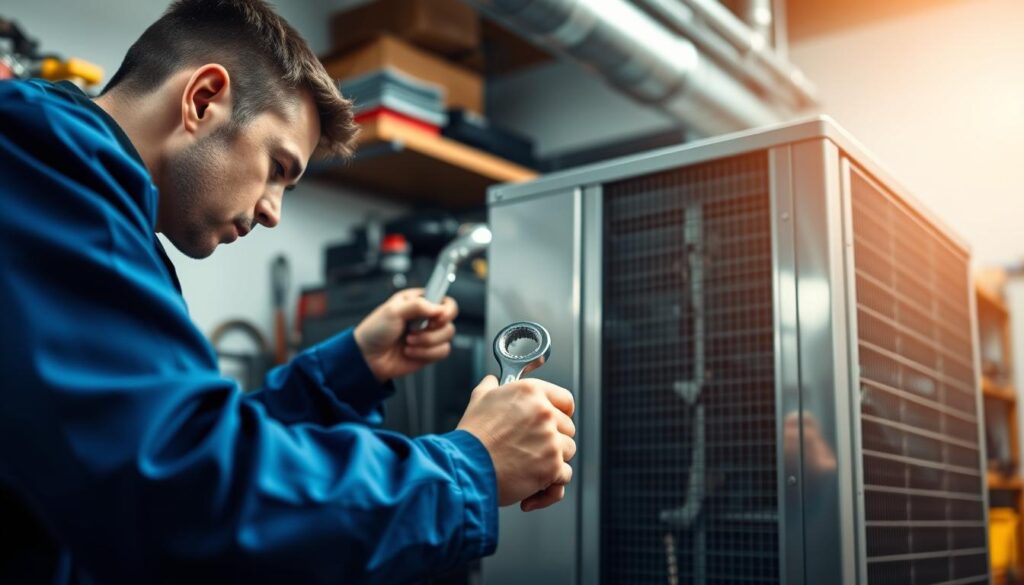
Routine Inspection and Maintenance Tips
Start by checking your system’s filters. Changing the blower filter at least twice a year can improve airflow and reduce energy consumption15. Dirty filters strain your system, leading to higher utility bills and reduced efficiency.
Inspect the outdoor unit regularly. Keeping a 2-foot radius free of debris ensures optimal performance and prevents overheating15. This simple step can save you up to 10% on cooling costs16.
Don’t forget the condenser coils. Cleaning them can enhance heat transfer efficiency by up to 30%, improving overall system performance16. This is especially important before the summer months when your system works hardest.
Control Protocols and Self-Inspection Checklists
Maintaining control over your system’s health starts with a checklist. Inspect electrical connections, lubricate moving parts, and test thermostat settings. These small actions can prevent major issues down the line17.
Programmable thermostats are a great option for managing costs. They can reduce cooling expenses by approximately 20% by automatically adjusting temperatures when you’re away15.
Choosing the Right Service Option
When professional help is needed, choose wisely. Scheduling annual maintenance can reduce the likelihood of costly repairs by 50%16. Look for certified technicians with positive reviews to ensure quality service.
What maintenance routines work best according to industry experts? Start with regular inspections and proactive care. This approach not only saves money but also keeps your system running smoothly for years to come.
Enhancing Energy Efficiency and Overall Performance
Boosting your system’s energy efficiency doesn’t just save money—it also enhances performance. With a few practical steps, you can reduce energy bills while ensuring your HVAC system runs smoothly. Let’s explore how you can achieve this balance.
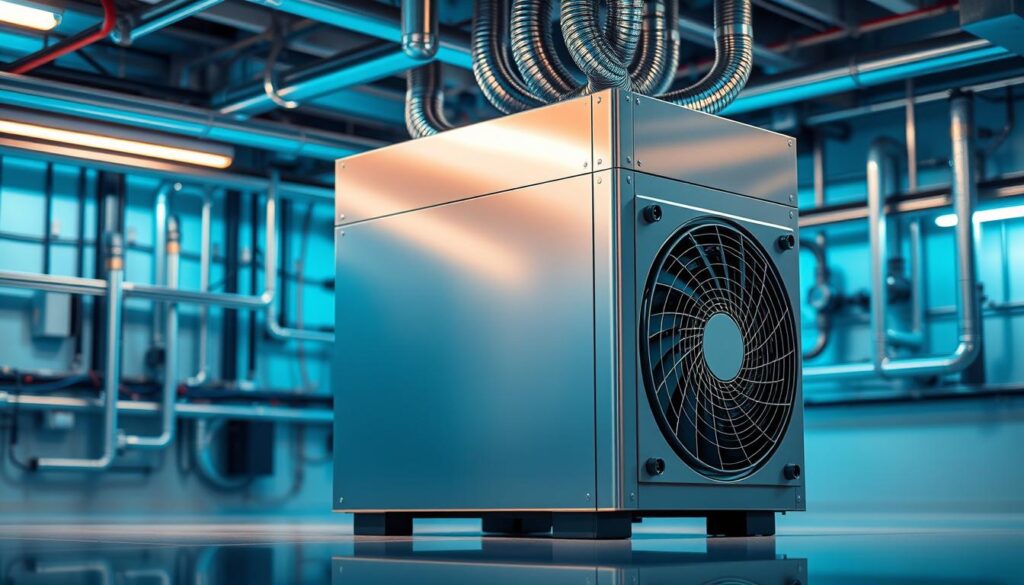
Implementing Energy-Saving Practices
Start by focusing on your condenser coil. Keeping it clean can improve heat transfer efficiency by up to 30%, ensuring your system operates at peak performance18. Regular maintenance, like changing filters every one to three months, can also lower energy bills and improve airflow19.
Another effective strategy is sealing air ducts. This prevents air leakage, which can waste up to 20% of the air moving through your system20. Proper insulation, especially in attics, can save up to 20% on heating and cooling costs20.
Consider upgrading to a programmable thermostat. This simple change can save you approximately $180 annually by adjusting temperatures when you’re away20. It’s a small investment with significant returns.
Tracking Efficiency Through Industry Metrics
Understanding industry metrics helps you measure your system’s efficiency. For example, ENERGY STAR certified windows can reduce energy bills by 7-24% compared to non-qualified options20. Similarly, replacing old equipment with ENERGY STAR certified units can save nearly $140 annually18.
Proper installation is equally important. Improper setup can decrease system efficiency by up to 30%, so always hire certified professionals18. Additionally, choosing the right size for your unit ensures it matches your cooling needs without wasting energy18.
| Energy-Saving Practice | Impact |
|---|---|
| Clean condenser coils | Improves efficiency by up to 30%18 |
| Seal air ducts | Prevents 20% air leakage20 |
| Upgrade to programmable thermostat | Saves $180 annually20 |
| Install ENERGY STAR windows | Reduces bills by 7-24%20 |
What energy efficiency upgrades can realistically enhance your unit’s performance? Start with simple changes like sealing ducts and upgrading thermostats. These steps not only save money but also contribute to a more sustainable future.
Comparing Dry Coolers and Traditional Condensing Units
Choosing between dry coolers and traditional systems can significantly impact your cooling efficiency and operational costs. Both options have unique design features and operational benefits, making it essential to understand their differences. Let’s dive into how each system works and where they excel.
Contrasting Features and Operational Benefits
Dry coolers operate solely with outside air, limiting output temperatures to no lower than the ambient air’s dry bulb temperature21. This makes them ideal for areas with water scarcity or environmental restrictions22. Traditional systems, on the other hand, often use water for cooling, which can be more efficient but requires a constant water supply22.
One key part of dry coolers is their finned coils, designed to maximize heat transfer efficiency21. Traditional systems rely on compressors and condenser coils, which can be more complex and costly to maintain21. Dry coolers also have lower acquisition costs, making them a budget-friendly option for many industry applications21.
When it comes to process efficiency, dry coolers can operate year-round, even in low-temperature environments22. Traditional systems, like chillers, offer more precise temperature control but often come with higher maintenance costs22. For example, data centers in cold climates increasingly use dry coolers for reliable cooling solutions21.
Industry Examples and Real-Life Insights
In the food and beverage industry, dry coolers are often preferred for their ability to meet specific temperature requirements without water usage21. Meanwhile, traditional systems are still widely used in industrial processes where precise cooling is critical22.
Consumer Reports highlight that integrating dry coolers with chillers can save energy by using dry coolers during colder months and chillers in warmer periods21. This hybrid approach is gaining popularity in power plants and chemical processing facilities21.
| Feature | Dry Coolers | Traditional Systems |
|---|---|---|
| Operational Cost | Lower acquisition and maintenance costs21 | Higher initial and maintenance costs22 |
| Design Flexibility | Can operate year-round, no water needed22 | Requires water supply, more complex design22 |
| Industry Applications | Data centers, food and beverage21 | Industrial processes, precise cooling22 |
Which design best suits your specific cooling needs? Consider factors like water availability, maintenance costs, and operational flexibility to make the right choice for your industry.
Innovative Technological Advances and New AWEF Standards
Innovation in cooling technology is reshaping the way we think about energy efficiency and performance. With advancements like THERMOSPAN™ condenser core design and stricter AWEF regulations, modern systems are smarter and more sustainable than ever before. These changes not only improve cooling capacity but also reduce operating time and energy consumption.
Understanding THERMOSPAN™ Condenser Core Design
THERMOSPAN™ is a game-changer in condenser core technology. Its unique design maximizes heat transfer efficiency, ensuring your equipment operates at peak performance. This innovation reduces energy usage and extends the lifespan of your system, making it a cost-effective solution for both residential and commercial applications.
Modern fans integrated with THERMOSPAN™ enhance airflow, further improving efficiency. This combination ensures consistent cooling capacity, even in demanding environments. How can this technology transform your system’s efficiency and longevity? By reducing wear and tear, it minimizes maintenance needs and keeps your equipment running smoothly for years.
Meeting and Exceeding AWEF Requirements
AWEF regulations, effective since January 1, 2020, set new benchmarks for energy efficiency in cooling systems. These standards apply to all new equipment, ensuring compliance across the board23. Manufacturers must meet or exceed minimum AWEF ratings based on capacity and application24.
Compliance with AWEF standards not only reduces energy bills but also supports environmental sustainability. For example, systems meeting these requirements can achieve 20–40% energy reductions in walk-in coolers and freezers24. This makes them ideal for businesses looking to cut costs and reduce their carbon footprint.
By integrating THERMOSPAN™ technology and adhering to AWEF standards, you can ensure your system is both efficient and future-proof. Are you ready to embrace the next generation of cooling technology?
Real Industry Insights Backed by Data and Trends
Understanding real-world performance trends can help you make smarter decisions for your HVAC system. Whether you’re upgrading or maintaining your setup, data-driven insights ensure you achieve optimal performance and efficiency. Let’s explore what industry surveys and Consumer Reports reveal about modern heating cooling systems.
Survey Findings and Consumer Reports Highlights
Recent surveys of over 13,000 AC units highlight key trends in operation and reliability. For example, systems with higher SEER ratings consistently outperform older models, reducing energy bills by up to 40%25. This makes energy-efficient conditioning systems a top choice for homeowners and businesses alike.
Consumer Reports also emphasize the importance of proper installation. Systems installed by certified professionals are 30% more efficient than DIY setups26. This ensures your system runs smoothly and avoids costly repairs.
Key Operational Success Factors
Several factors contribute to optimal performance in real-world settings. Regular maintenance, such as cleaning condenser coils and replacing filters, can improve efficiency by up to 30%27. Additionally, programmable thermostats help manage heating cooling cycles, saving up to $180 annually26.
Here’s a quick summary of survey findings:
| Factor | Impact |
|---|---|
| High SEER Ratings | Reduces energy bills by up to 40%25 |
| Professional Installation | Improves efficiency by 30%26 |
| Regular Maintenance | Boosts efficiency by up to 30%27 |
| Programmable Thermostats | Saves $180 annually26 |
What real industry trends can help guide your next purchase decision? Start by focusing on energy efficiency and professional installation. These steps ensure your system delivers reliable operation and long-term savings.
Building Trust Through Expert Credentials and Practical Experiences
Building trust in hvac systems starts with expertise and real-world experience. Whether you’re selecting the right type of system or ensuring compliance with regulations, the role of a skilled technician cannot be overstated. Let’s explore how personal stories and industry insights can help you make informed decisions.
Sharing Personal Stories and Industry Research
Real-life experiences often reveal the challenges and solutions in hvac systems. For example, a seasoned technician once shared how choosing the right type of system saved a client thousands in energy costs. These stories highlight the importance of expertise and practical knowledge28.
Industry research also plays a crucial role. Studies show that dynamic, informed professionals are essential for establishing trust in technical fields28. This includes not only technical skills but also the ability to integrate theory with practice29.
The Role of Skilled Technicians and Regulatory Compliance
A skilled technician brings more than just technical know-how. They ensure your system meets regulations and operates efficiently. For instance, proper installation can improve system performance by up to 30%28.
Meeting regulations is equally important. Compliance with industry standards not only builds trust but also ensures quality assurance. This is especially critical in industries where safety and efficiency are paramount29.
Expert Credentials and Successful Integrations
Expert credentials often influence the success of system integrations. For example, a certified technician can identify potential issues before they become costly problems. This proactive approach ensures long-term reliability and performance28.
Here are some key factors to consider when working with experts:
- Experience: Look for professionals with a proven track record in your specific type of system29.
- Certifications: Ensure they meet industry standards and regulations28.
- Communication: A good technician explains complex concepts in simple terms, helping you make informed decisions29.
How can genuine experience guide you in making informed decisions? Start by seeking professionals who combine technical expertise with practical insights. This approach ensures your hvac system is both efficient and reliable.
Conclusion
Ensuring your HVAC system operates at its best involves understanding key factors like safety and efficiency. From proper installation to regular maintenance, these steps keep your system running smoothly and extend its lifespan30.
To enhance safety, always ensure your system is installed on a level surface and free of obstructions. This prevents operational issues and improves airflow efficiency31. Regular servicing, recommended once or twice a year, can also boost performance and reduce energy consumption by up to 30%30.
When making decisions, rely on expert insights and real industry data. For example, ENERGY STAR certified systems can save you up to $500 annually on utility bills30. These choices not only improve efficiency but also contribute to a sustainable future.
Ready to take the next step? Explore further resources or consult with experienced technicians for tailored solutions. We’re here to help—feel free to reach out with questions or for a follow-up consultation!
FAQ
What is a condensing unit in an HVAC system?
How does a condensing unit improve energy efficiency?
What should I consider when choosing a refrigeration condensing unit?
What are the differences between air-cooled and water-cooled condensing units?
How often should I maintain my condensing unit?
What are the benefits of remote and packaged condensing systems?
How can I enhance the energy efficiency of my condensing unit?
What is THERMOSPAN™ condenser core design?
How do dry coolers compare to traditional condensing units?
What are the latest trends in condensing unit technology?
Source Links
- The Ultimate Guide to Choosing the Right Refrigeration Condensing Unit
- Ultimate Guide to HVAC Systems
- A Comprehensive Guide to HVAC System Components – Texas Air Mechanical
- What is a Condensing Unit in HVAC
- What Is an AC Condenser and How Does It Work?
- Maximizing Home Comfort: The Guide to Choosing the Best Energy Efficient HVAC System in 2024 – Comfort One | HVAC Installation, Repair & Maintenance In Phoenix, AZ
- HVAC Guide: Top 5 Recommended Central Air Conditioning Units in the US | PRO CREW SCHEDULE
- How to Choose Your Condensing Unit
- Considerations for Sizing and Selecting Condensing Units for WICFs
- How A Condensing Unit Works: Demystifying the Science Behind Efficient Cooling | Extrapolate
- Selecting the Perfect AC Condenser Unit for Your Business
- Residential HVAC System Installation Alpharetta GA – Superior Indoor Comfort, Inc.
- How do I Know if my Current HVAC System is Compatible with a New Air Conditioner?
- Tips For Residential HVAC Installation: Essential for Homeowners – One Hour Air Conditioning & Heating Fort Worth TX & North Dallas / Plano Area. Gladly servicing the Fort Worth and North Dallas Area.
- The Essential AC Maintenance Guide For Homeowners in 2022
- Keep Cool: Essential Outdoor AC Unit Maintenance Tips
- Air Conditioner Unit Maintenance Tips to Keep Your Home Cool All Year
- Heat & Cool Efficiently
- 2025 Homeowner’s Guide to Energy-Efficient Air Conditioning
- Dry Coolers: a complete guide – MITA Cooling Technologies
- WHAT IS A DRY COOLER & WHAT ARE THE DIFFERENCES BETWEEN DRY COOLERS VS. CHILLER SYSTEMS? – Cold Shot Chillers
- What You Need to Know About AWEF: New and Retrofit Installs
- Understanding the DOE Mandate on Walk-In Coolers and Freezers
- Condensing Unit Market- Global Industry Analysis and Forecast (2024-2030)
- Condensing Unit Market Size to Hit USD 81.72 Billion By 2034
- Condensing Unit Market, Industry Size Forecast [Latest]
- The educator as facilitator of trust in the nursing education environment
- Expertise in Decision Making
- What is an AC Condenser? | Your Guide to Cooling Efficiency
- Ultimate User Guide on Air-Cooled Condensing Units


0 Comments