Are you struggling to keep your HVAC system efficient and reliable? Water-cooled condensers might be the solution you’re looking for. These systems are known for their energy efficiency and ability to handle high-capacity cooling needs, making them a popular choice in industries like medical manufacturing and food processing1. Unlike air-cooled systems, they operate at lower condensing temperatures, which can significantly reduce energy consumption2.
One of the standout benefits of these systems is their compact design, which saves valuable space while delivering consistent performance1. Whether you’re dealing with drying processes or space heating, water-cooled condensers offer a reliable way to maintain optimal temperatures. Plus, their quick installation can minimize downtime, ensuring your operations stay on track1.
Key Takeaways
- Water-cooled condensers are energy-efficient and ideal for high-capacity cooling.
- They operate at lower condensing temperatures compared to air-cooled systems.
- Compact designs save space while delivering consistent performance.
- Quick installation reduces downtime in industrial applications.
- Proper maintenance ensures long-lasting performance and cost savings.
Understanding Water-Cooled Condensers in HVAC Systems
Ever wondered how to make your building’s cooling system more efficient? Water-cooled condensers are a game-changer for HVAC setups. These systems use a two-pipe design, also known as a double-pipe condenser, to transfer heat effectively3. Unlike air-cooled units, they operate at lower condensing temperatures, which can significantly reduce energy consumption4.
What is a Water-Cooled Condenser and How Does It Work in Your Building?
In simple terms, a water-cooled condenser is a type of HVAC unit that uses water to remove heat from the refrigerant. The process begins when the compressor pushes the refrigerant through the system. As the refrigerant flows, it releases heat into the water, which is then circulated and cooled4. This method is highly efficient, especially in high-capacity systems above 20 tons4.
One of the standout features of these systems is their ability to reduce water temperature by approximately 10 degrees before returning it to distribution lines4. This makes them ideal for environments where energy efficiency is a priority.
Key Benefits of Switching from Air-Cooled to Water-Cooled Systems for Energy Efficiency
Switching to a water-cooled system can lead to significant energy savings, ranging from 20% to 50% compared to traditional HVAC setups4. Here’s why:
- Higher Heat Capacity: Water has a greater ability to absorb heat than air, making these systems more efficient4.
- Lower Noise Levels: These units operate quietly, making them suitable for noise-sensitive environments4.
- Cost-Effective: Despite higher initial costs, the long-term savings on energy bills make them a smart investment4.
| Feature | Water-Cooled | Air-Cooled |
|---|---|---|
| Energy Efficiency | High | Moderate |
| Noise Level | Low | High |
| Initial Cost | Higher | Lower |
For example, in condominiums and apartment buildings, water-cooled systems are popular due to their cost-effectiveness and ability to handle high external temperatures4. If you’re looking to upgrade your HVAC system, this could be the solution you need.
Water Cooled Condenser Guide: Design and Maintenance Essentials
Looking to optimize your HVAC system’s performance? Understanding the design principles and maintenance strategies for your setup can make all the difference. Let’s break it down into actionable steps to ensure your system runs efficiently for years to come.
Fundamental Design Principles and Critical Components Explained
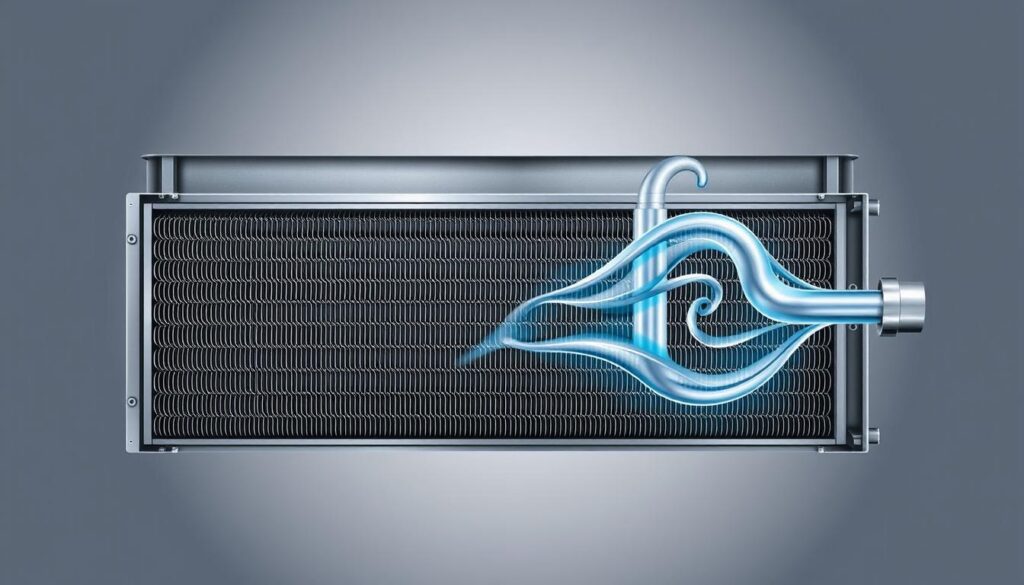
Every efficient system starts with a solid design. Key components like the water supply and refrigerant circuits play a crucial role. For instance, a 1” diameter pipe can carry as much heat as a 10” x 19” rectangular duct, making it a space-saving solution5.
Proper integration of these components ensures smooth operation. For example, cooling tower systems consume only about 5% of the water compared to once-through methods, significantly reducing operational costs6.
Integrating Water Supply, Cooling Circuits, and Optimal Layouts
Efficient layouts are essential for maximizing performance. Induced draught towers, for instance, can handle installations ranging from 5 m³/hr to 150,000 m³/hr, offering flexibility for various applications6.
Optimizing the cooling circuit design can also improve energy efficiency. Frequency modulating devices allow for infinitely variable fan speeds, enhancing performance while reducing energy consumption6.
Cost-Effective Strategies and Long-Term Benefits
Regular maintenance is key to long-term savings. Cleaning and corrosion prevention can extend the lifespan of your system. For example, evaporative cooling systems are noted as the least expensive cooling technique, outperforming dry air coolers in terms of energy efficiency6.
Investing in quality components and routine checks can also reduce downtime and repair costs. Radiant floor systems, for instance, deliver approximately 230 Btuh of heat per Watt of pump power, making them a cost-effective choice5.
| Design Type | Heat Capacity | Energy Efficiency |
|---|---|---|
| Shell and Coil | High | Moderate |
| Double-Tube | Very High | High |
By focusing on these principles, you can ensure your system operates at peak efficiency while minimizing costs. Whether you’re upgrading or maintaining your setup, these strategies will help you achieve long-term success.
Advanced Design Techniques and Practical HVAC Applications
Want to take your HVAC system to the next level with cutting-edge design techniques? Modern innovations in heat transfer and component design can significantly enhance performance. Let’s dive into the strategies that can transform your setup.
Innovative Heat Transfer Strategies and Modern Condenser Coil Designs
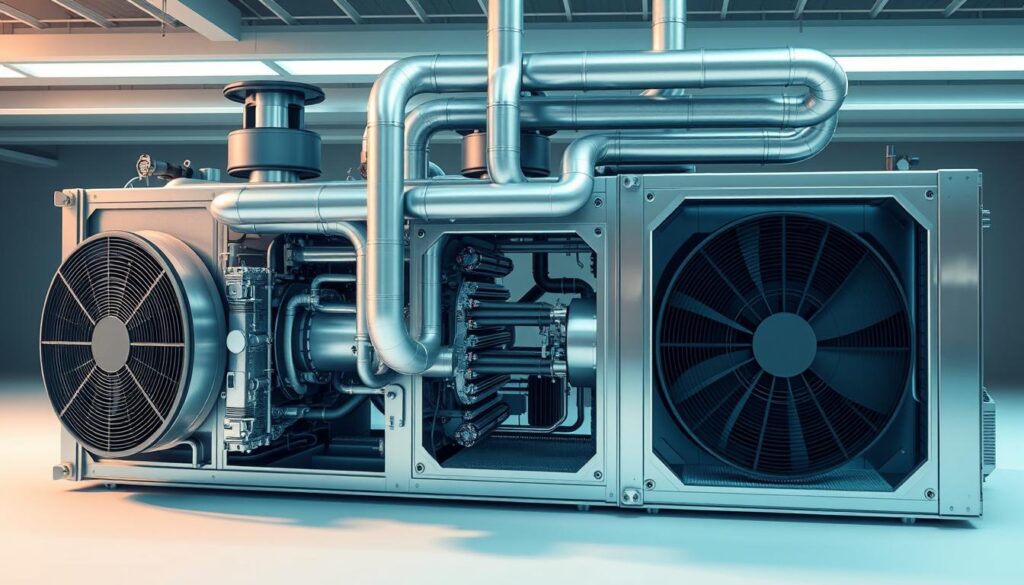
One of the most impactful advancements is in heat transfer efficiency. For example, advanced tube designs, such as microchannel coils, increase surface area for better heat exchange. These designs can reduce energy consumption by up to 15% compared to traditional methods.
Modern condenser coils also play a crucial role. Innovations like enhanced fin designs improve airflow and reduce pressure drops, ensuring optimal temperature control. These upgrades are particularly effective in high-capacity systems.
Leveraging Industry Data and Research for Informed Design Decisions
Understanding the role of cooling towers is essential. For instance, induced draught towers are more efficient than forced draught models, offering better performance in varying climates. Research shows that integrating these towers can cut operational costs by up to 20%.
Here’s how advanced design strategies can benefit your system:
- Enhanced Efficiency: Modern tube and coil designs maximize heat exchange.
- Cost Savings: Efficient cooling towers reduce energy and maintenance expenses.
- Improved Performance: Optimized layouts ensure consistent temperature control.
By staying informed about industry trends, you can make smarter decisions for your HVAC system. These techniques not only boost efficiency but also extend the lifespan of your equipment.
Maintenance Best Practices and Troubleshooting Strategies
Keeping your HVAC system in top shape doesn’t have to be overwhelming. With the right approach, you can ensure smooth operation and extend the lifespan of your equipment. Let’s explore practical steps to maintain your system and troubleshoot common issues effectively.
Routine Cleaning, Corrosion Prevention, and Sensor Integration Tips
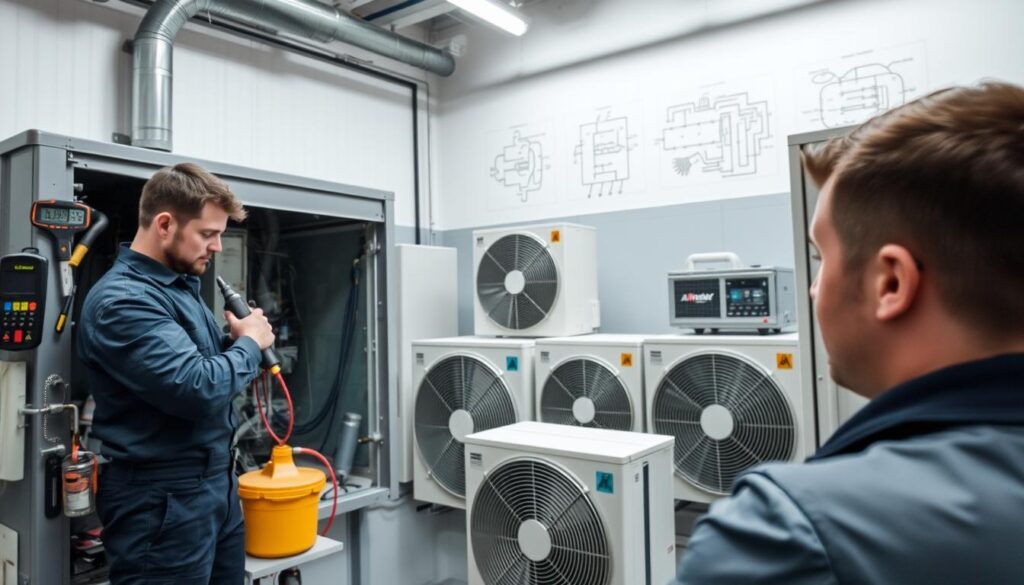
Regular cleaning is essential to maintain efficiency. For example, cleaning spray nozzles and checking for adequate airflow can prevent reduced performance and premature equipment failure7. Neglecting these tasks can lead to up to 30% higher energy consumption8.
Corrosion prevention is another critical aspect. Effective water treatment eliminates harmful bacteria and controls scale, solids, and corrosion7. This ensures optimal heat transfer and extends the life of your system.
Integrating sensors can also enhance maintenance. Remote monitoring systems reduce response times by 50%, allowing you to address issues before they escalate8.
How to Address Common Issues and Enhance System Longevity with Regular Checks
Regular checks are key to avoiding unexpected downtime. For instance, testing electrical connections and controls can prevent up to 25% of workplace accidents8. Additionally, maintaining detailed logs of flow rates and operating temperatures improves consistency by 40%8.
Here’s a quick comparison of maintenance techniques:
| Technique | Benefit | Impact |
|---|---|---|
| Routine Cleaning | Prevents reduced efficiency | Up to 30% energy savings8 |
| Corrosion Prevention | Extends equipment life | Optimal heat transfer7 |
| Sensor Integration | Real-time diagnostics | 50% faster response8 |
By following these steps, you can ensure your system operates efficiently and lasts longer. Whether you’re managing a large building or a compact space, these strategies will help you achieve long-term success.
Comparing Water-Cooled and Air-Cooled Systems for Optimal Efficiency
Choosing the right cooling system for your HVAC setup can feel overwhelming, but understanding the differences between options can simplify the decision. Whether you’re prioritizing energy savings, noise reduction, or installation flexibility, this complete guide will help you make an informed choice.
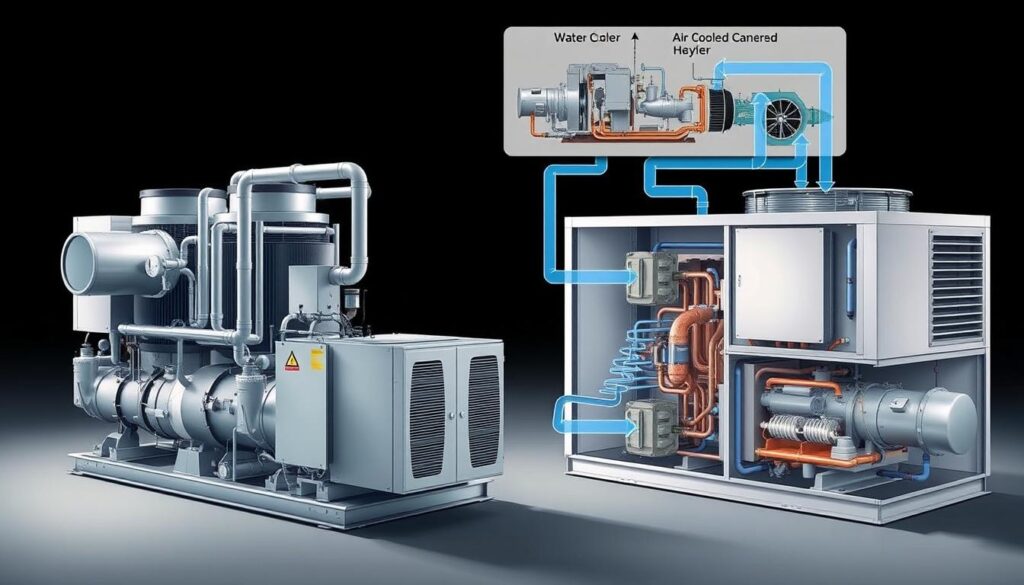
Evaluating Energy Consumption, Ambient Noise, and Installation Flexibility
When it comes to energy consumption, water-cooled systems are generally more efficient, reducing energy use and operating costs significantly9. In contrast, air-cooled systems perform better in regions with water scarcity, as they don’t rely on water for cooling10.
Noise levels are another key factor. Water-cooled systems operate quieter, with major noise-producing components located in the cooling tower9. Air-cooled systems, however, can be noisier due to the presence of large condenser fans11.
Installation flexibility also varies. Water-cooled systems require less space but involve more complex infrastructure, including water pumps and treatment systems9. Air-cooled systems, on the other hand, are easier to install and maintain, making them a practical choice for smaller setups10.
Determining the Right Choice Based on Space, Cost, and Performance Needs
Space constraints often influence the decision. Water-cooled systems are compact, ideal for high-capacity applications9. Air-cooled systems, while larger, are more adaptable to environments with limited water supply10.
Cost is another critical factor. Water-cooled systems have higher initial costs but offer long-term savings through reduced energy consumption9. Air-cooled systems are more cost-effective upfront but may incur higher operational expenses over time11.
Performance needs also play a role. Water-cooled systems excel in handling high heat loads, making them suitable for demanding applications10. Air-cooled systems, while less efficient, are easier to maintain and perform well in dry climates11.
Here’s a quick comparison to help you decide:
- Energy Efficiency: Water-cooled systems save up to 20-50% on energy costs9.
- Noise Levels: Water-cooled systems are quieter, while air-cooled systems can be noisier911.
- Installation: Air-cooled systems are easier to install, but water-cooled systems save space910.
By weighing these factors, you can determine the best system for your needs. Whether you prioritize efficiency, noise, or cost, this complete guide ensures you make the right choice.
Conclusion
Ready to elevate your HVAC system’s performance with smarter cooling solutions? Throughout this guide, we’ve explored how advanced design and intelligent control can transform your setup. From energy-efficient cycles to quieter operation, these systems ensure consistent cooling in any room or industrial space12.
By focusing on innovative techniques like microchannel coils and optimized layouts, you can maximize heat transfer and reduce energy consumption13. Regular maintenance, such as cleaning and corrosion prevention, further extends the lifespan of your equipment, saving you time and money in the long run.
Whether you’re upgrading or maintaining your system, these strategies ensure peak performance. Ready to take the next step? Reach out to experts or explore more resources to make the most of your HVAC setup. Share your experiences and let’s keep the conversation going!
FAQ
What is a water-cooled condenser and how does it work in your building?
What are the key benefits of switching from air-cooled to water-cooled systems for energy efficiency?
What are the fundamental design principles and critical components of a water-cooled condenser?
How can you integrate water supply, cooling circuits, and optimal condenser layouts effectively?
What are some cost-effective strategies and long-term benefits of using water-cooled condensers?
How can innovative heat transfer strategies and modern condenser coil designs improve HVAC systems?
What routine maintenance practices ensure the longevity of water-cooled condensers?
How do you evaluate energy consumption, ambient noise, and installation flexibility when choosing between water-cooled and air-cooled systems?
What factors should you consider to determine the right system based on space, cost, and performance needs?
Source Links
- What is a Water-Cooled Condenser & How Does it Work? – Cold Shot Chillers
- Troubleshooting Water-Cooled Condensers
- 3 Types Of HVAC Condensers: A Guide To Cooling Systems!
- How Do Water-Cooled Air Conditioners Work?
- CLM Hydronics Catalog.indd
- Vol 9 Fundamentals – Part 9 Water Cooled Condensers & Cooling Towers
- HVAC Cooling Tower Maintenance Best Practices
- Chiller Maintenance Checklist
- The Complete Guide to Water-Cooled Chiller Systems
- Air-Cooled Vs. Water-Cooled Condensers: Pros & Cons
- Water Cooling vs Air Cooling Power Consumption | ARANER
- The Benefits of Using Water Cooled Condenser Units
- A Comprehensive Guide to Refrigeration Condensers

0 Comments