
Struggling to keep your home cool during the summer? You’re not alone. Many face the same challenge, especially when central systems or window units aren’t an option. A portable air conditioner could be the answer you’ve been searching for.
Imagine this: It’s a sweltering afternoon, and you’re battling the heat. Then, you turn on a compact, energy-efficient unit, and within minutes, the room feels like a cool oasis. That’s the power of modern air conditioner technology. This guide dives into the details, helping you understand the benefits and drawbacks of these devices.
From installation ease to energy savings, we’ll explore what makes these units stand out. Whether you’re looking for a premium model or a budget-friendly option, this guide has you covered. Let’s get started on finding the perfect solution for your home comfort needs.
Key Takeaways
- Portable air conditioners are ideal for spaces where traditional systems won’t work.
- They offer flexibility, allowing you to move them between rooms easily.
- Energy-efficient models can help reduce your cooling costs.
- Modern units often come with smart-home features for added convenience.
- Consider factors like room size and humidity levels when choosing a model.
Identifying Your Cooling and Comfort Challenges
Feeling the heat in your home but can’t rely on central cooling? You’re not alone. Many homeowners face this issue, especially when traditional systems or window units aren’t an option. Let’s break down the challenges and find a solution that works for you.
One common problem is uneven airflow. Some areas of your room might feel like an icebox, while others stay uncomfortably warm. This happens when the cooling unit isn’t matched to the space’s size or layout. Knowing your room’s dimensions is the first step to solving this.
Another issue is calculating the right BTU (British Thermal Units) for your space. A unit that’s too small will struggle to cool the area, while one that’s too large can lead to excess humidity. For example, a 150-square-foot room typically needs a 5,000 BTU unit, while a 500-square-foot space might require 12,000 BTUs.
Environmental factors also play a role. If your home gets a lot of sunlight or has high humidity, you’ll need a more powerful unit. Adjustable window panels can help with installation, especially in spaces with unique layouts or restrictions.
Here’s how to get started:
- Measure your room’s square footage.
- Consider factors like sunlight and humidity.
- Use a BTU calculator to estimate your cooling needs.
By understanding these challenges, you can find a cooling solution that fits your space and lifestyle. Let’s make your home a comfortable retreat, no matter the weather.
The Portable AC Evaluation Guide: Essential Criteria and Testing Insights
Choosing the right unit for your space doesn’t have to be complicated. To make an informed decision, it’s important to understand the key factors that determine performance. Let’s dive into the essential criteria and testing methods that ensure you get the best results.
First, consider cooling capacity. This is measured in BTUs (British Thermal Units) and directly impacts how effectively a unit can cool your room. For example, a 10,000 BTU model is ideal for spaces up to 450 square feet. Pair this with energy efficiency metrics like CEER (Combined Energy Efficiency Ratio) to find a unit that saves on electricity bills.
Testing tools like data loggers and thermometers are crucial for assessing performance. These devices track temperature changes over time, ensuring the unit maintains consistent cooling. Watt meters measure energy consumption, while SPL meters evaluate noise levels, helping you find a quiet yet powerful option.
Manufacturers often use controlled lab tests to validate their claims. For instance, a 1-degree temperature difference across a room can confirm a unit’s effectiveness. Features like variable-speed inverter compressors and dual-hose designs also play a role. Dual-hose models, in particular, are known for faster cooling and better airflow distribution.
Here’s a quick comparison of key features to look for:
| Feature | Benefit | Example |
|---|---|---|
| Cooling Capacity (BTU) | Determines room size suitability | 10,000 BTU for 450 sq. ft. |
| Energy Efficiency (CEER) | Reduces operating costs | CEER 10.14 (most efficient) |
| Hose Design | Improves airflow and cooling speed | Dual-hose models |
| Noise Level (dB) | Ensures quiet operation | 44-56 dB (best models) |
Personal experiences also matter. For example, selecting a model based on precise testing insights can save you from unexpected issues. By focusing on these criteria, you’ll find a unit that meets your needs and keeps your home comfortable all summer long.
Comparing Top Models and Budget-Friendly Options
Premium or budget-friendly? Let’s compare the top models available. Whether you’re looking for cutting-edge features or a reliable unit that fits your budget, there’s something for everyone. Here’s a breakdown of the best options on the market.
Highlighting Premium Picks and Runner-Up Choices
The Midea Duo MAP14HS1TBL stands out as a top-tier choice. With a cooling capacity of 14,000 BTUs, it’s perfect for spaces up to 700 square feet. Its dual-hose design ensures faster cooling and better airflow. Plus, it maintains a consistent temperature with no more than a 1-degree difference across the room.
For those who prefer a slightly more powerful option, the LG LP1419IVSM is a great alternative. It features a built-in hose and storage compartments, making it easy to pack and store. However, it’s technically less efficient than the Midea Duo.
Exploring Budget-Friendly Options
If you’re on a budget, the LG LP0621WSR is a solid pick. With 6,000 BTUs, it’s ideal for smaller rooms up to 250 square feet. It’s lightweight, easy to install, and operates quietly at 55 decibels. While it lacks some advanced features, it’s an excellent value for the price.
Another affordable option is the Black+Decker BPACT14WT. It’s slightly louder than other models but offers reliable performance for medium-sized rooms. Its compact design and straightforward setup make it a popular choice for renters or those with limited space.
| Model | Cooling Capacity | Room Size | Noise Level | Key Feature |
|---|---|---|---|---|
| Midea Duo MAP14HS1TBL | 14,000 BTU | 700 sq. ft. | 48-54 dB | Dual-hose design |
| LG LP1419IVSM | 14,000 BTU | 700 sq. ft. | 55-57 dB | Built-in hose storage |
| LG LP0621WSR | 6,000 BTU | 250 sq. ft. | 55 dB | Lightweight |
| Black+Decker BPACT14WT | 7,500 BTU | 350 sq. ft. | 58 dB | Compact design |
When choosing a model, consider your room size, noise tolerance, and budget. Premium units like the Midea Duo offer advanced features, while budget-friendly options like the LG LP0621WSR provide reliable cooling without the high cost. No matter your choice, you’ll find a unit that keeps your space comfortable all summer long.
Evaluating Cooling Efficiency and BTU Ratings
When it comes to keeping your space cool, understanding BTU ratings and energy efficiency is key. These factors determine how well a unit can cool your room and how much it will cost to run. Let’s break down what you need to know to make an informed decision.
Understanding BTU Standards for Different Room Sizes
BTU, or British Thermal Unit, measures the energy needed to cool a space. For small rooms, like a 150-square-foot bedroom, a unit with 4,000-6,500 BTUs is usually sufficient. Larger spaces, such as a 500-square-foot living room, may require 12,000 BTUs or more.
Environmental factors also play a role. If your room gets a lot of sunlight or has high humidity, you’ll need a higher BTU rating. For example, a 300-square-foot room with a 12-foot ceiling requires more BTUs than one with an 8-foot ceiling due to the increased air volume.
Decoding Energy Efficiency Ratios and Performance Metrics
Energy efficiency is just as important as cooling capacity. The Combined Energy Efficiency Ratio (CEER) measures how much cooling a unit provides per watt of electricity. A higher CEER means better efficiency and lower power bills.
For instance, a unit with a CEER of 10.14 is more efficient than one with a CEER of 8.5. This difference can save you up to 20% on your energy costs over time. Additionally, features like variable-speed compressors and eco-friendly modes can further reduce energy consumption.
Here’s a quick guide to help you calculate the right BTU for your space:
- Measure your room’s square footage.
- Factor in ceiling height, sunlight, and humidity levels.
- Use a BTU calculator to estimate your needs.
Real-world testing shows that accurate BTU ratings are critical for efficient cooling. For example, a unit with too few BTUs will struggle to cool a room, while one with too many can lead to excess humidity and higher energy costs.
| Room Size (sq. ft.) | Recommended BTUs | Energy Efficiency (CEER) |
|---|---|---|
| 150 | 4,000-6,500 | 8.5-10.14 |
| 300 | 7,000-9,000 | 9.0-10.14 |
| 500 | 12,000-14,000 | 10.14+ |
By balancing BTU ratings and energy efficiency, you can achieve optimal cooling while keeping your power bills in check. Whether you’re cooling a small bedroom or a large living area, these insights will help you make the right choice.
Installation Tips: Setup and Maintenance Made Easy
Setting up your cooling unit doesn’t have to be a hassle. With a few simple steps, you can have it running smoothly in no time. Proper installation ensures efficient operation and helps maintain a steady temperature in your space. Let’s walk through the process together.
Step-by-Step Guide for Quick Installation
Start by placing your unit near a window. This makes it easier to connect the exhaust hose, which is essential for venting hot air outside. Most units come with a window kit designed to fit standard windows, so you won’t need additional tools.
Next, attach the exhaust hose securely. Ensure there are no kinks or bends, as this can reduce efficiency. Use the included sealing sponge to close any gaps around the window kit. This prevents warm air from entering and keeps your space cooler.
Plug the unit into a nearby outlet. Avoid using extension cords, as they can overheat and pose a safety risk. Once everything is connected, turn on the unit and adjust the settings to your preferred temperature.
Maintenance Best Practices for Long-Lasting Performance
Regular maintenance keeps your unit running efficiently and extends its lifespan. Start by cleaning the air filter every two weeks. A dirty filter can block airflow and reduce cooling performance. Simply rinse it under water and let it dry before reinstalling.
Check the water drainage system regularly. Some units have an auto-evaporation feature, while others require manual draining. If your unit has a drainage hose, ensure it’s clear of blockages to prevent leaks.
Wipe down the exterior to remove dust and debris. This not only keeps your unit looking clean but also improves its overall performance. Lastly, inspect the exhaust hose periodically for any signs of wear or damage.
By following these simple steps, you’ll enjoy consistent cooling and save on energy costs. A little effort during setup and maintenance goes a long way in keeping your space comfortable all summer long.
Assessing Noise Levels and Quiet Operation
Finding the right balance between cooling power and quiet operation can make all the difference. Whether you’re working from home, relaxing in your bedroom, or enjoying a quiet evening, noise levels matter. A silent unit ensures your space remains peaceful while keeping you cool.
Why Noise Level Matters
Noise is a critical factor, especially in quiet spaces like bedrooms and home offices. A loud unit can disrupt sleep, concentration, and overall comfort. That’s why many homeowners prioritize models with low decibel ratings. For example, a product with a noise level below 50 dB is ideal for creating a serene environment.
Measuring Noise Levels
Sound pressure level (SPL) meters are commonly used to measure noise. These devices capture the running noise of a unit from a standard distance, usually one meter. Subjective listening tests also play a role. For instance, comparing fan noise against compressor hum during high settings helps gauge real-world performance.
Conducting Your Own Noise Tests
You don’t need professional tools to assess noise. Simply place the unit in your room and listen for any disruptive sounds. Check for vibrations or rattling, which can indicate improper installation or instability. Ensuring the unit is placed on a stable floor can significantly reduce noise.
Tips for Reducing Noise
- Place the unit on a flat, stable surface to minimize vibrations.
- Ensure proper installation of the exhaust hose to prevent rattling.
- Regularly clean the air filter to maintain smooth airflow.
- Choose a product with advanced noise-reduction features.
User and Expert Insights
User testimonials often highlight the importance of quiet operation. For example, many praise units with whisper-quiet technology for transforming their living spaces. Experts also recommend models with variable-speed compressors, which operate more quietly at lower settings.
| Feature | Benefit | Example |
|---|---|---|
| Low Decibel Rating | Ensures quiet operation | Below 50 dB |
| Variable-Speed Compressor | Reduces noise at lower settings | Midea Duo |
| Stable Installation | Minimizes vibrations | Flat floor placement |
By focusing on noise levels, you can create a peaceful, cool environment in your home. Whether you’re working, sleeping, or relaxing, a quiet unit makes all the difference.
Experience-Driven Insights: Expert Opinions and User Stories
Ever wondered how real users feel about their cooling solutions? Sometimes, the best advice comes from those who’ve been in your shoes. Whether it’s a cozy bedroom or a bustling living space, real-life experiences can offer invaluable insights. Let’s explore what experts and everyday users have to say.
Real-Life Experiences That Matter
One user shared how their cooling unit transformed their bedroom into a peaceful retreat. “I used to struggle with sleepless nights during the summer,” they said. “Now, my room stays cool and quiet, and I wake up refreshed.” Stories like these highlight the importance of choosing the right unit for your needs.
Experts also weigh in, emphasizing the value of hands-on testing. “Even a small amount of testing can reveal a unit’s true performance,” says one HVAC specialist. “It’s not just about specs—it’s about how it feels in your space.”
Challenges and Solutions Over Coffee
Imagine sitting down for a coffee chat with a friend, discussing the challenges of finding the perfect cooling solution. One homeowner shared how they initially struggled with installation but found success with a step-by-step guide. “It made all the difference,” they said. “Now, I can move the unit between rooms effortlessly.”
Another user praised their unit’s energy efficiency, noting how it reduced their power bills. “I was skeptical at first,” they admitted. “But after a month, I saw a noticeable drop in my energy usage.”
Expert Recommendations for Everyday Comfort
Professionals recommend balancing efficiency, design, and ease of use. “Look for models with adjustable settings,” advises one expert. “This allows you to customize cooling based on your room’s needs.”
Here are some key takeaways from user and expert insights:
- Hands-on testing ensures a unit meets your expectations.
- Proper installation is crucial for optimal performance.
- Energy-efficient models can save you money in the long run.
- User-friendly designs make daily use hassle-free.
By combining these insights, you can make an informed decision that enhances your home comfort. Whether it’s a quiet bedroom or a multi-purpose living area, the right unit can make all the difference.
Leveraging Smart Features and Home Connectivity
Smart technology is revolutionizing how we manage home comfort, making it easier than ever to stay cool. Modern portable acs now come equipped with advanced features that allow you to control your unit remotely, personalize schedules, and integrate seamlessly with your smart home ecosystem. Let’s explore how these innovations can enhance your experience.
One of the standout features of today’s best portable models is their compatibility with voice assistants like Amazon Alexa and Google Assistant. Imagine adjusting your room’s temperature with a simple voice command or setting up a cooling schedule through your smartphone app. These capabilities not only add convenience but also improve energy efficiency by ensuring your unit operates only when needed.
Mobile app connectivity takes this a step further. With apps like the one offered by the Midea Duo, you can monitor and adjust your unit from anywhere. Forgot to turn off the AC before leaving home? No problem. A quick tap on your phone ensures you’re not wasting energy. Real-life users have praised this feature for its practicality and cost-saving benefits.
Here’s how you can maximize these smart features:
- Use personalized schedules to cool your home only during peak hours.
- Integrate your unit with smart home systems for seamless automation.
- Monitor energy usage through the app to identify savings opportunities.
Smart modes, like eco-friendly settings, further enhance energy efficiency. These modes adjust cooling intensity based on room conditions, reducing power consumption without compromising comfort. For example, the Midea Duo’s smart mode has been shown to lower energy bills by up to 20% in some households.
Technical compatibility is another key factor. Ensure your unit works with your existing smart home setup, whether it’s Alexa, Google Assistant, or Apple HomeKit. This ensures smooth operation and avoids unnecessary frustration. As smart homes become more common, investing in a compatible unit future-proofs your cooling solution.
By leveraging these smart features, you can enjoy a cooler, more comfortable home while saving on energy costs. Whether you’re at home or on the go, modern portable acs make it easier than ever to stay in control.
Year-Round Climate Control: Cooling, Heating, and Versatility
Imagine a unit that keeps you cool in summer and warm in winter—year-round comfort made simple. Modern devices now offer dual functionality, ensuring your home stays comfortable no matter the season. Whether it’s a sweltering July afternoon or a chilly December evening, these units have you covered.
The key to effective climate control lies in BTU ratings. These measurements determine how well a unit can cool or heat your space. For example, a 10,000 BTU model is ideal for medium-sized rooms, providing consistent temperature regulation. Higher BTUs are better for larger spaces or extreme weather conditions.
Take the Midea Duo, for instance. This model excels in both cooling and heating modes, thanks to its advanced compressor technology. Its dual functionality not only improves performance but also enhances efficiency, saving you money on energy bills throughout the year.
Here’s how these units work: During summer, they remove heat from your room, keeping it cool. In winter, they reverse the process, drawing warmth from the outside air and bringing it indoors. This seamless switching between modes ensures optimal comfort without the need for separate devices.
Energy savings are another major benefit. By using a single unit for both heating and cooling, you reduce operational costs. Advanced features like eco-friendly modes and programmable settings further enhance efficiency, making these units a smart investment for your home.
When comparing models, look for those with high BTU ratings and energy-saving certifications. For example, the LG LP1419IVSM offers excellent performance in both modes, while the Black+Decker BPACT14WT provides reliable heating and cooling at a budget-friendly price.
Versatility is the ultimate advantage. With a single device, you can tackle seasonal extremes and maintain a comfortable environment year-round. Whether it’s a scorching summer day or a frosty winter night, these units ensure your home feels just right.
Understanding Energy Consumption and Operating Costs
Understanding how much energy your cooling unit consumes can save you money in the long run. Energy use directly impacts your monthly utility bills, making it essential to choose a model that balances performance and efficiency. Let’s break down the factors that influence operating costs and how you can make smarter choices.
Evaluating the Cost Implications of Long-Term Operation
Wattmeter testing is a reliable way to forecast energy consumption. By measuring how much power a unit uses over time, you can estimate its annual operating costs. For example, a model that consumes 1.2 kW per hour will cost more to run than one using 0.65 kW. These projections help you compare units and identify the most cost-effective option.

Features like the exhaust hose play a crucial role in efficiency. A well-designed hose ensures proper ventilation, reducing the workload on the unit and lowering energy use. Additionally, models with eco-friendly modes or programmable settings can further cut down on power consumption.
User experiences and lab data confirm that some units are more efficient than others. For instance, the best portable air models often include advanced compressors that adjust cooling intensity based on room conditions. This not only saves energy but also extends the unit’s lifespan.
Here’s a quick comparison of energy consumption across different models:
| Model | Power Consumption (kW/h) | Annual Cost |
|---|---|---|
| Portable Unit A | 1.2 | $173 |
| Split-System Unit B | 0.65 | $82 |
| Portable Unit C | 1.0 | $144 |
By understanding energy consumption and operating costs, you can make informed decisions that keep your home comfortable without overspending. Whether you’re comparing models or optimizing usage, these insights will help you save money and energy in the long run.
Practical Benefits: Portability and Multi-Room Flexibility
Ever thought about how easy it is to move cooling power from room to room? Modern acs are designed with portability in mind, making it simple to adapt to your changing needs. Whether you’re working in the living room or relaxing in the bedroom, these units move with you effortlessly.
Built-in wheels and ergonomic handles are game-changers. Imagine rolling your cooling device from one space to another without breaking a sweat. For example, one user shared how they moved their unit from the kitchen during the day to the bedroom at night, ensuring comfort wherever they went.
Multi-room functionality is another standout feature. Homes without central air benefit greatly from this flexibility. Renters, in particular, appreciate the ability to cool specific areas without permanent installation. It’s a practical solution for seasonal or temporary living spaces.
Design features like lightweight frames and compact sizes optimize ease of movement. These units fit seamlessly into small spaces, making them ideal for apartments, offices, or even recreational vehicles. User testimonials often highlight how these designs simplify daily use.
Here’s a quick comparison of portability features:
| Feature | Benefit | Example |
|---|---|---|
| Built-in Wheels | Easy movement between rooms | Midea Duo |
| Ergonomic Handles | Comfortable lifting and carrying | LG LP1419IVSM |
| Compact Design | Fits small spaces | Black+Decker BPACT14WT |
By balancing performance and convenience, these units make adapting to varying cooling needs effortless. Whether you’re cooling a single room or multiple spaces, portability ensures you stay comfortable all year round.
Proper Installation and Window Compatibility Guide
Getting the most out of your cooling device starts with proper installation. Matching your unit to your window type ensures optimal performance and energy efficiency. Let’s walk through the steps to make your setup seamless and effective.
Assessing Your Window Type
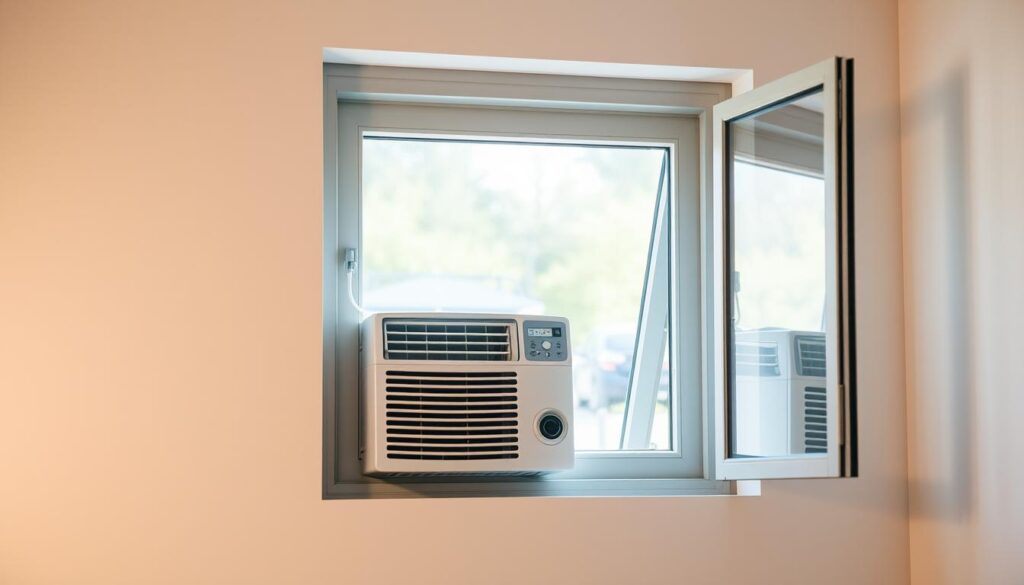
Before purchasing, measure your space and identify your window type. Common styles include single-hung, double-hung, and casement windows. Each requires a specific adapter kit for secure installation. For example, casement windows may need a custom panel to fit the exhaust hose properly.
Matching Units to Window Configurations
Ensure your device’s installation kit matches your window. Single-hung windows are the easiest to work with, while casement windows may require additional adjustments. A proper fit prevents air leaks and ensures efficient cooling. Always check the kit’s compatibility before making a purchase.
Optimizing Exhaust Hose Arrangements
The exhaust hose plays a crucial role in venting hot air. Keep it as short and straight as possible to minimize heat buildup. Avoid kinks or bends, as they can reduce efficiency. Use duct tape or sealant to secure the hose and prevent leaks.
Common Pitfalls and How to Avoid Them
- Incorrect Measurements: Measure your window and space carefully to avoid gaps.
- Poor Hose Placement: Ensure the exhaust hose is secure and unobstructed.
- Inadequate Sealing: Use weather stripping or sealant to close gaps around the window kit.
Step-by-Step Installation Tips
- Place the unit near a window and ensure it’s level.
- Attach the exhaust hose and secure it with the provided kit.
- Use the window adapter to seal the opening tightly.
- Plug in the unit and test it to ensure proper operation.
Proper installation not only maximizes cooling but also improves energy efficiency. By following these steps, you’ll enjoy a comfortable space and lower energy bills. Take the time to set it up right—your future self will thank you!
Data-Backed Performance: Testing Methods and Industry Stats
Ever wondered how experts test cooling devices to ensure they meet your needs? Behind every reliable unit is a rigorous testing process that combines science and technology. By using advanced tools and methods, professionals can provide accurate insights into performance, helping you make informed decisions.
How Data Loggers and Thermometers Guide Our Testing
Data loggers and thermometers are essential tools in evaluating cooling devices. These devices track temperature changes over time, ensuring consistent performance. For example, a data logger can measure how quickly a unit cools a room, while a thermometer verifies the accuracy of the temperature settings.
Watt meters are another critical tool. They measure energy consumption, helping you understand the operating costs of your device. By combining these tools, experts can assess not only cooling efficiency but also energy savings.
Interpreting Laboratory Results and Cooling Test Outcomes
Lab testing provides valuable insights into how a unit performs under controlled conditions. For instance, tests may measure the temperature drop in a room over a set period. This data helps validate claims about cooling capacity and efficiency.
Industry statistics also play a role. Metrics like CEER (Combined Energy Efficiency Ratio) indicate how much cooling a unit provides per watt of electricity. A higher CEER means better efficiency and lower energy bills.
Here’s what lab testing reveals:
- Temperature drop measurements confirm cooling effectiveness.
- Power consumption tests highlight energy efficiency.
- Unit size is evaluated against performance benchmarks.
Expert testing procedures ensure that every unit meets strict standards. For example, the DOE’s proposed test procedures include provisions for measuring energy use in various modes, such as cooling, standby, and off. These tests provide a comprehensive view of a unit’s performance.
By relying on data-backed evidence, you can choose a device that delivers both comfort and efficiency. Whether you’re looking for a compact unit or one with advanced remote control features, testing insights guide you to the right choice.
Comparative Analysis: Portable vs. Window Air Conditioners
Deciding between two cooling options can feel overwhelming, but it doesn’t have to be. Both portable and window units have their strengths, and understanding their differences can help you choose the right system for your home. Let’s break it down in a friendly, data-backed way.
Portable units shine when it comes to flexibility. You can move them from room to room, making them ideal for renters or those who need temporary cooling. Installation is a breeze—no need to wrestle with window panels or permanent setups. However, they tend to be louder, with noise levels ranging from 44 to 58 decibels, depending on the model.
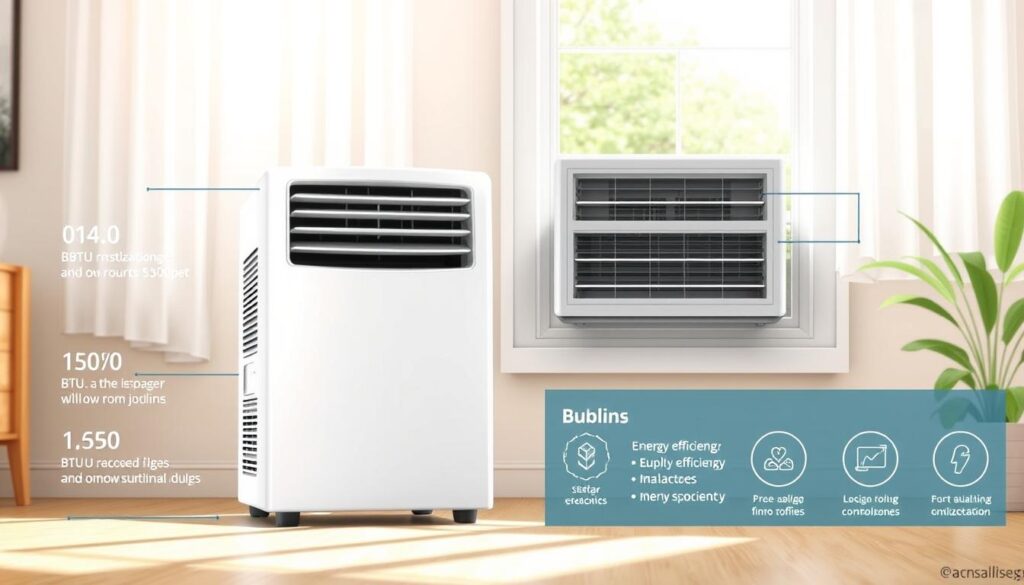
Window units, on the other hand, are more permanent but often quieter. They’re installed directly in your window, which can save floor space and reduce noise. For example, the Midea U-Shaped unit operates at just 49 decibels, making it one of the quietest options. However, installation can be tricky, especially if you’re not handy with tools.
Energy efficiency is another key factor. Portable units like the Midea Duo have a CEER rating of 10.8, offering significant energy savings. Window units, such as the Frigidaire FHWC124WB1, can cool larger spaces but may consume more power over time. Testing shows that portable units can save up to 40% on energy costs compared to some window models.
Here’s a quick comparison of the two systems:
| Feature | Portable Units | Window Units |
|---|---|---|
| Installation | Easy, no permanent setup | Requires window mounting |
| Noise Level | 44-58 dB | 49-57 dB |
| Energy Efficiency | High (CEER 10.8+) | Varies (CEER 12-15) |
| Mobility | Highly portable | Fixed in one location |
User feedback highlights the convenience of portable units for multi-room use. One homeowner shared how they moved their unit from the living room during the day to the bedroom at night. Window units, however, are praised for their consistent cooling and quieter operation.
So, which system is right for you? If you value flexibility and easy installation, a portable unit might be your best bet. But if you’re looking for quieter operation and don’t mind a permanent setup, a window unit could be the way to go. Consider your space, lifestyle, and cooling needs to make the right choice.
Tips for Optimal Home Comfort and Air Quality
Creating a comfortable home environment goes beyond just adjusting the thermostat. It’s about balancing temperature control with humidity management to ensure your space feels just right. Let’s explore how you can achieve this balance while improving air quality.
Balancing Temperature and Humidity
Maintaining the right ratio of temperature to humidity is key to comfort. Too much humidity can make your space feel sticky, while too little can dry out the air. A unit with a built-in dehumidifier can help regulate moisture levels, keeping your home comfortable year-round.
For example, during summer, set your cooling unit to a moderate temperature and use the dehumidifier to reduce excess moisture. In winter, a heater with a humidifier can add warmth without drying out the air. This dual approach ensures consistent comfort in every season.
Integrating Additional Features
Modern units often come with features that enhance both comfort and air quality. Look for models with air purifiers or filters that remove allergens and pollutants. These additions can turn your home into a healthier environment, especially for those with allergies or respiratory issues.
Smart features, like programmable settings, allow you to customize your climate control. For instance, you can set your unit to cool or heat your space before you arrive, ensuring it’s always at the perfect ratio of temperature and humidity.
Expert Tips for Optimal Comfort
- Use a hygrometer to monitor humidity levels and adjust settings accordingly.
- Clean or replace air filters regularly to maintain efficiency and air quality.
- Combine cooling or heating with air purification for a healthier home environment.
- Choose units with energy-efficient ratios to save on utility bills.
By following these tips, you can create a home that’s not only comfortable but also healthy. Whether it’s adjusting your heater in winter or optimizing your cooling unit in summer, small changes can make a big difference.
Final Thoughts and Next Steps
Transforming your home into a cool room doesn’t have to be a daunting task. With the insights from this guide, you’re now equipped to tackle your cooling challenges head-on. Whether it’s understanding energy consumption or mastering installation, every detail plays a role in creating a comfortable space.
Take a moment to reflect on your specific needs. Are you looking to cool a small bedroom or a larger living area? Identifying your priorities will help you narrow down the best options. Remember, even small adjustments can make a big difference in just an hour.
Don’t forget to review objective testing data and real user experiences before making a decision. These insights ensure you choose a unit that fits your lifestyle and budget. For deeper understanding, explore additional resources and expert reviews.
Ready to take the next step? Use this guide to make a confident, informed choice for year-round home comfort. Your cool room is just a few decisions away!
FAQ
How do I choose the right BTU rating for my room?
Can I use a portable air conditioner in multiple rooms?
How noisy are portable air conditioners?
Do portable air conditioners use a lot of energy?
Can I install a portable air conditioner without a window?
What’s the difference between a portable air conditioner and a window unit?
How often should I clean or maintain my portable air conditioner?
Can a portable air conditioner also heat a room?
What smart features should I look for in a portable air conditioner?
How do I manage humidity with a portable air conditioner?
Source Links
- The Best Portable Air Conditioners to Cool Down Any Room
- Portable air conditioner buying guide | CHOICE
- Best Air Conditioner Buying Guide – Consumer Reports
- The Ultimate Guide to Choosing the Right AC Unit for Your Home – ASI Hastings
- Stay Chill All Summer With the 5 Best Portable Air Conditioners
- Beat the Heat With the Best Portable Air Conditioners
- Portable Air Conditioners Test Procedures Notice of Proposed Rulemaking
- The Best Portable Air Conditioner
- The 6 best portable air conditioners of 2025, including options to help with wildfire smoke
- BTU Ratings: A Guide to HVAC Efficiency and Comfort
- Energy Conservation Program: Test Procedure for Portable Air Conditioners
- A Beginner’s Guide to How to Install Portable Air Conditioner
- How To Choose a Portable AC Unit for Your Home – Today’s Homeowner
- How to install a portable air conditioner | CHOICE
- The Essential Checklist: What to Look for in a Portable Air Conditioner
- Microsoft Word – Course – HVAC Systems Noise Control R.doc
- Whisper-Quiet Cooling: Explore the Quietest Air Conditioners for Your Home – NH’s Top Choice for Home Comfort | Sanford Temperature Control
- Should you buy a portable air conditioner or a window unit? We’ve tested both and window units are far more efficient and powerful.
- User Stories and User Story Examples by Mike Cohn
- Artificial intelligence in healthcare: transforming the practice of medicine
- The Best Smart Thermostat
- Decoding AC Types: A Guide to Choosing the Right Air Conditioning
- Keeping Your Home Comfortable Year-Round: A Guide to Heating and Cooling Systems – Bragging Mommy
- Choosing the Ideal Air Conditioning System for Your Home – Milt’s of Amelia
- How Much Energy Does an Air Conditioner Use?
- How much do air conditioners cost to run? | CHOICE
- Top Portable AC Air Conditioner Options
- What Is a Ventless Portable Air Conditioner & How Does It Work
- Create a cool zone by installing a portable AC—here’s how
- Honeywell Portable Air Conditioners: Answering Your Installation Questions and More
- PACs vs. window AC units: Which is right for your home?
- Energy Conservation Program: Test Procedures for Portable Air Conditioners
- Energy Conservation Program: Test Procedure for Portable Air Conditioners
- The Best Portable Air Conditioners for Keeping Cool, Tested and Reviewed
- The 5 Best Window Air Conditioners of 2025
- How to Find the Best Air Conditioner for Your Comfort
- How To Choose an Air Conditioner
- How to Select the Best HVAC System for Your Needs – One Hour Air Conditioning & Heating Fort Worth TX & North Dallas / Plano Area. Gladly servicing the Fort Worth and North Dallas Area.
- Ultimate Guide To Portable Air Conditioners: What You Need To Know
- Best Portable Air Conditioners And How They Work | Weather.com
- Portable Air Conditioners: Buy the Right One and Stay Cool This Summer



0 Comments