
Keeping your food safe and fresh is a top priority for any business. A well-designed walk-in cooler or freezer is essential for maintaining the right temperature and ensuring your products stay in perfect condition. The FDA requires food to be stored below 40°F (4°C) to ensure safety, making it crucial to choose the right refrigeration system for your needs1.
Modern walk-in coolers and freezers are built with foam insulation sandwiched between metal panels, offering excellent energy efficiency and durability. Proper installation and regular maintenance can extend the life of your unit, saving you money in the long run. Whether you’re storing fresh produce or frozen goods, understanding the design and efficiency of your system is key to success.
This guide will help you navigate the complexities of choosing the right walk-in unit for your business. From material selection to energy-saving tips, you’ll find practical advice to make informed decisions. Let’s dive into the details and ensure your refrigeration system works smarter, not harder.
Key Takeaways
- Maintain FDA-recommended temperatures for food safety.
- Choose units with foam insulation for better energy efficiency.
- Regular maintenance is essential for long-term performance.
- Proper installation can save costs and improve efficiency.
- Understand the differences in materials and designs for your needs.
Identifying Your Cooling Needs and Walk-In Options
Choosing the right cooling system for your business starts with understanding your specific needs. Whether you’re storing fresh produce or frozen goods, the type of unit you select can impact efficiency, cost, and long-term performance. Let’s explore the key factors to consider when making this important decision.
Understanding Prefabricated vs. Built-In Walk-In Systems
Prefabricated units are modular and designed for quick installation. They’re ideal for businesses that need a fast, hassle-free solution. These systems often come pre-assembled, reducing setup time and labor costs2.
On the other hand, built-in systems offer customization. They’re tailored to fit your space perfectly, making them a great choice for unique layouts. While they may take longer to install, their adaptability can lead to better long-term efficiency3.
Evaluating Indoor and Outdoor Locations for Optimal Use
Indoor units benefit from controlled environments, reducing exposure to weather-related wear and tear. They’re often easier to maintain and may require fewer zoning permits3.
Outdoor units, however, offer flexibility in placement. They’re perfect for businesses with limited indoor space. Keep in mind that outdoor systems may need additional weatherproofing, which can increase initial costs2.
| Feature | Prefabricated | Built-In |
|---|---|---|
| Installation Time | Quick | Longer |
| Customization | Limited | High |
| Cost | Lower upfront | Higher upfront |
Both prefabricated and built-in systems have their merits. Your choice depends on your business’s unique needs, space constraints, and budget. By evaluating these factors, you can select a system that ensures optimal performance and efficiency.
Key Components of a Walk-In Freezer System
Efficiency and durability are at the heart of every reliable refrigeration system. To ensure your setup performs optimally, it’s essential to focus on the core components that make it work. From insulation to user-friendly features, every detail matters.
Effective Insulation and Panel Design
High-quality insulation is the backbone of any efficient cooling system. Materials like extruded polystyrene or polyurethane are commonly used for their excellent thermal properties. These materials help maintain the desired temperature, reducing energy consumption and costs4.
Well-engineered panels ensure an airtight seal, preventing heat exchange and maintaining structural integrity. For example, panels with an R-value of ≥5.64 m²·K/W are ideal for walk-in freezers5. This not only enhances performance but also extends the lifespan of your unit.
User-Friendly Features and Operational Considerations
Operational efficiency is just as important as design. Features like easy-to-use control panels and smooth door mechanisms can significantly improve daily operations. For instance, display door assemblies for freezers must meet specific energy consumption standards to ensure reliability5.
Here are some key benefits of a well-designed system:
- Energy savings: Proper insulation reduces power usage.
- Durability: High-quality materials withstand wear and tear.
- Ease of use: Intuitive controls simplify maintenance.
By focusing on these components, you can create a system that works smarter, not harder. Every detail, from material choice to installation practices, impacts overall performance and cost-effectiveness.
Deep Dive into Insulation Materials and R-Values
Understanding insulation materials is key to maximizing your refrigeration system’s efficiency. The right choice can save energy, reduce costs, and maintain optimal temperatures for your products. Let’s explore the two most popular options: extruded polystyrene and foamed-in-place polyurethane.
Benefits of Extruded Polystyrene for Long-Term Efficiency
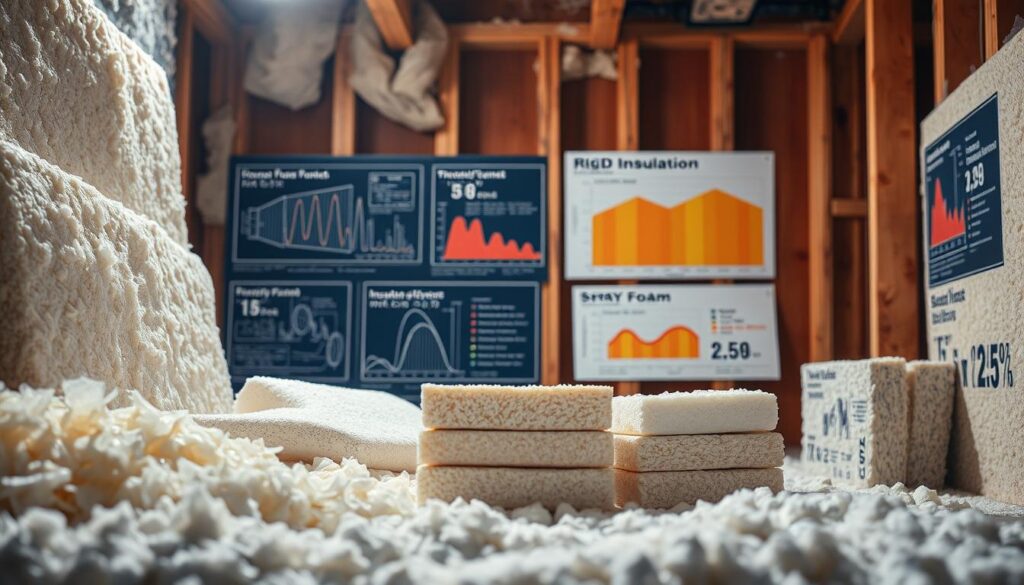
Extruded polystyrene (XEPS) is a top choice for insulation due to its high R-value of R-5.5 per inch6. This material retains about 47% of its R-value over time, making it a reliable option for long-term energy efficiency6.
Another advantage is its moisture resistance. Unlike other materials, XEPS doesn’t absorb water, which helps maintain its insulating properties even in humid environments6. This makes it ideal for units that need consistent performance in varying conditions.
Cost is another factor. XEPS is more affordable than polyurethane foam, offering a balance between performance and budget7. If you’re looking for a cost-effective solution that doesn’t compromise on quality, this material is worth considering.
Exploring Foamed-In-Place Polyurethane Advantages
Foamed-in-place polyurethane is another excellent option, with an R-value of R-6.3 per inch6. While it may lose some heat resistance over time, its initial performance is unmatched. This material creates a continuous insulating layer, eliminating gaps that can compromise efficiency6.
One of its standout features is its structural integrity. Polyurethane foam adheres tightly to surfaces, providing both insulation and support6. This makes it a great choice for units that require durability and stability.
However, it’s important to note that polyurethane foam is more expensive upfront7. If your priority is long-term energy savings and you’re willing to invest, this material could be the right fit.
| Feature | Extruded Polystyrene (XEPS) | Foamed-In-Place Polyurethane |
|---|---|---|
| R-Value | R-5.5 per inch | R-6.3 per inch |
| Moisture Resistance | High | Moderate |
| Cost | Lower | Higher |
| Long-Term Efficiency | Retains 47% R-value | May lose heat resistance |
Both materials have their strengths. Extruded polystyrene offers cost-effectiveness and moisture resistance, while polyurethane foam provides superior initial insulation and structural benefits. Your choice depends on your specific needs and budget.
Exploring Metal Skins and Construction Quality
The material you choose for your refrigeration system’s exterior plays a crucial role in its longevity and performance. Metal skins not only protect the unit but also enhance its efficiency and durability. Let’s explore the options available and how they can benefit your setup.
Galvalume and G90 Galvanized Steel Characteristics
Galvalume is a popular choice due to its excellent corrosion resistance. It combines aluminum, zinc, and silicon, creating a protective layer that withstands harsh environments8. This makes it ideal for units exposed to moisture or varying temperatures.
G90 galvanized steel is another reliable option. It’s coated with zinc to prevent rust, offering a cost-effective solution for many businesses8. However, it may require more maintenance in highly corrosive environments.
Stainless Steel and Aluminum Options for Durability
Stainless steel is known for its strength and hygiene. It’s resistant to rust and easy to clean, making it a top choice for food-related applications8. While it’s more expensive, its durability often justifies the cost.
Aluminum is lightweight and corrosion-resistant. It’s a great option for units that need to be moved or reconfigured frequently8. However, it may not be as strong as steel in high-impact areas.
When selecting a metal skin, consider your operational environment and budget. Each material has its strengths, and the right choice can significantly impact your system’s efficiency and lifespan.
Insights into Walk-In Refrigeration Systems
Optimizing your refrigeration setup starts with understanding the two main system types. Whether you choose a remote or self-contained system, each has unique benefits that can impact your business’s efficiency and costs. Let’s explore these options and how they align with energy standards like EISA.
Remote Versus Self-Contained System Considerations
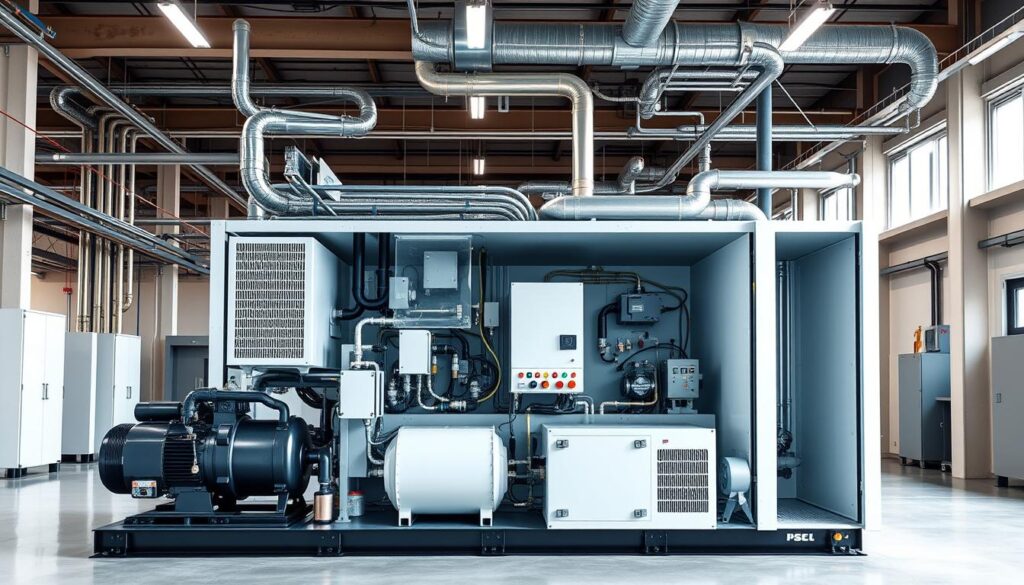
Remote systems feature separate condensing units, often placed outside the storage area. This setup reduces heat inside the unit, improving cooling performance9. It’s ideal for larger operations where space isn’t a constraint.
Self-contained systems, on the other hand, integrate all components into a single unit. They’re compact and easier to install, making them a great choice for smaller spaces10. However, they may generate more heat inside the storage area.
Here’s a quick comparison:
- Remote systems: Better for large spaces, higher upfront costs.
- Self-contained systems: Compact, easier to install, lower initial costs.
Ensuring Compliance with EISA Requirements and Energy Efficiency
Compliance with the Energy Independence and Security Act (EISA) is crucial for reducing energy costs. EISA-compliant systems meet strict efficiency standards, ensuring optimal performance9. For example, a 10 x 10 ft unit can save up to $124 monthly when properly sized and installed9.
Key components like the compressor and evaporator play a vital role in system efficiency. Regular maintenance ensures these parts function at their best, extending the unit’s lifespan11.
By choosing the right system and adhering to EISA guidelines, you can achieve significant energy savings and maintain reliable performance for years to come.
Outdoor Applications and Special Considerations
Outdoor refrigeration systems face unique challenges that require thoughtful planning. Unlike indoor units, outdoor setups are exposed to harsh weather conditions, which can impact performance and longevity. Proper preparation ensures your system remains efficient and reliable, even in extreme climates.
Implementing Winterizing Kits and Effective Rain Roofs
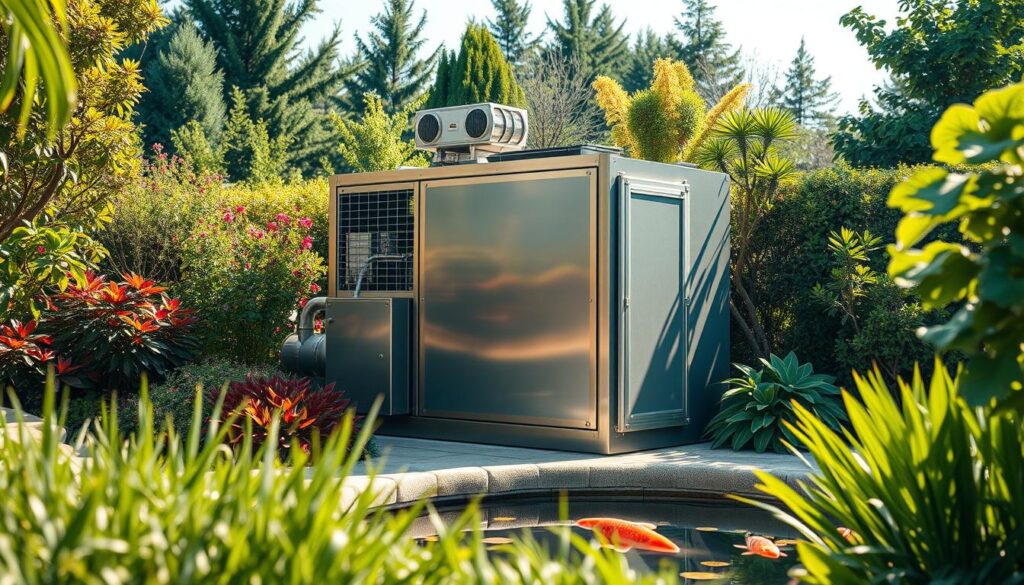
Winterizing kits are essential for outdoor units in colder regions. These kits include compressor covers and crankcase heaters, which protect the system from freezing temperatures12. Without these components, oil circulation can be disrupted, leading to costly repairs.
Rain roofs are another critical feature for outdoor installations. Made from materials like PVC or metal flashing, they prevent water infiltration and protect the unit from damage12. Proper flashing and membrane systems ensure long-lasting protection, even in heavy rain or snow.
Here are some tips to maintain energy efficiency in outdoor setups:
- Choose light-colored finishes to reduce heat absorption13.
- Opt for thicker insulation (4-inch or 5-inch) in warmer climates13.
- Regularly inspect the unit for wear and tear caused by weather exposure.
By addressing these challenges proactively, you can extend the lifespan of your outdoor refrigeration system and avoid unnecessary repair costs. Proper planning ensures your unit performs optimally, no matter the weather.
Walk-In Coolers and Freezers Without a Floor: Pros and Precautions
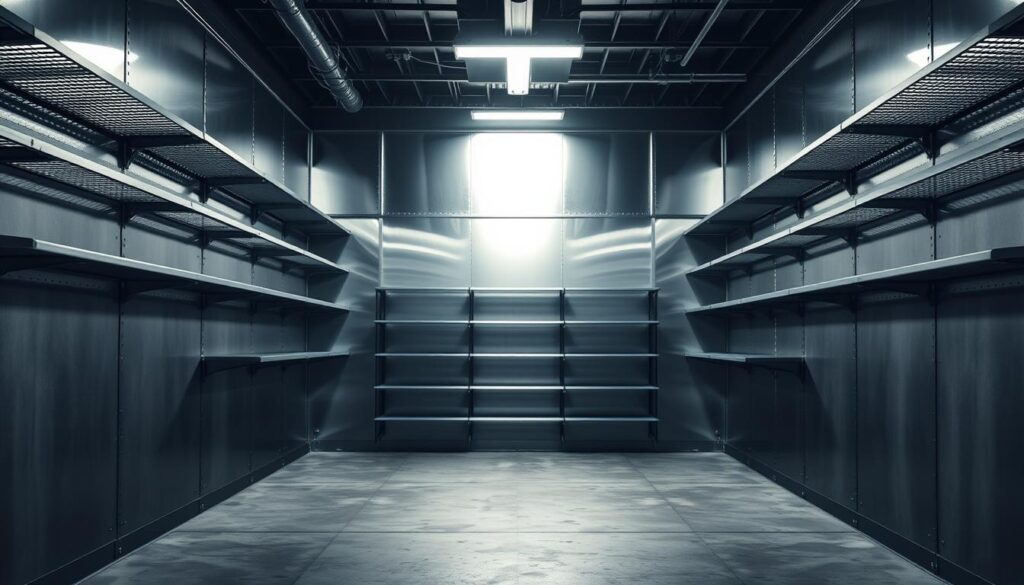
Designing a refrigeration system without a built-in floor can offer flexibility and cost savings. This approach is particularly useful for businesses looking to reduce upfront expenses or customize their setup. However, it requires careful planning to ensure efficiency and safety.
One of the main benefits of a floorless design is lower initial costs. By eliminating the built-in floor, you can save on materials and installation expenses14. This makes it an attractive option for businesses with tight budgets.
However, there are important precautions to consider. These units must be installed over a properly insulated, level concrete surface14. Without this, thermal bridges can form, undermining the system’s efficiency15.
- Use a concrete pad with proper insulation to prevent heat transfer14.
- Install thermal breaks to minimize energy loss15.
- Ensure the surface is level to avoid structural issues14.
- Consult local codes to meet regulatory requirements16.
While a floorless design can save money upfront, it’s essential to plan carefully. Proper insulation and installation can prevent long-term issues and ensure your system operates efficiently14.
Consulting with professionals is highly recommended. They can help you navigate the complexities of installation and ensure your system meets all safety and efficiency standards16.
| Feature | With Floor | Without Floor |
|---|---|---|
| Cost | Higher upfront | Lower upfront |
| Installation | Complex | Simpler |
| Efficiency | Built-in insulation | Requires additional insulation |
By weighing the pros and cons, you can make an informed decision that aligns with your business needs. A floorless design can be a practical choice when implemented correctly.
Evaluating Manufacturer Credentials and Customer Service
Selecting the right manufacturer for your refrigeration system is a decision that impacts long-term performance. A reliable partner ensures your unit operates efficiently, saving you time and money. Here’s what to look for when evaluating manufacturers.
Credentials and Certifications are critical. Ensure the manufacturer complies with safety standards like UL 471 and CSA 22.2 for electrical components17. These certifications guarantee the system meets rigorous safety and performance criteria.
Check if the manufacturer adheres to energy efficiency codes outlined by NRCan and DOE. This ensures your unit meets R-value requirements for panels, reducing energy costs17.
Customer Service and Support are equally important. A manufacturer with a dedicated support team can resolve issues quickly, minimizing downtime. Look for companies offering clear, itemized quotes and personalized assistance.
Here’s a checklist to evaluate manufacturers:
- Experience: At least ten years in business.
- Certifications: UL, CSA, and NSF approvals.
- Warranty: Clear terms and comprehensive coverage.
- References: Positive reviews from past clients.
- Responsiveness: Quick and helpful customer support.
Warranty and After-Sales Support can make or break your experience. A manufacturer offering a robust warranty demonstrates confidence in their product. Compare warranty details, including coverage duration and exclusions.
Responsive after-sales support is invaluable. Whether it’s troubleshooting or replacement parts, a reliable manufacturer ensures your system stays operational18.
| Feature | High-Quality Manufacturer | Average Manufacturer |
|---|---|---|
| Certifications | UL, CSA, NSF | Limited or none |
| Customer Support | 24/7 availability | Limited hours |
| Warranty | Comprehensive coverage | Basic or short-term |
Choosing the right manufacturer is as important as selecting the right product features. Thorough research and detailed questions can help you make an informed decision. A trusted partner ensures your refrigeration system delivers reliable performance for years to come.
Using the Walk In Freezer Guide for Best Results
Maximizing the efficiency of your refrigeration setup doesn’t have to be complicated. By following a few actionable tips, you can reduce energy costs and ensure your system performs optimally. This guide serves as a roadmap to help you make informed decisions that benefit your business in the long run.
Integrating Cost-Effective Energy Solutions and Installation Tips
One of the best ways to save on operational costs is by choosing energy-efficient solutions. For example, prefabricated units with high R-value insulation can reduce energy consumption by up to 15%19. Proper installation also plays a crucial role in maintaining efficiency. Ensure your unit is placed on a level surface and sealed tightly to prevent heat exchange20.
Here are some practical steps to enhance your setup:
- Optimize space: Arrange your unit to minimize airflow obstruction.
- Regular maintenance: Clean condenser coils and inspect door gaskets monthly to prevent energy loss20.
- Use integrated systems: These systems enhance performance and reduce energy consumption over time19.
Balancing upfront investment with long-term savings is key. For instance, a well-insulated unit may cost more initially but can save you hundreds annually in energy bills21. Real-world examples show that businesses with efficient setups often see a payback period of just four years21.
Take immediate action by reviewing your current setup against these recommendations. Small adjustments can lead to significant improvements in temperature control and overall performance. By following this guide, you’ll ensure your refrigeration system works smarter, not harder.
Panel Construction, Insulation, and Refrigerant Considerations
Modern refrigeration systems rely heavily on advanced panel construction and smart refrigerant choices. These elements not only enhance performance but also ensure long-term efficiency and compliance with environmental standards. Let’s explore how cutting-edge techniques and thoughtful refrigerant selection can elevate your system.
Understanding Advanced Panel Construction Techniques
Panel construction plays a pivotal role in maintaining the desired temperature and reducing energy consumption. Techniques like soft-nose and high-density rail designs minimize thermal bridges, ensuring consistent insulation22. These methods also improve durability, making your unit more resistant to wear and tear.
For example, panels with an R-value of ≥5.64 m²·K/W are ideal for maintaining efficiency in walk-in coolers22. Proper installation, including a 1/16-inch joint width between panels, ensures airtight seals and optimal performance22.
Here’s why advanced panel construction matters:
- Energy savings: Reduced heat exchange lowers power usage.
- Durability: High-quality materials withstand harsh conditions.
- Ease of maintenance: Well-designed panels simplify upkeep.
Selecting the Right Refrigerant for Optimal Performance
Choosing the right refrigerant is equally important. Options like R-290 (propane) offer low global warming potential and high energy efficiency23. This makes them a sustainable choice for modern refrigeration systems.
Traditional refrigerants, while effective, often fall short in meeting current environmental regulations. R-290, on the other hand, aligns with global standards and reduces operational costs23.
Here’s a quick comparison of refrigerants:
| Feature | Traditional Refrigerants | R-290 (Propane) |
|---|---|---|
| Global Warming Potential | High | Low |
| Energy Efficiency | Moderate | High |
| Regulatory Compliance | Limited | Fully Compliant |
By combining advanced panel construction with eco-friendly refrigerants, you can create a system that’s both efficient and sustainable. Consulting with experts ensures your choices align with your operational needs and long-term goals.
Wrap-Up and Next Steps
Ensuring your refrigeration system operates at peak efficiency starts with smart planning and expert insights. From selecting the right materials to optimizing installation, every detail matters. Whether it’s advanced panel construction or choosing eco-friendly refrigerants, these decisions impact long-term performance and cost savings24.
Remember, proper maintenance is key. Regularly inspect your unit for wear and tear, and ensure all joints are sealed with NSF-approved caulking for better insulation25. These small steps can significantly enhance efficiency and extend the lifespan of your system.
Take action today. Review your current setup, identify improvement areas, and consult reputable manufacturers for personalized advice. By following these best practices, you’ll not only maintain optimal temperature but also reduce energy costs over time. Your business deserves a system that works smarter, not harder.
FAQ
What’s the difference between prefabricated and built-in walk-in systems?
How do I choose the best location for my walk-in cooler or freezer?
What insulation materials are best for long-term efficiency?
What are the benefits of stainless steel or aluminum in construction?
Should I choose a remote or self-contained refrigeration system?
What special considerations are needed for outdoor walk-in units?
Can I install a walk-in cooler or freezer without a floor?
How do I ensure my walk-in system meets energy efficiency standards?
What should I look for in a walk-in cooler or freezer manufacturer?
How can I optimize the installation process for my walk-in unit?
Source Links
- Best Walk-in Cooler & Freezer Repair Tips, Maintenance Guide, Replacement, Install
- Walk-in Buying Guide | U.S. Cooler Walk-ins
- The Ultimate Guide to Walk-In Coolers & Freezers – Norlake
- Walk-in Cooler & Freezer Buying Guide
- Walk-in freezer and walk-in cooler components
- 5 Most Common Thermal Insulation Materials | Thermaxx
- Understanding Cold Storage Warehouse Cost: A Detailed Analysis
- How to Choose the Right Walk-In Cooler or Freezer Guide
- Walk-In Cooler And Freezer FAQs – Master-Bilt
- The Essential Guide to Walk-In Cooler and Freezer Rental – Polar Leasing
- Walk-in Freezer Technology Insights: 3 Essential Must-Haves
- How to Choose the Right Walk-In Cooler or Freezer Guide
- Outdoor Walk-In Coolers Basics
- The Basics of Walk-In Coolers and Freezers
- Practicing Employee Safety in Walk-In Coolers & Freezers
- The Complete Guide to Commercial Refrigeration – KCR HVAC Blog
- Mastering Navigating the Certification Maze: A Comprehensive Guide for Choosing a responsible Walk-In Cooler Manufacturer
- Commercial Refrigeration and Freezer
- How to Choose the Right Walk-In Cooler or Freezer Guide
- A Guide to Cleaning the Walk-in Freezer
- Walk-In Freezer Installation: 6 Essential Tips To Win!”
- Walk-In Installation (interactive)
- A Guide to Walk-In Cooler and Freezer Flooring
- Installation Guide | U.S. Cooler Walk-ins


0 Comments